Why Does My Queen Victoria Agave Have Yellow Leaves? 🤒
Agave victoriae-reginae
By the Greg Editorial Team
Jun 18, 2024•5 min read
This article was created with the help of AI so we can cover more plants for you. May contain errors. See one? Report it here.
- 🌵 Over/underwatering causes yellow leaves; adjust watering routine and soil moisture.
- ☀️🌡️ Sunlight and temperature are key; aim for bright, indirect light and stable temps.
- 🌱 Soil, pests, and diseases matter; use well-draining soil and monitor for invaders.
Watering Woes: Walking the Fine Line
💦 Too Much of a Good Thing: Overwatering Hazards
Swollen leaves and a mushy feel are your Queen Victoria Agave waving a red flag. Overwatering can turn those firm, elegant leaves into a soggy mess. If you spot yellow or translucent patches, it's time to take action.
Root rot could be the silent assassin here, lurking beneath the surface. Before you reach for the watering can, check the soil. Is it more wet sponge than nurturing bed? Hold off on the H2O.
🌵 Tips to Dry Out the Drama
- Check the soil: If it's damp 2 inches down, resist watering.
- Trim the damage: Soft, discolored roots need to go.
- Increase airflow: Move your plant to a spot with better ventilation.
- Monitor moisture: Adjust your watering routine based on the soil's dryness.
When Thirsty Leaves Turn Yellow
If your Agave's leaves are crispy with browning tips, it's crying out for water. Underwatering leaves your plant looking more like a desert relic than a lush, green beauty.
Quenching Your Plant's Thirst
- Spot the thirst: If the top inch of soil is bone-dry, it's time for a drink.
- Water wisely: Do it slowly, letting the plant absorb moisture at its own pace.
- Establish routine: Create a watering schedule that's as reliable as sunrise.
- Adapt and observe: Every Agave has its own needs; tweak your care to suit.

Light and Temperature Tango
🌞 Sunburn and Shade: Finding the Sweet Spot
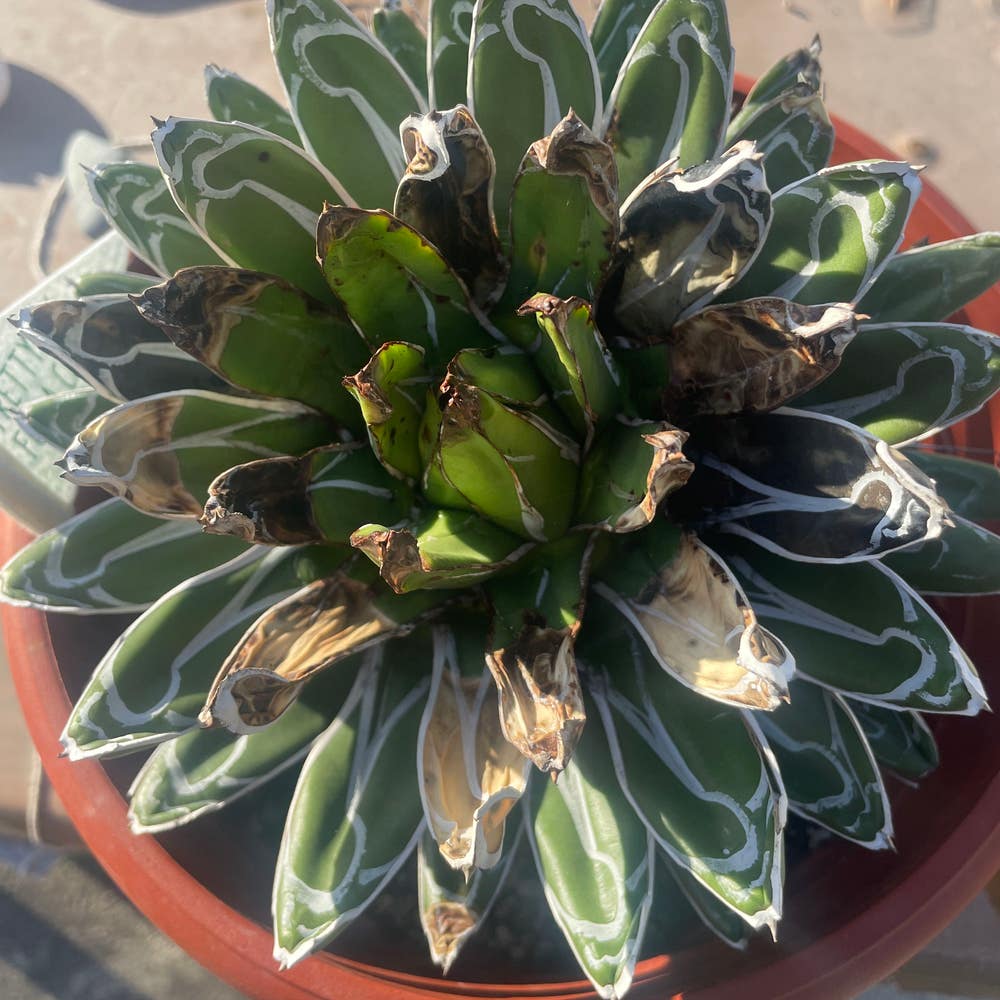
Sunburn isn't just for beachgoers; your Queen Victoria Agave can suffer too. Intense direct sunlight can lead to yellow or even white, crispy leaves. Conversely, too much shade and your Agave's leaves will turn a sickly yellow, craving more light.
To prevent a solar fiasco, provide bright, indirect sunlight. If your Agave is getting too much direct sun, consider using sheer curtains to diffuse the light. Rotate your plant periodically to ensure even light exposure, avoiding the botanical equivalent of a lopsided tan.
Keeping Cool or Cozy: Temperature Troubles
Temperature swings are the nemesis of your Agave's leaf health. These plants prefer a stable environment, ideally between 65-75°F (18-24°C). If the mercury dips below 55°F, think of it as a red alert for your succulent friend.
To create the ideal climate, keep your Agave away from drafty windows and air vents. During heatwaves, a bit of shade can be a lifesaver. Remember, your plant isn't seeking a thrill ride of temperature highs and lows; it craves consistency.

Battling Below: Soil and Invaders
🌱 The Foundation of Health: Soil and Nutrients
Soil quality directly impacts your Queen Victoria Agave's leaf color. A nutrient imbalance can trigger yellow leaves, signaling a cry for help. Soil testing is a critical step in diagnosing deficiencies or excesses in essential nutrients like magnesium, which is vital for leaf health.
To whip up the perfect soil mix, aim for a well-draining concoction that caters to your Agave's preference for a dry, comfy bed. The right blend is like a tailored suit; it fits just right, providing support without smothering. Remember, your plant's roots need to breathe, not drown.
🐜 Unwanted Guests: Pests and Diseases
Yellow leaves can also be a red flag for pests or diseases. Inspect your Agave for freeloaders like mealybugs, aphids, and mites. These uninvited guests suck the life out of your plant, leaving behind telltale yellow despair.
Evicting pests is straightforward: show them the door with a spritz of insecticidal soap or neem oil. For diseases like root rot, prevention is key. Ensure good air circulation and avoid overwatering. If the situation calls for it, don't hesitate to use chemical treatments—just follow the label to a T. Your Agave's health is worth the vigilance.

The Green Comeback: Revival and Prevention
🌱 Turning Back the Yellow Tide
In the battle against yellow leaves, the first step is a thorough inspection. Remove any yellow or dead foliage to clear the way for new growth. If overwatering's the issue, let the soil dry out completely before the next watering session. For underwatering, a deep soak might be necessary, but don't drown the plant in your enthusiasm.
Should pests be partying on your plant, show them the exit with neem oil or insecticidal soap. Fungicide applications can help with diseases like agave anthracnose. And remember, if your Agave is suffering from transplant stress, give it time to adapt before taking drastic measures.
🌿 Keeping the Green: Long-Term Leaf Love
Vigilance is your new best friend. Regularly inspect your Agave for any signs of distress. Water needs fluctuate, so adjust your schedule to the plant's rhythm, generally allowing the soil to dry between waterings.
Sunlight is crucial, but too much can lead to sunburn. Find that sweet spot where your Agave gets enough light without scorching. In terms of temperature, keep it warm, especially during winter, but avoid extreme heat.
Fertilize sparingly; a little goes a long way with these succulents. And finally, ensure good air circulation around your plant to prevent pest infestations and promote healthy growth. Keep these tips in your back pocket, and your Agave's leaves should stay as green as an envious garden gnome.
⚠️ Safety First
This content is for general information and may contain errors, omissions, or outdated details. It is not medical, veterinary advice, or an endorsement of therapeutic claims.
Always consult a qualified healthcare professional before using any plant as food, medicine, or supplement.
Never eat any plant (or feed one to pets) without confirming its identity with at least two trusted sources.
If you suspect poisoning, call Poison Control (800) 222-1222, the Pet Poison Helpline (800) 213-6680, or your local emergency service immediately.
Spotted an error? Please report it here.
Turn your Queen Victoria Agave's frown upside down from yellow to lush green 🌿 with Greg's personalized care reminders tailored to your plant's unique needs!