Why Are My Queen Victoria Agave Leaves Falling Over?
Agave victoriae-reginae
By the Greg Editorial Team
Jun 18, 2024•6 min read
This article was created with the help of AI so we can cover more plants for you. May contain errors. See one? Report it here.
- Signs of distress: Wilting, discoloration, and spongy base need immediate action.
- Overwatering and pests lead to swollen leaves, root rot, and infestations.
- Consistent care: Proper watering, drainage, and regular checks keep Agave healthy.
Spotting the Trouble Signs
🚨 Recognizing the Symptoms: Is Your Agave in Distress?
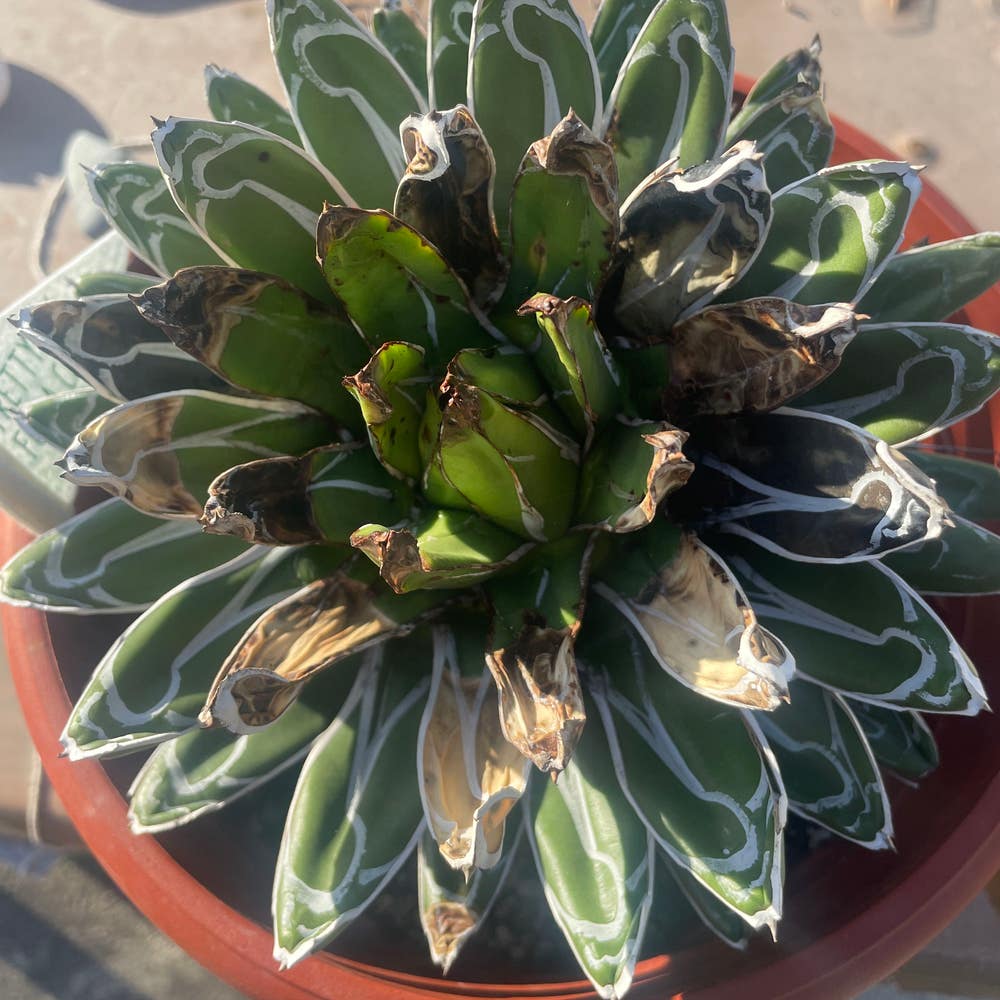
Wilting leaves should be your first clue that your Queen Victoria Agave might be sending out an SOS. If the leaves that once stood proud are now drooping pathetically, it's time to play plant detective. Check for discoloration or a spongy base, as these are glaring red flags that your Agave is not just being dramatic—it's genuinely struggling. And don't overlook the roots; they should be firm and white, not mushy and brown. If they look like they've seen better days, you've got a problem on your hands.
📉 The Droop vs. The Natural Curve: Decoding Your Agave's Body Language
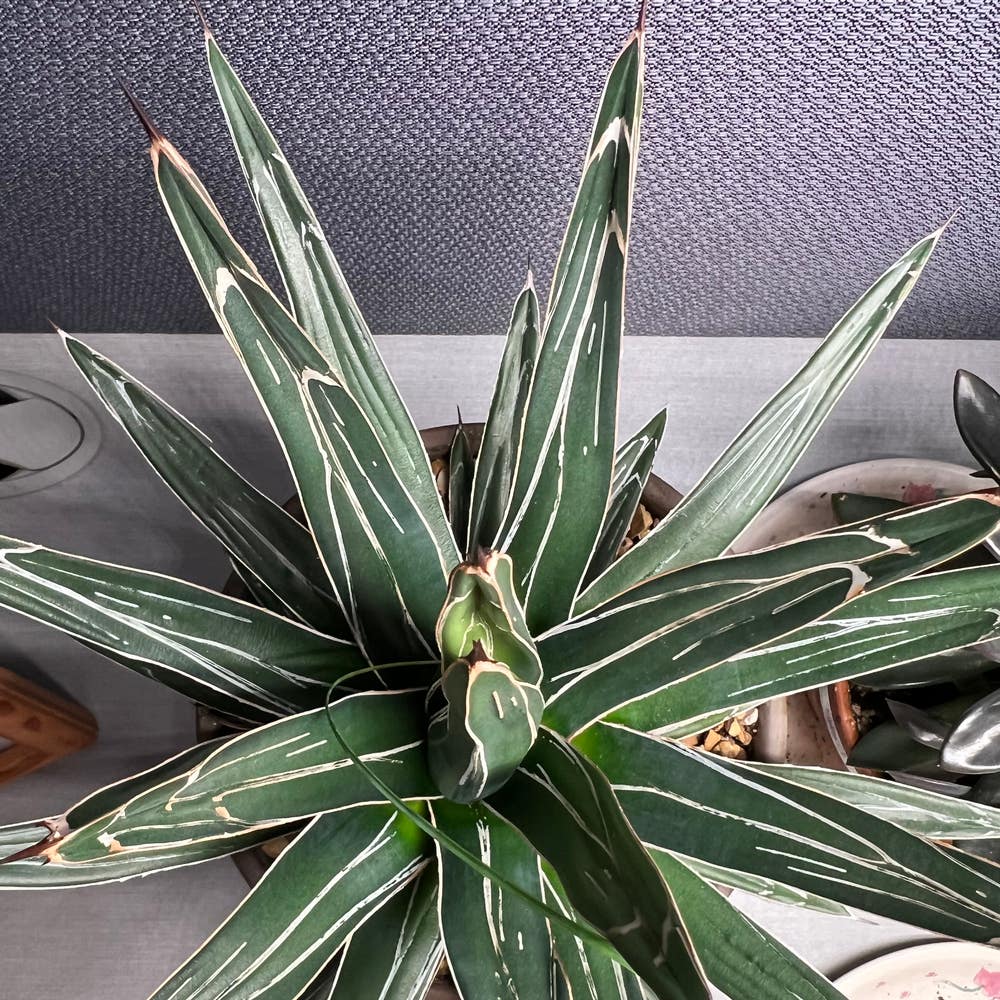
Not every slouch is a cry for help. It's normal for lower leaves to bend the knee to new growth. But if you're witnessing a mass droop-off or the leaves feel softer than a politician's promise at the base, it's a sign of distress. Multiple affected leaves or droopiness paired with soft spots are your cue to scrutinize for pests, check soil moisture, and reassess light conditions. Remember, a healthy Agave stands its ground firmly; if it wobbles when you give it a gentle nudge, it's time to investigate further.

Top Reasons Your Agave's Got the Slumps
💦 Too Much Love: The Perils of Overwatering
Swollen leaves that feel mushy are crying out from too much water. Yellowing or translucent leaves are the plant's way of saying, "I'm drowning here!" If the roots are brown or black and smell like last week's compost, you've got root rot on your hands.
🚱 Spotting the Signs of Waterlogged Roots
Check for a soil that's more swamp than desert. If it clings to your fingers like a bad habit, it's too wet. Leaves may burst or show unsightly spots, signaling it's time to intervene.
🚑 How to Rescue a Drowning Agave
First, stop the waterworks. Prune the damaged leaves and give the roots a spa treatment by rinsing off the soil. If they're rotting, it's surgery time—snip away the bad parts. Let the plant dry out like a sunbather for a few days before repotting in fresh, well-draining soil. Hold off on the fertilizer; let the roots find their zen first.
🏜️ Thirsty as a Desert: When Underwatering Takes its Toll
Leaves drooping like a tired hiker in the sun? That's dehydration. If the soil is drier than a stand-up comedian's wit, your Agave is parched.
🥤 The Wilt Tell-Tale: Identifying Dehydration
Lightweight pots are a dead giveaway; they should feel satisfied, not starving. Brittle leaves are the plant's version of a thirst trap—don't fall for it; water it.
💧 Quenching the Thirst: Rehydrating Your Plant
Think of rehydration as a gentle rain, not a monsoon. Water until the soil is moist, like a well-made cake, not a soaked sponge. If the soil is bone-dry, consider bottom-watering to avoid shock and awe.
🐜 Bug Battles: Pests that Can Topple Your Agave
Mealybugs and spider mites are the party crashers nobody invited. They'll turn your Agave's leaves into their personal buffet.
🐞 Common Culprits: Mealybugs and Spider Mites
Look for sticky residue or leaves that have more spots than a Dalmatian. That's the sign pests are gatecrashing.
🛡️ Winning the War: Effective Pest Control Strategies
Evict the critters with a spot treatment—think of it as bouncer duty for your plant. For prevention, keep a clean environment and consider a natural deterrent like neem oil.
😩 Feeling Stressed: Environmental Factors Causing the Collapse
If your Agave's leaves are curling more than a weightlifter's biceps, it could be stress from the wrong environment.
🌡️ Too Hot, Too Cold, or Just Not Right: Temperature and Light Issues
Avoid temperature swings more erratic than a mood ring. Keep your Agave away from drafts and heat sources that could send it into a leaf-curling tantrum.
💨 Airflow and Your Agave: Why Circulation Matters
Good airflow is like a breath of fresh air for your Agave. It prevents the stale, stagnant conditions that pests love and keeps your plant feeling like it's on a tropical vacation, not stuck in a stuffy elevator.

Turning the Tide: Rescue and Recovery Tactics
💧 Fine-tuning Watering: Getting Back on Track
The perfect pour is all about balance. Check the soil's moisture before watering—if it's dry, your Agave is thirsty. Ensure your pot isn't a water jail; proper drainage is non-negotiable. Adapt your watering habits with the seasons; what quenches in spring may drown in fall.
🚰 Soil Check: Ensuring Proper Drainage
Your Agave's soil should drain like a colander, not hold water like a sponge. If overwatering's the culprit, consider repotting with a well-draining mix to give your plant a fresh start. Keep an eye on the recovery like a hawk, ensuring new growth is vibrant and healthy.
🐜 Pest Eviction: Cleaning Up the Critters
💉 Spot Treatment: Dealing with Infestations
Act swiftly at the first sign of pests. Treat with insecticidal soap or neem oil—think of it as an eviction notice for mealybugs and spider mites. Early intervention can prevent a full-blown bug battle.
🛡️ Prevention: Keeping Pests at Bay
Quarantine new plants and maintain a clean environment to avoid introducing pests. Regular health checks and good air circulation are your best defense. Remember, a healthy Agave is less inviting to critters.
🌞 Creating the Ideal Agave Ambiance
💡 Light It Right: Adjusting Light Exposure
Your Agave craves comfort, not a spotlight. Ensure it gets enough light without causing a leafy protest. Too much sun can scorch, too little can weaken—find that sweet spot.
🌡️ Temperature Tweaks: Finding the Sweet Spot
Keep the temperature steady—think comfy sweater weather. Avoid extremes that stress your plant out. A gentle breeze from an oscillating fan can prevent stale, stifling air and discourage fungal growth.

Keeping Your Agave Upright: Prevention is Key
💧 Water Wisdom: Setting Up a Fail-Proof Watering Schedule
Consistency is your Agave's secret weapon against the slumps. Water when the top 2 inches of soil feel like a dry martini—crisp and parched. For newbies, that's every 4-5 days, then throttle back to 2-3 times a month, less in the winter chill. If you're a visual type, watch for the soil's dry signal before you make it rain.
👀 Vigilance and Care: Regular Health Checks and Maintenance
Treat your Agave like a VIP—regular check-ups are non-negotiable. Peek under its leafy skirts for pests, and ensure it's not sweating from overwatering. Rotate the pot for an even tan and to avoid lopsided growth. Think of it as turning a steak for the perfect sear—uniform and just right.
🌱 The Right Pot and Soil: Building a Strong Foundation
Your Agave's pot is its castle—choose wisely. Ensure it's the right size, with a drainage hole to avoid soggy disasters. The soil should be like a good life partner—supportive and well-draining. If you're feeling fancy, consider a rock bed for that extra drainage oomph. Remember, a strong foundation is key to keeping your Agave from face-planting.
⚠️ Safety First
This content is for general information and may contain errors, omissions, or outdated details. It is not medical, veterinary advice, or an endorsement of therapeutic claims.
Always consult a qualified healthcare professional before using any plant as food, medicine, or supplement.
Never eat any plant (or feed one to pets) without confirming its identity with at least two trusted sources.
If you suspect poisoning, call Poison Control (800) 222-1222, the Pet Poison Helpline (800) 213-6680, or your local emergency service immediately.
Spotted an error? Please report it here.
Ensure your Queen Victoria Agave stands tall and thrives 🌵 with Greg's custom care schedule and expert pest control advice.