Your Queen Victoria Agave's Light Needs
Agave victoriae-reginae
By the Greg Editorial Team
Jun 18, 2024•4 min read
This article was created with the help of AI so we can cover more plants for you. May contain errors. See one? Report it here.
- Full sun to partial shade is ideal for Queen Victoria Agave.
- Six hours of daily sun is essential for health and form.
- LED grow lights can supplement sunlight indoors effectively.
Basking in the Great Outdoors
🌞 Sun Worshipper's Delight
Queen Victoria Agaves are sun enthusiasts, thriving in conditions that mimic their native desert habitat. The ideal scenario is a spot that offers full sun to partial shade, ensuring the plant receives a generous amount of sunlight while avoiding the potential for overexposure.
When it comes to the duration of daily sun exposure, six hours is the magic number. This amount of light is crucial for the Agave to photosynthesize effectively and maintain its compact, symmetrical form.
☀️ When the Heat is On
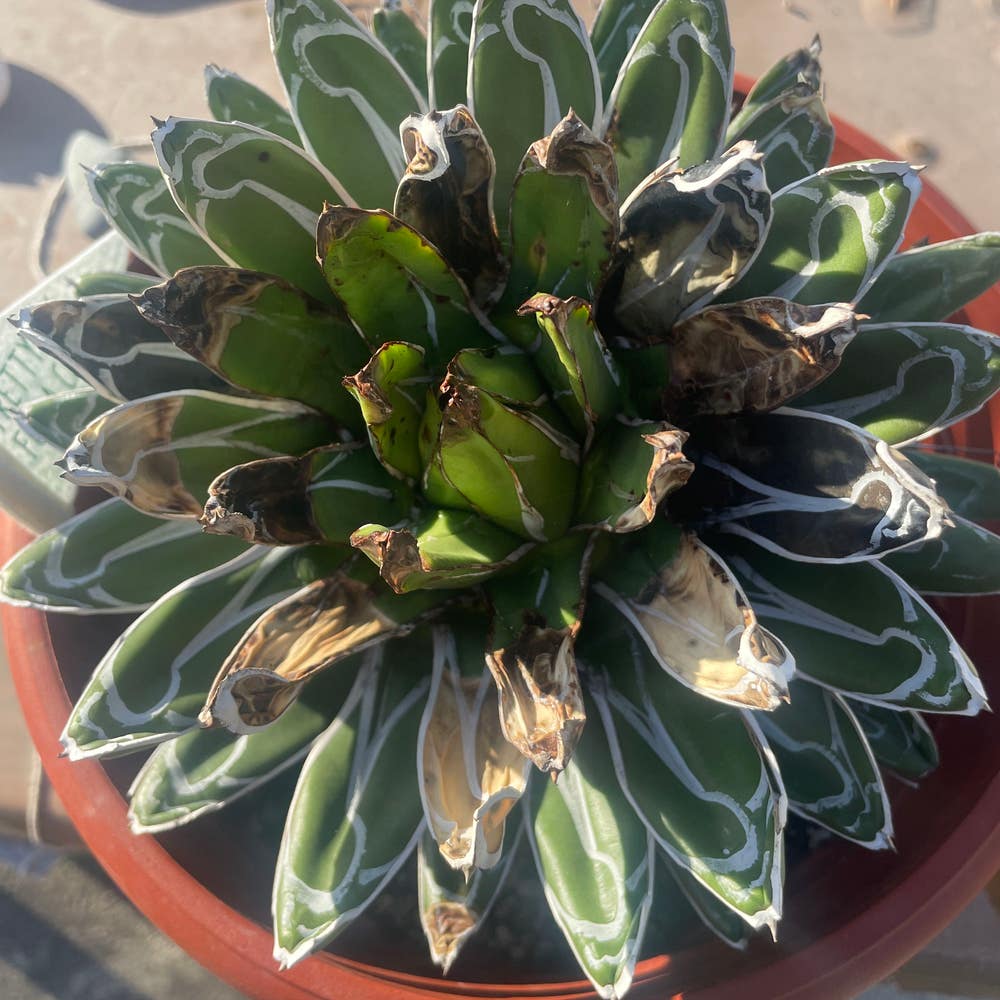
Despite their love for sunlight, Queen Victoria Agaves can suffer from too much of a good thing. Midday sun during the peak of summer can be particularly brutal, leading to leaf burn. To protect your Agave, consider providing light shade during the hottest part of the day, especially in regions where temperatures soar.
Adapting to your local climate is key. In hotter regions, a bit of afternoon shade will help prevent stress, while in cooler areas, your Agave may handle more sun exposure without issue. Adjust your plant's location seasonally to avoid the extremes of summer heat or winter cold.

Section

Light's Green Light for Flowering
🌼 Mature Agave's Blooming Ambitions
Age and light are the power couple behind the Queen Victoria Agave's flowering. These plants are marathon runners, not sprinters, often waiting a decade or more before they show off their blooms. When they do, it's a grand finale, as flowering typically signals the end of the agave's life cycle.
Seasonal light changes play a crucial role in this process. As days lengthen in spring and summer, the increased light intensity and duration can trigger the agave's blooming cycle. It's nature's way of saying, 'It's showtime!'
📅 Seasonal Light and Blooming Cycles
The blooming cycle of the Queen Victoria Agave is a calendar event, with yellow and green flowers making their debut from spring to summer. These are the seasons when your agave will soak up the sun's rays like a tourist on a beach holiday, using the extra daylight to prep for its final spectacular display.
To ensure your agave gets the memo that it's time to bloom, mimic these natural light conditions as closely as possible. If you're growing indoors, this might mean adjusting the exposure or even supplementing with grow lights to simulate those long, sunny days.

Supplementing Sunshine: Grow Lights
💡 Choosing Your Indoor Sun
Grow lights are the next best thing when the sun's rays are MIA. LED lights are the energy-efficient darlings of the indoor gardening world, with a spectrum that's close to natural sunlight. Fluorescent lights, on the other hand, are the old guard—less energy-efficient but easier on the wallet. Both can emit Agave-friendly wavelengths, but LEDs are particularly good for their low heat output.
💡 Positioning and Timing
Getting the position right is key—too close and you risk a crispy Agave; too far and it's like sunbathing on a cloudy day. Aim for a sweet spot about 6 to 12 inches from the plant. As for timing, think of grow lights as the sun's stunt double. Keep them on for 14-16 hours a day to mimic those long summer days, and your Agave won't know the difference.
💡 Grow Light Do's and Don'ts
Intensity and duration need to be just right. Too much of a good thing can lead to an Agave sunburn, and nobody wants that. Use a timer to automate the light cycle, because let's face it, we're all prone to forgetfulness.
💡 Avoiding Common Grow Light Pitfalls
Ensure your Agave thrives by avoiding the rookie mistake of inconsistent lighting. Rotate your plant regularly to promote even growth. Remember, grow lights are a supplement, not a replacement for good ol' sunlight, so whenever possible, give your Agave some time outdoors.
⚠️ Safety First
This content is for general information and may contain errors, omissions, or outdated details. It is not medical, veterinary advice, or an endorsement of therapeutic claims.
Always consult a qualified healthcare professional before using any plant as food, medicine, or supplement.
Never eat any plant (or feed one to pets) without confirming its identity with at least two trusted sources.
If you suspect poisoning, call Poison Control (800) 222-1222, the Pet Poison Helpline (800) 213-6680, or your local emergency service immediately.
Spotted an error? Please report it here.
With Greg's custom reminders ⏲, you'll never miss the perfect light for your Queen Victoria Agave, ensuring it's primed for that spectacular decade-in-the-making bloom.