💧 How Often Should I Water My Queen Victoria Agave?
Agave victoriae-reginae
By the Greg Editorial Team
Jun 18, 2024•3 min read
This article was created with the help of AI so we can cover more plants for you. May contain errors. See one? Report it here.
- Seasonal watering is key: more in summer, less in winter.
- 🌵 Watch for signs: Wrinkled leaves mean underwatering, yellow leaves mean overwatering.
- Drench and dry method: Use filtered or rainwater for best results.
When to Water Your Queen Victoria Agave
💦 Seasonal Watering Adjustments
In the summer heat, your Queen Victoria Agave is as active as a bee. It's the prime time for growth, so water it every two weeks. When the chill of winter sets in, this desert native prefers a more minimalist approach—once a month should suffice.
Growth Cycle Considerations
During the active growth phase, your Agave's thirst ramps up. Keep the soil from becoming bone-dry. Conversely, when it hits a dormant period, it's like the plant is meditating—disturb it as little as possible with watering.

Recognizing Your Agave's Thirst
💧 Telltale Signs of Underwatering
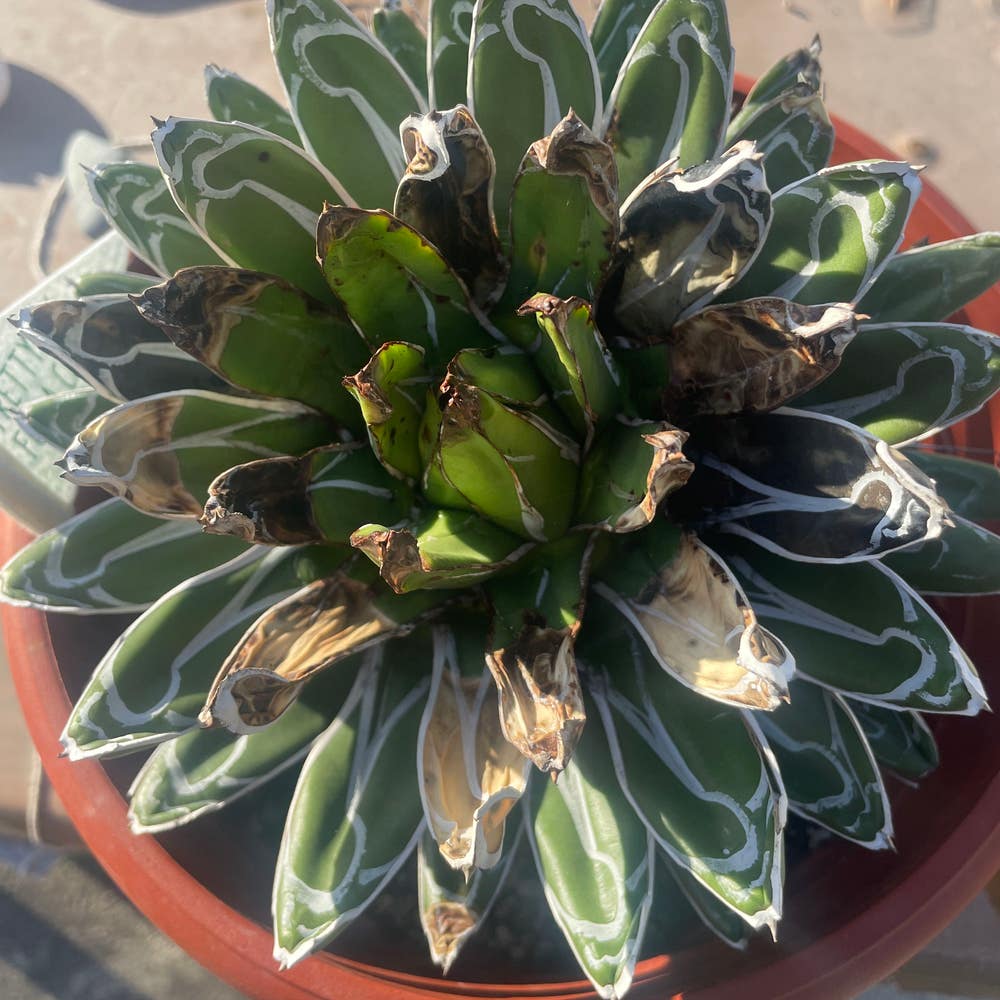
Dry, wrinkled leaves are your Queen Victoria Agave's cry for help. If the leaves look more like crumpled paper than firm, succulent blades, it's time to quench its thirst. The soil should also be a tell; if it's as dry as a bone two inches down, your agave is parched.
💦 Overwatering Warnings
Yellowing leaves are a red flag for overwatering. They may feel mushy, like an overripe fruit, signaling that you've been too generous with the H2O. If the base of your agave is soft or black, root rot has likely set in. This is a critical state; overwatered agaves can go from lush to mush if not addressed promptly.

Watering Techniques for a Happy Agave
💧 The Right Way to Water
Drench and dry—that's the mantra for watering your Queen Victoria Agave. It's a simple concept: water the plant thoroughly, then let the soil dry out completely before the next watering. This method mimics the natural rainfall patterns the agave would experience in its native desert habitat. Soak the soil until water runs out of the drainage holes, then hold off on watering until the soil is bone-dry to the touch, at least a couple of inches down. This encourages deep root growth and prevents the dreaded root rot.
💦 Water Quality Matters
Not all water is created equal, especially when it comes to your Queen Victoria Agave. Tap water can be hard on your plant due to chemicals and salts, which can build up in the soil over time. Filtered or rainwater is the VIP treatment your agave deserves, promoting healthier growth and preventing potential mineral damage. If you can't collect rainwater, letting tap water sit out overnight before using it can help some of the chemicals evaporate. Remember, what you pour is as crucial as how often you do it.

Adapting Watering Practices
💧 Indoor vs. Outdoor Care
Navigating the watering differences between the cozy indoors and the great outdoors is like understanding two dialects of the same language. Indoors, your Queen Victoria Agave enjoys the stable climate but might resent the dry air from your AC. Outdoors, it basks in the full glory of the sun but could throw a fit during a downpour.
🌿 Environmental Factors
Pot size and soil type aren't just details—they're the life coaches of your agave's hydration routine. A snug pot in the living room means quicker drying and more frequent water dates. In contrast, a spacious outdoor setting in a terra-cotta pot might mean your watering can gathers dust for a bit longer. Local weather? It's the wildcard that keeps you on your toes—always be ready to adapt.
⚠️ Safety First
This content is for general information and may contain errors, omissions, or outdated details. It is not medical, veterinary advice, or an endorsement of therapeutic claims.
Always consult a qualified healthcare professional before using any plant as food, medicine, or supplement.
Never eat any plant (or feed one to pets) without confirming its identity with at least two trusted sources.
If you suspect poisoning, call Poison Control (800) 222-1222, the Pet Poison Helpline (800) 213-6680, or your local emergency service immediately.
Spotted an error? Please report it here.
Ensure your Queen Victoria Agave never misses a sip 💧 with Greg's custom watering reminders tailored to your plant's and home's unique conditions.