Best Soil for Queen Victoria Agave
Agave victoriae-reginae
By the Greg Editorial Team
Jun 18, 2024•4 min read
This article was created with the help of AI so we can cover more plants for you. May contain errors. See one? Report it here.
- Mold and waterlogging? Time to fix your agave's soil.
- Perfect mix: Coarse sand, perlite, peat moss, and nutrients.
- Repot in spring with a 50/50 organic-mineral blend for best results.
Spotting and Fixing Soil No-Nos
🚩 Recognizing Trouble in Paradise
- Mold on your Queen Victoria Agave's soil is a glaring red flag.
- Waterlogging is evident when the pot feels like a soaked sponge after a downpour.
🛠 Quick Fixes for Common Soil Issues
- Compacted soil needs a quick intervention. Mix in some coarse sand or perlite to loosen it up.
- Improve poor drainage by ensuring your pot has adequate drainage holes or adding a layer of gravel at the bottom.

The Dream Soil Mix for Queen Victoria Agave
💫 Key Ingredients for Success
Creating the ultimate soil mix for your Queen Victoria Agave starts with the right components. Coarse sand provides excellent drainage, preventing water from pooling around the delicate roots. Perlite steps in to keep the mix light and airy, ensuring roots can breathe easily. For a touch of moisture retention without the sogginess, peat moss is your go-to.
Balancing Act
Getting the mix just right is a delicate dance of aeration, moisture, and nutrients. Aim for a third each of potting soil, coarse sand, and perlite for a well-rounded base. Consider adding a dash of compost or worm castings for a nutrient boost. The pH should sit comfortably between 6.0 and 7.5, creating a cozy environment for your agave to thrive. Keep an eye on the texture—it should crumble like a good cookie, not clump like wet clay.

DIY Soil Mix: Your Agave's Best Friend
🌱 Crafting the Perfect Home for Your Plant
Roll up your sleeves—it's time to mix soil like a pro. Start with a clean, spacious container to avoid making a mess. Grab a trowel and follow these steps:
- Pour in 1 part all-purpose potting soil as your base.
- Add 1 part coarse sand to prevent compaction.
- Mix in 1 part perlite for that crucial aeration.
- Consider a dash of activated charcoal to keep things fresh.
- Finally, sprinkle in worm castings for a nutrient boost.
Mix thoroughly until the components are indistinguishable from one another. The result should be a loose, airy substrate that holds moisture without waterlogging.
📏 Getting the Proportions Right
The secret sauce is all in the ratios. Aim for a 50/50 blend of organic to mineral materials. Your organic components, like potting soil and worm castings, provide nutrients. The mineral parts, such as perlite and coarse sand, ensure proper drainage and aeration.
For Queen Victoria Agave, which detests soggy feet, err on the side of extra perlite. If you're in a humid region, up the ante on the sand. Remember, this isn't a cake recipe—tweaking is not just allowed; it's encouraged. Trust your instincts and adjust as needed for your environment.

When Soil Goes South: Specific Fixes for Queen Victoria Agave
🌱 Repotting with Precision
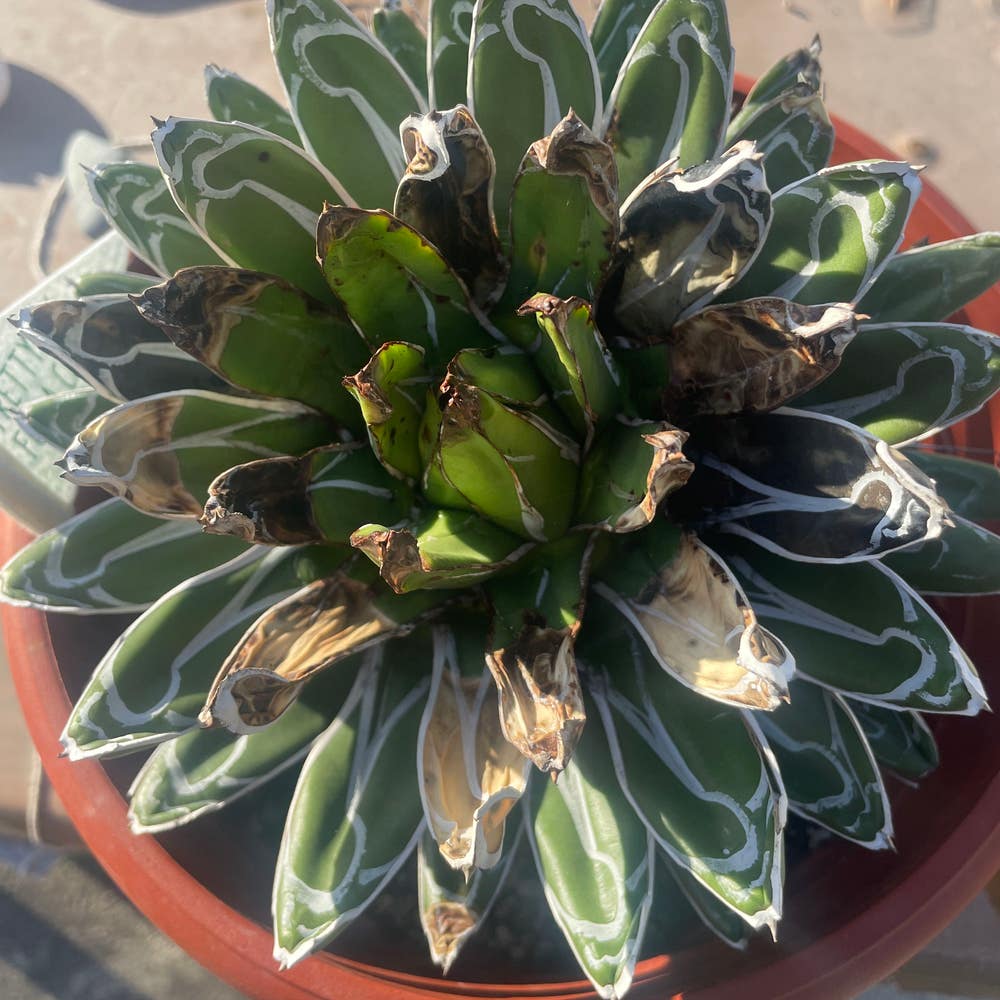
Timing is everything when it comes to repotting your Queen Victoria Agave. If you notice yellowing leaves or a plant that's more limp than a forgotten salad, it's likely screaming for a change of scenery. Springtime is your go-to season for this task, giving your plant a fresh start with the growing season ahead.
First, gently coax your agave out of its current pot, taking care not to damage its regal roots. Snip away any that look like they've seen better days—dark, mushy, or resembling something you'd find in a horror movie. Healthy roots are firm and light-colored. Treat the good ones with a fungicide to show fungi the door.
🌿 Enhancing Drainage and Aeration
Your Queen Victoria Agave's roots need to breathe—think of them as tiny lung-like structures gasping for air. To enhance drainage, mix in materials like coarse sand or perlite. These are the VIPs of the soil world, creating air pockets and making the soil as welcoming as a luxury resort for your plant's roots.
Remember, it's not just about throwing in the good stuff and hoping for the best. Proportions matter. Too much of a good thing can be just as disastrous as too little. Aim for a soil mix that feels like it's on a permanent beach vacation—light, airy, and just the right amount of dry.
⚠️ Safety First
This content is for general information and may contain errors, omissions, or outdated details. It is not medical, veterinary advice, or an endorsement of therapeutic claims.
Always consult a qualified healthcare professional before using any plant as food, medicine, or supplement.
Never eat any plant (or feed one to pets) without confirming its identity with at least two trusted sources.
If you suspect poisoning, call Poison Control (800) 222-1222, the Pet Poison Helpline (800) 213-6680, or your local emergency service immediately.
Spotted an error? Please report it here.
Create the ultimate throne for your Queen Victoria Agave with a soil mix fit for royalty, and let Greg's soil moisture reminders 🏰 keep your plant's kingdom prosperous.