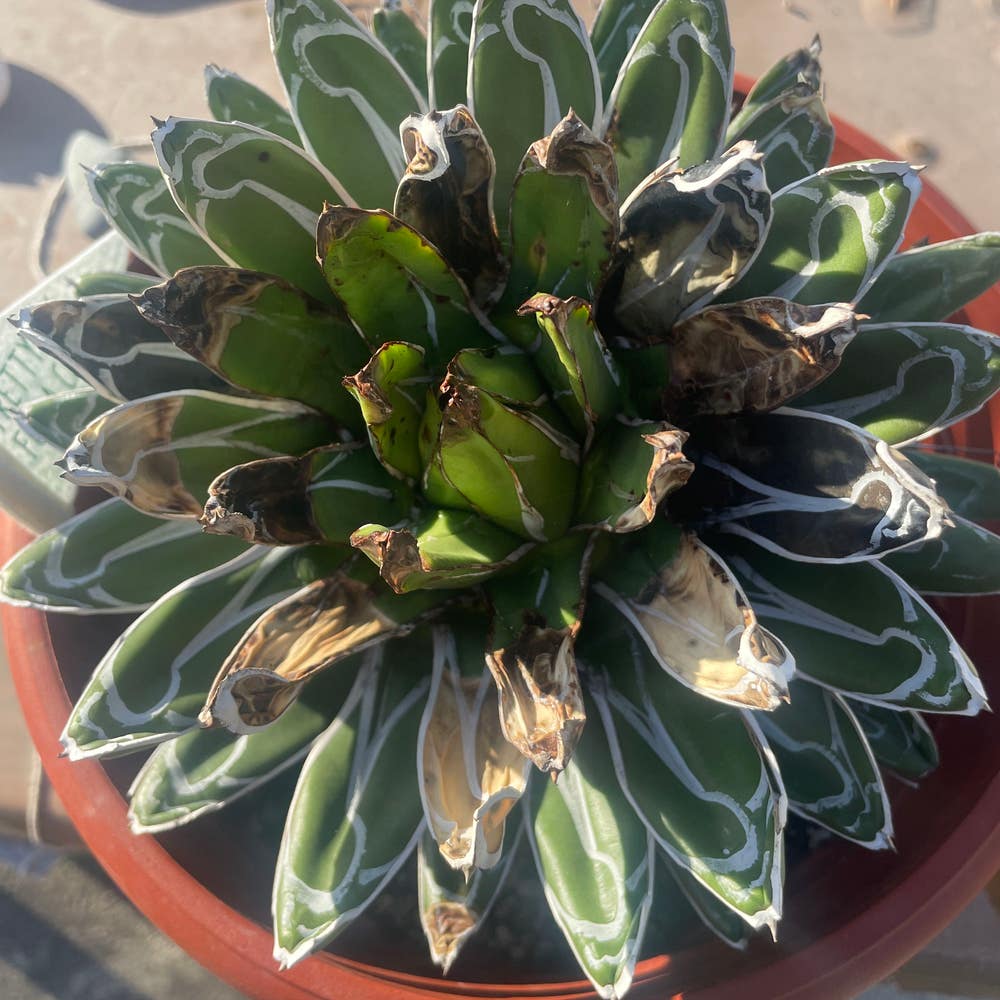
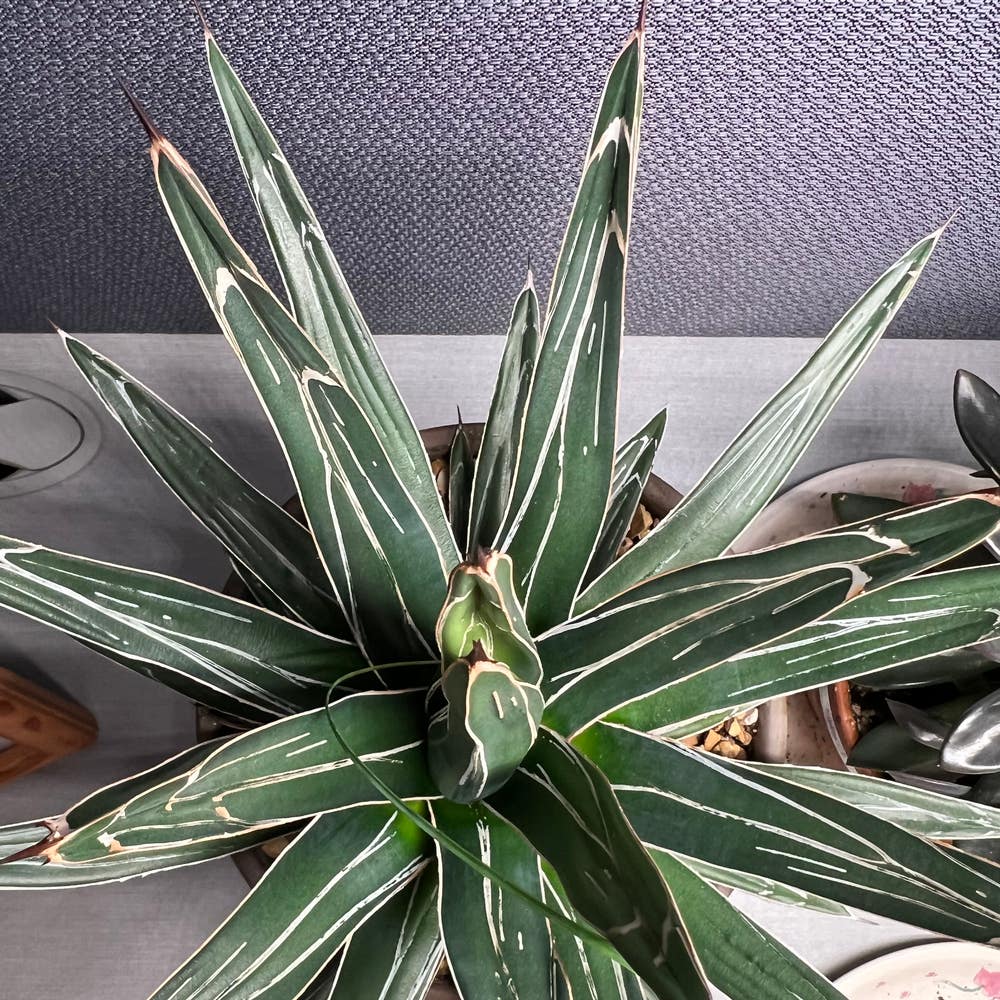
Why Are There Black Spots on My Queen Victoria Agave Leaves?
Agave victoriae-reginae
By the Greg Editorial Team
Jun 18, 2024•3 min read
This article was created with the help of AI so we can cover more plants for you. May contain errors. See one? Report it here.
- Fungal infections cause black spots, distinguishable from bacterial or physical damage.
- 🌞 Sunburn and scratches can also lead to black spots on leaves.
- Choose the right fungicide and apply consistently for effective treatment.
Spotting the Culprits: Common Causes of Black Spots
🍄 Fungal Foes: Identifying Signs of Fungal Infections
Black spots on Queen Victoria Agave leaves often scream fungal infection. Look for telltale signs like powdery or crusty textures, sometimes with a side of concentric rings. These spots aren't just chilling on the surface; they're feasting on your plant.
Differentiating these fungal signatures from other issues is key. Unlike bacterial spots that come off as slimy, fungal spots are the dry, flaky kind. If you're seeing a fungal fiesta, it's time to crash it.
☀️ Sunburn and Scratches: Physical Causes of Black Spots
Sunburn can fake black spots like a bad spray tan. They're typically uneven, found on sun-facing sides, and might come with crispy leaf tips. Think of these as your plant's cry for less light or a plea for some shade.
Scratches and pest damage are the more straightforward culprits. These spots are flat, like a bruise, and won't spread like a gossip in a small town. If your plant's been in a scuffle, you'll know – the evidence is more physical than mysterious.

Section

The Treatment Plan: Combating Fungal Infections
🌿 Choosing the Right Fungicide
When your Queen Victoria Agave is under fungal siege, choosing the right fungicide is like picking the best armor for battle. You've got two main camps: chemical and natural. On the chemical front, tebuconazole and triticonazole are like the elite troops, highly effective against a range of fungal foes. For those leaning towards Mother Nature's cabinet, neem oil and baking soda concoctions are the trusty sidekicks. Remember, not all fungicides play nice with every plant, so do your homework and check compatibility.
🎯 Application Techniques
Now, let's talk application. Think of it as a covert operation—precision is key. Cover every leaf, top to bottom, like you're on a stealth mission to leave no spot untouched. Timing is critical; consistency wins the war. Follow the label's schedule like it's your battle rhythm, usually every 7 to 14 days. Avoid spraying during a heatwave; fungicides and high temperatures are like oil and water. And gear up—safety equipment isn't optional. It's your shield in this garden skirmish.

Prevention is Key: Long-Term Strategies
💧 Watering Wisdom: Avoiding Excess Moisture
Let's talk watering—it's a simple act that can make or break your Queen Victoria Agave. Overwatering is the silent killer in the plant world, leading to root rot and those dreaded black spots. Here's the deal: only water when the soil feels like a dry handshake, not a wet fish. If the top inch is dry, give it a drink with room temperature water. Think of it as a thirst quencher, not a flood.
🌬 Circulation and Care: Creating an Ideal Environment
Airflow is like a breath of fresh air for your plant's health. It's about finding that sweet spot where the air can do a gentle tango around the leaves. Position your agave where it can enjoy a light breeze, but dodge those harsh drafts. And humidity? Keep it balanced—too much feels like a sauna, too little like a desert. Use a pebble tray or misting to get that just-right humidity vibe. Remember, a happy plant is a spot-free plant.
⚠️ Safety First
This content is for general information and may contain errors, omissions, or outdated details. It is not medical, veterinary advice, or an endorsement of therapeutic claims.
Always consult a qualified healthcare professional before using any plant as food, medicine, or supplement.
Never eat any plant (or feed one to pets) without confirming its identity with at least two trusted sources.
If you suspect poisoning, call Poison Control (800) 222-1222, the Pet Poison Helpline (800) 213-6680, or your local emergency service immediately.
Spotted an error? Please report it here.