Queen Victoria Agave Root Rot Solutions
Agave victoriae-reginae
By the Greg Editorial Team
Jun 18, 2024•4 min read
This article was created with the help of AI so we can cover more plants for you. May contain errors. See one? Report it here.
- Yellow leaves and mushy roots signal Queen Victoria Agave root rot.
- Prune rot, repot in well-draining soil, and adjust watering post-treatment.
- Prevent with proper pots, soil, and balanced sunlight, airflow, and humidity.
Spotting the Red Flags: Symptoms of Root Rot
🚨 Visual Distress Signals
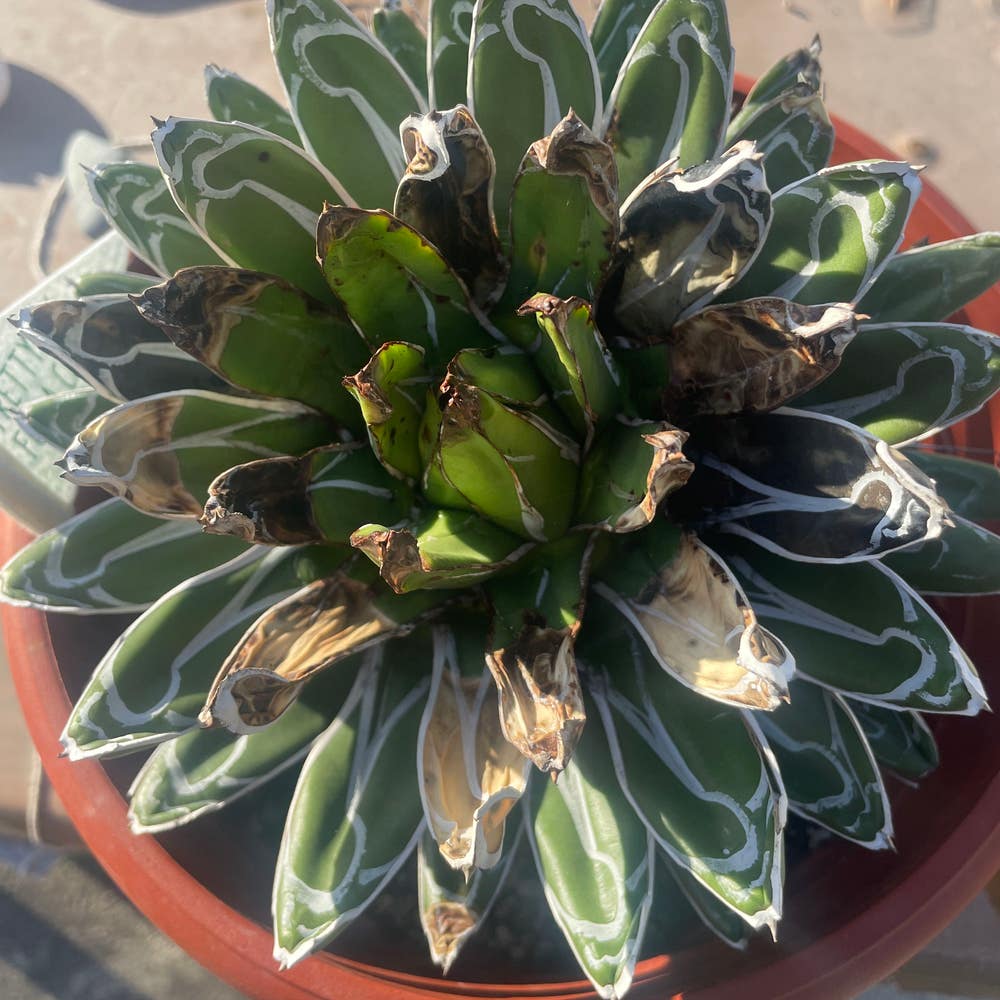
Yellowing leaves are not a new trend in plant fashion; they're a distress signal from your Queen Victoria Agave. When the vibrant greens fade to sickly yellows, it's time to pay attention to the plant's root health.
Mushy roots and a stench from the soil are the plant's equivalent of an S.O.S. flare. These symptoms are clear indicators that root rot has taken hold and immediate action is required.
🕵️ Beyond the Surface
To inspect the roots, you'll need to play detective. Gently remove the plant from its pot, being careful not to cause additional stress or damage.
Healthy roots should be firm and white, like a fresh piece of string cheese, not brown and mushy like overripe fruit. If the roots are soft and discolored, it's time for a serious intervention.

Immediate Rescue: Treating Root Rot
🏥 Surgical Precision
Root rot in your Queen Victoria Agave is like a silent alarm—it needs immediate action. Sterilize your scissors or shears; this is surgery, not a craft project. Gently remove the plant from its pot and wash the roots under running water. Now, channel your inner surgeon and trim away the rotten, mushy parts until you see healthy, white roots. It's a no-nonsense haircut that could save its life.
🌱 Fresh Start with Soil
Once the bad roots are history, it's time for a fresh start. Grab some well-draining soil—think of it as the ICU for your plant's roots. Repot your Agave, ensuring the new pot has drainage holes to avoid future waterlogging. This isn't just a change of scenery; it's a life-saving move.
🚱 Post-Op Care
After the repotting hustle, hold off on the water. Let the plant settle in its new digs before you even think about watering again. When you do, check the soil's dryness like you're testing a cake—only water when the top inch feels dry. Overwatering now is like offering a drowning man a glass of water—just don't.

Water Wisely: Adjusting Irrigation Habits
💧 Finding the Sweet Spot
Watering your Queen Victoria Agave is less about sticking to a strict schedule and more about responding to its needs. Check the soil moisture before watering—dry an inch down means it's time for a drink. In recovery, the plant is especially vulnerable, so aim for soil that's moist but never soggy.
🌿 The Right Setup
Drainage is non-negotiable—your pot should be riddled with holes to avoid waterlogging the roots. Remember, a pot that's too large will retain unnecessary moisture, so size it right. And just like a breathable pair of sneakers, ensure your plant's environment allows for good air circulation; it's crucial for a healthy recovery.

The Best Offense is a Good Defense: Prevention Strategies
🌱 Soil and Pot Mastery
Choosing the right soil mix and pot is like picking the best armor for your Queen Victoria Agave. For soil, think well-draining and airy, with a good amount of grit to mimic its natural habitat. Terra cotta pots are your go-to for breathability, and don't forget the drainage holes—these are non-negotiable. Regularly check to ensure they're not clogged; it's like keeping the emergency exits clear in a crowded theater.
🌞 Environmental Harmony
Your Queen Victoria Agave craves sunlight but not the scorch of the midday sun. Position it to bask in the morning light, and give it some shade when the sun gets too intense. Airflow is crucial; stagnant air is the enemy. Indoors, a fan on low can keep the air moving, while outdoors, a spot with natural breezes is ideal. As for humidity, strike a balance—too much invites pests and diseases, too little and your agave might stress. It's like setting the thermostat to a comfortable 70 degrees; it's all about finding that sweet spot.
⚠️ Safety First
This content is for general information and may contain errors, omissions, or outdated details. It is not medical, veterinary advice, or an endorsement of therapeutic claims.
Always consult a qualified healthcare professional before using any plant as food, medicine, or supplement.
Never eat any plant (or feed one to pets) without confirming its identity with at least two trusted sources.
If you suspect poisoning, call Poison Control (800) 222-1222, the Pet Poison Helpline (800) 213-6680, or your local emergency service immediately.
Spotted an error? Please report it here.
Prevent root rot 🛑 in your Queen Victoria Agave by using Greg to tailor the perfect dry-out period and pot environment, just like the pros in this guide.