💧 Why Are My Queen Victoria Agave Leaves Mushy?
Agave victoriae-reginae
By the Greg Editorial Team
Jun 18, 2024•5 min read
This article was created with the help of AI so we can cover more plants for you. May contain errors. See one? Report it here.
- Mushy leaves mean trouble; act fast to prevent plant loss.
- 🌧️ Overwatering is the main cause; adjust watering and drainage.
- Prune and choose well-draining soil to maintain plant health.
Spotting the Trouble: Signs of Mushy Leaves
🍂 Visual Cues: The Look of a Mushy Leaf
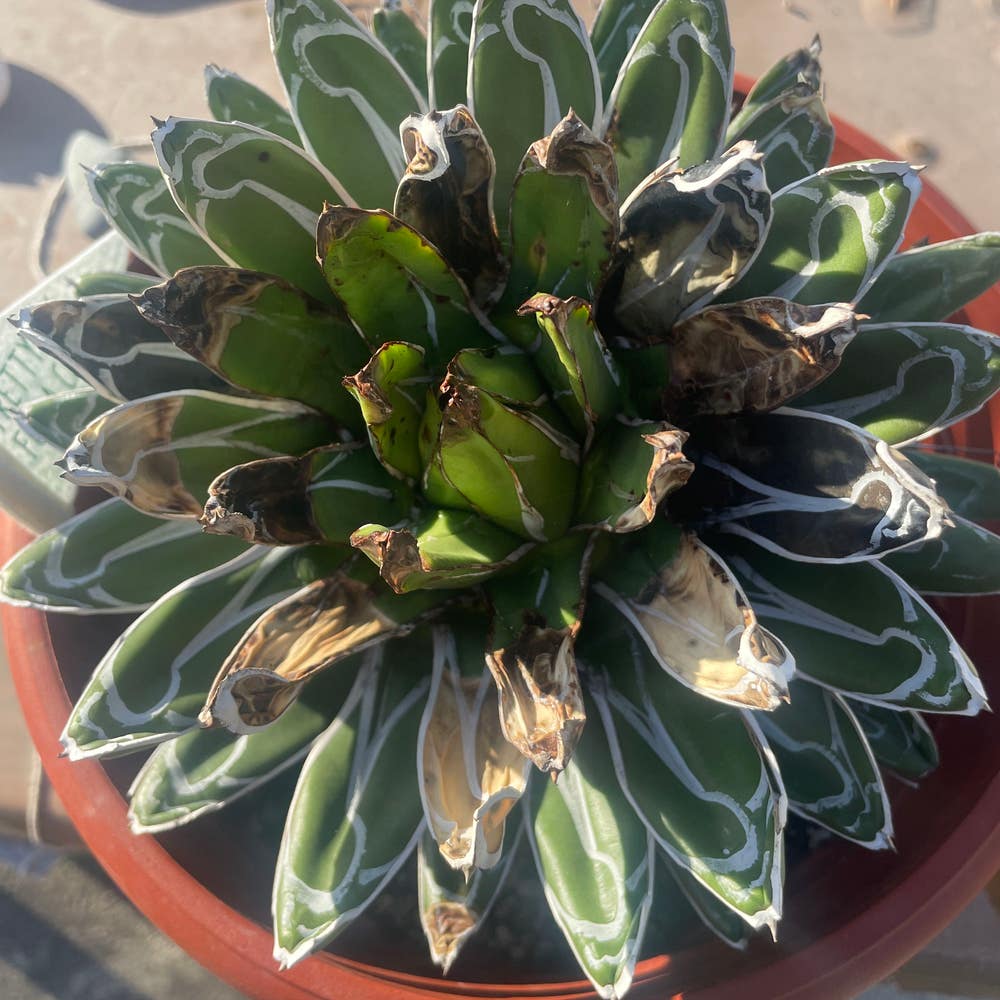
Mushy leaves on your Queen Victoria Agave are alarm bells. They may turn a pale yellow or brown, like a plant's cry for help. Leaves that resemble overcooked vegetables are a clear sign of trouble. If they fall off with no resistance, it's time to act.
🕵️ Beyond the Surface: Other Symptoms to Watch For
Squishiness under gentle pressure is a no-go. A healthy leaf should have resilience, not feel like a damp sponge. Dark spots or a wilted appearance are your plant's way of waving a white flag. Don't overlook a moldy smell or soil that stays wet for days—these are telltale signs of overwatering. And remember, roots should not resemble the aftermath of a horror movie. If they're mushy and brown, root rot is likely at play.
🚩 Immediate Red Flags
When leaves feel like a marshmallow, it's intervention time. A gentle squeeze should not result in a squish. If it does, your plant is sending an SOS. Also, keep an eye out for pests, they're not just a nuisance—they can turn leaves to mush and leave behind a fluffy white mess.
🌡️ Environmental Checks
Light and temperature are more than just small talk for plants; they're critical. Too much direct light or exposure to cold can stress your plant, leading to mushiness. Leaves that droop or curl are trying to conserve energy, a sign that your plant could be in trouble.
🔍 Early Detection
Regular inspection is key. Catching mushy leaves early is like catching a problem before it escalates. Addressing issues promptly can save your plant from further damage. When in doubt, think like a detective and look for clues in the plant's environment that could contribute to the issue. Your plant's life might depend on your sleuthing skills.

The Usual Suspects: Identifying Causes of Mushiness
💦 Overwatering Woes: Connecting the Dots Between Water and Mush
Overwatering is like a love letter gone wrong; it's the most common misstep leading to your Queen Victoria Agave's mushy leaves. Roots need to breathe, and too much water is like stuffing the mailbox until it bursts. If the soil feels more like a wet sponge than a dry desert, it's time to reassess your watering habits.
🌱 Root Rot: Unearthing the Hidden Culprit
Root rot is the silent horror lurking beneath the soil. It turns robust roots into a mushy mess, often accompanied by a musty odor of decay. This is the plant's SOS signal, and it's usually a direct result of overwatering. If you find roots that resemble overcooked spaghetti, it's time to act fast.
🕳️ Drainage Dilemmas: How Water Retention Can Spell Disaster
Proper drainage is as crucial as the watering itself. Without it, you're basically giving your plant a one-way ticket to Soggy Town. Check for adequate drainage holes and consider a soil amendment with perlite or coarse sand to keep the roots from drowning in excess moisture.

Turning the Tide: Immediate Actions to Take
🚱 Stop the Soak: Adjusting Your Watering Routine
Your Queen Victoria Agave is drowning in excess love. Check the soil before watering; it should feel moist, not soggy. Overwatering is like giving your plant a pair of concrete shoes—it's not going to swim out of that situation. So, let the soil dry out a bit between waterings. Remember, this isn't a cactus's spa day; it's a survival strategy.
🪓 Cut the Rot: Pruning Strategies for Damaged Leaves
When it comes to mushy leaves, it's time to play surgeon. Snip off the damaged parts with sterilized scissors—think of it as removing zombie flesh to save the rest of the body. Clean your tools after each cut to prevent spreading any infection. It's like a plant apocalypse, and you're the hero with the cure.

Long-Term Love: Preventing Future Mushiness
💧 Soil Solutions: Choosing the Right Mix for Health and Drainage
To prevent your Queen Victoria Agave from turning into a mushy mess, soil choice is paramount. Opt for a well-draining mix, akin to a breathable cotton tee for roots. A combination of perlite or coarse sand can keep the soil aerated, ensuring that water flows through rather than pooling. Consider a layer of pebbles at the pot's base for extra drainage, like a mini drainage system.
🌡️ Perfecting the Environment: Ensuring the Right Humidity and Temperature
Airflow is crucial. Keep the air moving around your plant; a gentle fan can prevent a fungal free-for-all. Watering wisdom is simple: check the soil's dampness before watering. Use a moisture meter for precision, and water deeply but infrequently to encourage strong root growth.
💦 Humidity Control
Balance is key in humidity levels. Aim for the Goldilocks zone—not too moist, not too dry. A pebble tray or humidifier can assist, but avoid creating a soggy atmosphere. Monitor with a hygrometer and thermometer to maintain stable conditions, because consistency is as important to plants as routine is to a dog.
🍂 Seasonal Awareness
Be mindful of seasonal shifts. Dial back watering in cooler months and increase as temperatures rise. This isn't just about being weather-aware; it's about syncing with your plant's natural rhythms for optimal health.
✂️ Pruning and Maintenance
Regularly prune any mushy leaves to prevent the spread of decay. Keep the foliage dry, steering clear of the splash zone. Remember, a well-cared-for Queen Victoria Agave is less susceptible to issues, so give it the love it deserves.
⚠️ Safety First
This content is for general information and may contain errors, omissions, or outdated details. It is not medical, veterinary advice, or an endorsement of therapeutic claims.
Always consult a qualified healthcare professional before using any plant as food, medicine, or supplement.
Never eat any plant (or feed one to pets) without confirming its identity with at least two trusted sources.
If you suspect poisoning, call Poison Control (800) 222-1222, the Pet Poison Helpline (800) 213-6680, or your local emergency service immediately.
Spotted an error? Please report it here.
Avoid the mush and keep your Queen Victoria Agave thriving 🌵 by using Greg to tailor your watering schedule and prevent overwatering woes!