Queen Victoria Agave - Ultimate Guide to Fertilizing
Agave victoriae-reginae
By the Greg Editorial Team
Jun 18, 2024•4 min read
This article was created with the help of AI so we can cover more plants for you. May contain errors. See one? Report it here.
- Organic vs. Synthetic: Choose based on your agave's needs and your convenience.
- Balanced N-P-K ratio (10-10-10 or 20-20-20) recommended for optimal health.
- Fertilize cautiously: Over-fertilization can damage your agave, less is more.
Picking the Right Fertilizer for Your Queen Victoria Agave
💡 Organic vs. Synthetic: Which Way to Go?
When it comes to nourishing your Queen Victoria Agave, you're faced with the classic garden conundrum: organic or synthetic fertilizers? Organic options are like a slow-cooked meal for your plant, releasing nutrients as they break down. They're kinder to the environment and improve soil health over time. Synthetic fertilizers, however, are the fast food of the plant world—quick, convenient, and packed with nutrients. But beware, they can lead to nutrient burn if not used sparingly.
🌱 N-P-K Ratios: Understanding the Numbers
The N-P-K ratio on fertilizer labels is like a plant's dietary label. For Queen Victoria Agave, a balanced 10-10-10 or 20-20-20 ratio works wonders, supporting overall health without promoting excessive growth. Nitrogen (N) keeps the leaves green, Phosphorus (P) is essential for root health, and Potassium (K) is the all-rounder, keeping the plant's functions in check.
🌿 Micronutrients Matter Too
While N-P-K is the main event, micronutrients are the unsung heroes for your agave's well-being. These include elements like calcium, magnesium, and sulfur. They might not get top billing, but they're crucial for the plant's vitality. So, when picking your fertilizer, make sure it's a feature-rich ensemble, not just a one-hit wonder.

Timing is Everything: When to Fertilize
⏰ Growth Spurts: Fertilizing During Active Growth
Identifying the active growth phase of your Queen Victoria Agave is key to timing fertilization. This succulent typically enters a growth spurt in spring and summer, when it's most receptive to nutrients. During these seasons, it's best to fertilize every two to four weeks to support its growth.
❄️ Winter Slumber: Adjusting for Dormancy
As the Queen Victoria Agave slows down in winter, it's crucial to adjust your fertilization routine. Scale back to prevent issues like overgrowth that's susceptible to frost damage. This means potentially halting fertilization altogether during dormancy, as the plant conserves energy for the next cycle of growth.

Fertilizing Techniques: How to Apply Fertilizer Properly
🌱 Soil Application: Keeping it Safe
Apply fertilizer to moist soil to prevent root burn and enhance nutrient absorption. Never mix it directly into the planting hole; instead, spread it around the base. Water your plant before and after applying fertilizer to distribute nutrients and avoid salt buildup.
💧 Dilution Solutions: Getting the Mix Right
For liquid fertilizers, dilution is non-negotiable. Use a measuring syringe for precision, and adhere to the product's dilution instructions. If you're unsure, err on the side of caution and dilute more. A half-strength mix is often ideal for slower-growing plants or those in low light.

Avoiding the Pitfalls of Over-Fertilization
🚨 Spotting Trouble: Recognizing Over-Fertilization Symptoms
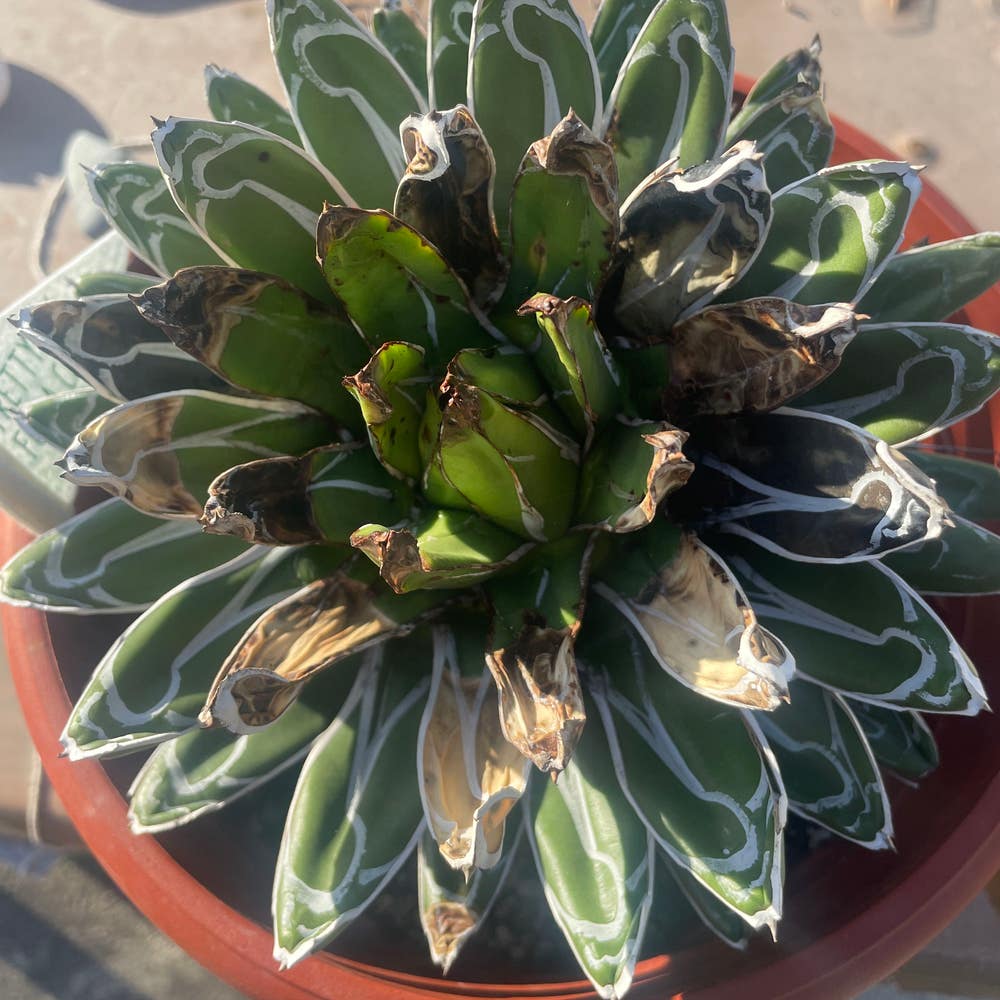
Queen Victoria Agave is as tough as they come, but even this hardy plant can suffer from too much love in the form of fertilizer. Yellowing leaves or a white, crusty layer of salt on the soil's surface are distress flares signaling over-fertilization. You might also see leaf burn, stunted growth, or wilting leaves despite wet soil. If the roots look more like they've been in a bar brawl than a bed of soil, it's time to rethink your feeding strategy.
🛠 Quick Fixes: Addressing Fertilizer Faux Pas
Caught red-handed with the fertilizer spreader? Don't panic. First, remove any visible fertilizer from the soil's surface. Then, flush the soil with water to wash away excess nutrients; think of it as a plant detox. If your plant looks like it's on its last legs, consider repotting with fresh soil. Hold off on the fertilizer until your plant has recovered—patience is a virtue, especially when it comes to plant care. Remember, prune any damaged foliage to help the plant focus on bouncing back. Keep a close eye on your green friend and resume a more conservative fertilization regimen only when it shows signs of new growth.
⚠️ Safety First
This content is for general information and may contain errors, omissions, or outdated details. It is not medical, veterinary advice, or an endorsement of therapeutic claims.
Always consult a qualified healthcare professional before using any plant as food, medicine, or supplement.
Never eat any plant (or feed one to pets) without confirming its identity with at least two trusted sources.
If you suspect poisoning, call Poison Control (800) 222-1222, the Pet Poison Helpline (800) 213-6680, or your local emergency service immediately.
Spotted an error? Please report it here.
Ensure your Queen Victoria Agave thrives with optimal fertilization 🌿 by using Greg to remind you when and how to feed your plant, avoiding common pitfalls and ensuring peak plant health.