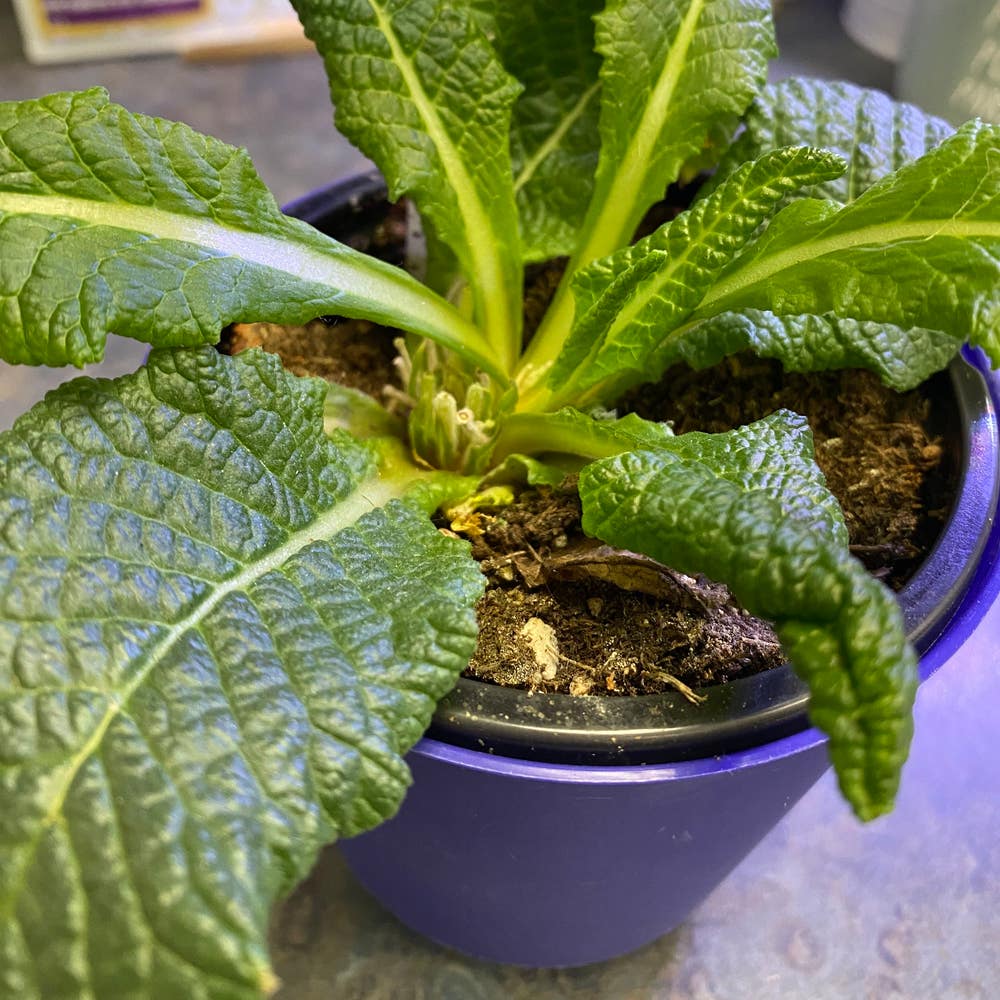
4 Tips for Healing Curling Leaves on Your Primula obconica
Primula obconica
By the Greg Editorial Team
Jan 07, 2025•6 min read
This article was created with the help of AI so we can cover more plants for you. May contain errors. See one? Report it here.
Revive your Primula obconica 🌱 by quickly diagnosing and treating those curling leaves for vibrant health!
- 💧🌱 Curling leaves result from overwatering or underwatering; adjust your watering schedule.
- 🌡️🌿 Maintain 15°C to 20°C and 50%-70% humidity for optimal Primula health.
- 🐜🔍 Regular pest inspections and treatments prevent curling leaves from infestations.
Causes of Curling Leaves
💧 Overwatering and Its Effects
Overwatering is a common issue that can lead to curling leaves on your Primula obconica. Symptoms include yellowing leaves, which often precede curling, and wilting even when the soil is wet, indicating that roots are suffocating.
Root rot is a significant risk associated with overly saturated soil, severely impacting leaf health. To prevent this, allow the top inch of soil to dry out before watering again, ensuring your plant thrives.
🚰 Underwatering and Its Symptoms
On the flip side, underwatering can also cause curling leaves. Look for dry, crispy leaf edges and inward curling, which are stress responses from the plant.
To maintain healthy foliage, establish a consistent watering schedule that provides moisture without waterlogging. Watch for signs like soil pulling away from the pot edges, indicating dryness.
🐜 Pest Infestations
Common Pests
Pests can wreak havoc on your Primula obconica, leading to curling leaves. Aphids are a common culprit, leaving a sticky residue on leaves and causing distorted growth.
To treat aphid infestations, use insecticidal soap or neem oil. Spider mites are another concern, identifiable by fine webbing and stippled leaves. Increasing humidity and applying miticides can help control these pests effectively.
🌡️ Environmental Stress Factors
Environmental conditions play a crucial role in leaf health. Primula obconica prefers a temperature range of 15°C to 20°C (59°F to 68°F). Extreme temperatures can cause leaves to curl or drop.
Humidity is equally important, with preferred levels between 50% to 70%. Low humidity can lead to dry air, resulting in leaf curling and browning. Maintaining these conditions is essential for a healthy plant.
Diagnosing Leaf Curl Issues
🌊 Identifying Signs of Overwatering
To diagnose overwatering, start by checking for soggy soil. A moisture meter or simple finger test can help you determine if the soil is overly saturated.
Next, inspect the roots for health. Gently remove the plant from its pot and look for any signs of rot, which can severely impact your Primula obconica's overall health.
💧 Recognizing Signs of Underwatering
Underwatering can be identified by assessing the leaf texture. Healthy leaves should feel firm and plump, while dry, crispy edges indicate stress.
Additionally, examine the soil condition. If it feels dry and compacted, it's a clear sign that your plant needs more water.
🐛 Checking for Pests and Their Damage
A visual inspection is crucial for identifying pest infestations. Look closely at the undersides of leaves and along stems for any unwanted visitors.
Also, assess any damage to the leaves. Discoloration or deformation can signal that pests are affecting your plant's health.
🌡️ Assessing Environmental Conditions
Monitoring temperature is essential for your plant's well-being. Use a thermometer to ensure it stays within the ideal range of 15°C to 20°C (59°F to 68°F).
Finally, check humidity levels around your Primula obconica. A hygrometer can help you measure humidity, ensuring it stays within the preferred 50% to 70% range.
By diagnosing these issues, you can take the necessary steps to restore your plant's health and prevent further leaf curling.
Treating Curling Leaves
Adjusting Watering Practices 🌊
Establish a consistent watering schedule: Water your Primula obconica when the top inch of soil feels dry. This helps prevent both overwatering and underwatering, which can lead to curling leaves.
Implement proper drainage: Ensure your pots have drainage holes. This prevents water accumulation, which is crucial for maintaining healthy roots.
Pest Control Methods 🐞
Organic Options
Neem oil: This natural pesticide can be applied every 7-14 days until pests are under control. It's effective and safe for your plant.
Insecticidal soap: Spray this directly on affected areas to eliminate pests. It’s a straightforward solution that can make a big difference.
Chemical Options
- Systemic insecticides: Use these as a last resort for severe infestations. They can be effective but should be handled with care.
Improving Humidity Levels 💧
Increase humidity: Consider using a humidifier in the room. This creates a more favorable environment for your Primula obconica.
Group plants together: This helps create a microclimate with higher humidity. It’s a simple trick that can enhance the health of your plants.
Misting: Lightly mist the leaves in the morning to boost humidity. This can provide immediate relief to stressed plants.
Soil Amendments and Drainage Solutions 🪴
Use well-draining potting mix: A recommended mix includes peat moss, perlite, and vermiculite. This combination ensures that your plant’s roots have the right environment to thrive.
Repot if necessary: If you suspect root rot, repot your Primula obconica in fresh soil. This can rejuvenate your plant and help it recover.
By addressing watering practices, pest control, humidity, and soil conditions, you can effectively treat curling leaves on your Primula obconica. These steps not only resolve current issues but also set the stage for healthier growth in the future.
Preventing Future Leaf Curl
🌊 Best Practices for Watering
To keep your Primula obconica thriving, establish a consistent watering schedule based on soil moisture. Always check the top inch of soil; if it feels dry, it's time to water.
Avoid letting your plant sit in water, as this can lead to root rot. Proper drainage is essential for healthy roots and leaves.
🐞 Regular Pest Inspections
Conduct weekly checks for pests, especially during the growing season. Early detection can save your plant from severe damage.
Using sticky traps is a smart way to monitor pest populations. These traps can help you catch infestations before they escalate.
🌱 Optimal Environmental Conditions for Growth
Maintaining stable temperatures and humidity levels is crucial for your plant's health. Aim for a temperature range of 15°C to 20°C (59°F to 68°F) and humidity levels between 50% and 70%.
Avoid placing your Primula near drafts or heat sources. These environmental stressors can lead to curling leaves and other issues.
🌿 Fertilization Tips to Promote Healthy Foliage
Use a balanced, water-soluble fertilizer to nourish your plant. Fertilizing every 4-6 weeks during the growing season will support robust growth.
Always dilute fertilizer to half-strength to avoid burning the roots. This simple step can make a significant difference in your plant's overall health.
By following these preventive measures, you can help your Primula obconica flourish and avoid the frustration of curling leaves. Next, let’s explore how to treat any curling leaves that may already be present.
⚠️ Safety First
This content is for general information and may contain errors, omissions, or outdated details. It is not medical, veterinary advice, or an endorsement of therapeutic claims.
Always consult a qualified healthcare professional before using any plant as food, medicine, or supplement.
Never eat any plant (or feed one to pets) without confirming its identity with at least two trusted sources.
If you suspect poisoning, call Poison Control (800) 222-1222, the Pet Poison Helpline (800) 213-6680, or your local emergency service immediately.
Spotted an error? Please report it here.
Keep your Primula obconica's leaves curl-free and thriving 🌱 by using Greg's tailored watering schedules and pest alerts to create the perfect environment for your plant!