Why Does My Philodendron melinonii Have Yellow Leaves?
Philodendron melinonii
By the Greg Editorial Team
Jun 18, 2024•5 min read
This article was created with the help of AI so we can cover more plants for you. May contain errors. See one? Report it here.
Banish yellow leaves 🍂 and restore your Philodendron melinonii to its lush green glory with expert care secrets!
- 💧 Water wisely: Over/underwatering causes yellow leaves; check top inch of soil.
- ☀️ Bright, indirect light: Too much or too little sun leads to yellowing.
- 🌱 Nutrients matter: Use balanced fertilizer; watch for deficiency signs.
When Water Gets Tricky: Balancing Hydration for Your Philodendron
🚰 Spotting the Signs of Water Woes
Yellow leaves on your Philodendron melinonii can be a red flag for watering issues. Overwatering often leads to leaves that feel as limp as overcooked noodles, while underwatering results in foliage that droops sadly. If the soil feels like a wet sponge, you've gone too far; if it's as dry as a bone, it's time to grab the watering can.
🚰 Fine-Tuning Your Watering Routine
Adjusting your watering routine is essential to prevent and fix yellow leaves. Consistency is your best friend here. Forget the calendar; let the top inch of soil be your guide—if it's dry, it's time to water. If it's damp, give it a break. Self-watering systems can be a lifesaver, providing a steady moisture level without the fuss. And remember, water at the base to prevent unwanted leaf parties for fungi.

Let There Be Light (But Not Too Much!)
💡 Reading the Leaves: Light-Related Yellowing
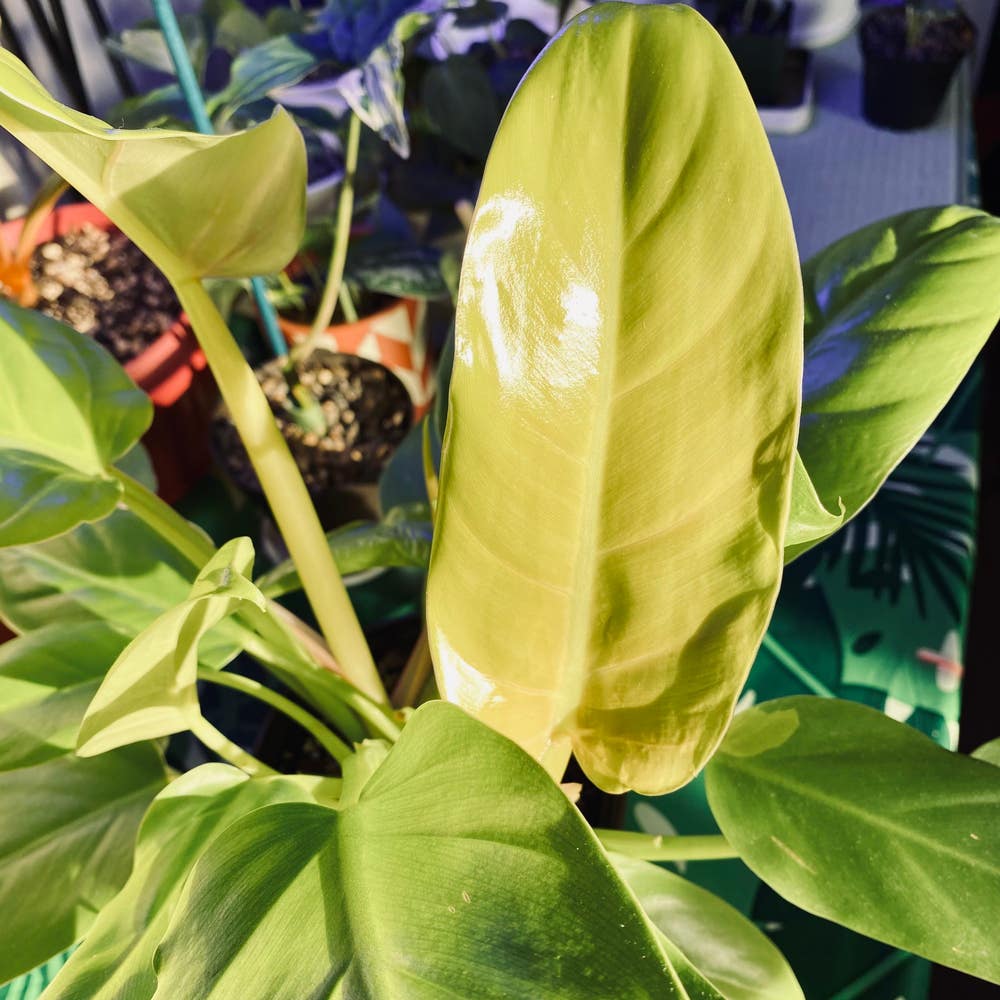
Philodendron melinonii leaves turning yellow? Lighting could be the culprit. If leaves are reaching out like they're begging for sunlight, they're not getting enough. Conversely, leaves that look bleached or have a crispy edge are likely getting too much direct sun.
💡 Finding the Sweet Spot for Sunlight
To prevent your Philodendron from throwing a leafy tantrum, aim for bright indirect light. A spot where you can read comfortably without artificial lighting is usually a good bet. Use sheer curtains to diffuse strong rays if necessary. Remember, the plant's location might need adjusting with the changing seasons to maintain the ideal light balance.

Feeding Your Philodendron: A Nutrient Balancing Act
💡 The Telltale Signs of Nutrient Needs
Yellow leaves on your Philodendron melinonii might as well be flashing neon signs for nutrient deficiency. If the lower leaves are turning yellow, your green buddy could be low on nitrogen. Dark spots? It's crying out for phosphorus. And if the leaves are yellow but the veins are still green, it's likely a case of magnesium or manganese deficiency.
🍽️ Serving Up the Right Nutrients
To prevent your Philodendron from looking more malnourished than a college student's fridge, balance is key. A balanced fertilizer is like a multivitamin for your plant, and it's craving that goodness. Test your soil to ensure it's not the pH throwing a wrench in the works. Stick to a feeding schedule—once every 4-6 weeks during the growing season should do the trick.
Remember, over-fertilization is the plant equivalent of a sugar crash—too much and you'll see a white crust on the soil or leaves more burnt than toast. If you've been heavy-handed, your Philodendron will show its displeasure with browning leaf tips and a general look of despair.
To fix what's broken, you might need to amend your soil. A slightly sandy texture lets the roots breathe, and adding chelated iron might just be the pick-me-up your yellowing Philodendron needs. But don't just throw nutrients at it and hope for the best. Like a good detective, look for clues and respond with precision. Too much nitrogen, and you'll have a weak-stemmed, tip-burnt mess on your hands.
So, keep it simple. Regular soil tests, a balanced diet, and your Philodendron will be less yellow submarine and more green goddess.

The Root of the Problem: Ensuring Healthy Roots
🌱 Unraveling Root-Bound Issues
Cramped roots can strangle your Philodendron melinonii's vigor, leading to those dreaded yellow leaves. Spotting this is straightforward: roots peeking out of drainage holes, a pot that dries out faster than your phone battery, or leaves that look more tired than you feel on a Monday morning. These are all cries for help from a root-bound plant.
🌿 Repotting for Relief
Repotting isn't just about upsizing; it's about giving your Philodendron a new lease on life. Here's how to do it without causing a plant panic:
- Choose a new pot that's a couple of inches larger in diameter than the old one. Bigger isn't always better—think cozy, not cavernous.
- Prepare a well-draining potting mix. Your plant's roots despise soggy conditions as much as cats hate water.
- Gently remove the plant from its current pot. If the roots are twirling like a ballerina, it's time to untangle them with care.
- Trim any roots that look like they've seen better days—brown, mushy, or smelling like last week's compost.
- Position your Philodendron in the new pot and fill in with soil, firming gently. You're aiming for snug, not squashed.
- Water the plant to settle the roots and soil, but don't drown it. Think refreshing shower, not a flood.
- Monitor your plant post-repotting. It's normal for it to sulk for a bit, but with the right care, it'll bounce back faster than your mood on a Friday evening.
Remember, repotting is like moving to a new home for your Philodendron—it should feel like an upgrade, not an upheaval.
⚠️ Safety First
This content is for general information and may contain errors, omissions, or outdated details. It is not medical, veterinary advice, or an endorsement of therapeutic claims.
Always consult a qualified healthcare professional before using any plant as food, medicine, or supplement.
Never eat any plant (or feed one to pets) without confirming its identity with at least two trusted sources.
If you suspect poisoning, call Poison Control (800) 222-1222, the Pet Poison Helpline (800) 213-6680, or your local emergency service immediately.
Spotted an error? Please report it here.
Banish yellow leaves and ensure your Philodendron melinonii thrives with Greg's tailored care 🌱, from spot-on watering to perfect lighting reminders based on your home environment.