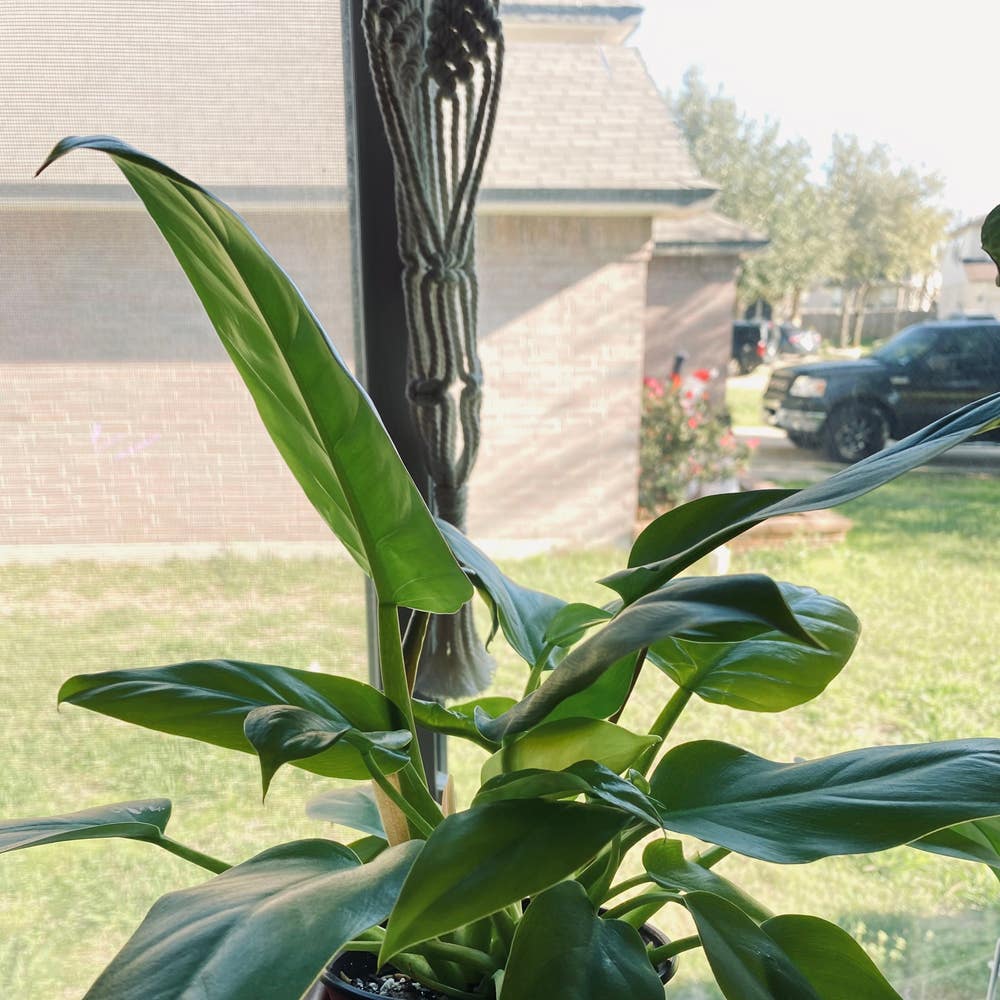
💧 Why Are My Philodendron melinonii Leaves Curling?
Philodendron melinonii
By the Greg Editorial Team
Jun 18, 2024•5 min read
This article was created with the help of AI so we can cover more plants for you. May contain errors. See one? Report it here.
Unravel the mystery behind your Philodendron melinonii's curling leaves and revive its splendor 🌿.
- Leaf curling signals distress in Philodendron melinonii, often with discoloration and softness.
- 🌡️💧 Environmental and watering balance are key to preventing and fixing curling.
- 🐜 Combat pests and diseases with organic methods and proper treatment.
Spotting Trouble: Recognizing Leaf Curl Symptoms
🌀 Identifying the Curl: What Does It Look Like?
Curling leaves on your Philodendron melinonii are a visual SOS. Typically, leaves should lay flat or have a gentle wave. If you're seeing leaves that resemble a coiled spring or look like they're trying to roll themselves up, that's your cue. It's not a new leaf yoga pose; it's a sign of distress.
🕵️ Beyond the Curl: Other Signs to Watch for
But the plot thickens beyond the curl. Discoloration is the sidekick to curling leaves, with shades shifting from vibrant green to a sickly yellow or brown. And if the leaves feel thinner or softer than a slice of overripe avocado, you've got more clues to consider. It's like the plant is waving a white flag, but instead of surrender, it's asking for help. Keep an eye out for these changes—they're the breadcrumbs leading you to the heart of the issue.

The Usual Suspects: Common Causes of Leaf Curling
🌞 Environmental Culprits
Light levels can make or break your Philodendron melinonii's composure. Too much sun? Expect leaves crispier than autumn leaves underfoot. Not enough? You'll find them reaching for the light like a kid for cookies on a high shelf.
Temperature swings are the drama queens of the plant world. Your Philodendron prefers a steady climate, not a rollercoaster that leaves its leaves curling tighter than a miser's fist.
Humidity is the silent player in this game. Aim for a 40%-60% humidity sweet spot. Too low, and your plant's leaves will curl up like they're bracing for a drought.
🚰 Thirsty Roots: Watering Woes
Overwatering is a one-way ticket to Soggyville, with leaves that curl downwards as if in soggy despair. Underwatering will have them curling up, hoarding what little moisture they have like a desert wanderer with a canteen.
Drainage is key. Your plant's roots need to breathe, not swim. Ensure your soil is well-aerated; think of it as a comfy bed with the right amount of spring, not a swamp.

Unwanted Guests: Pests and Diseases
🐛 Pests
Identifying Common Invaders: Spider Mites and Aphids
Aphids and spider mites are notorious for turning lush leaves into their personal buffets. Aphids leave a sticky residue, while spider mites are masters of miniature web-weaving. Catching these critters early is crucial; inspect the undersides of leaves and look for telltale signs like speckling or fine silk threads.
🌿 Natural Defenses: Organic Pest Control Methods
Neem oil and insecticidal soap are your go-to organic bouncers, showing pests the door without harsh chemicals. Introducing predatory insects, like ladybugs, can also help maintain the natural order in your indoor jungle.
🦠 Diseases
Fungal Foes: Spotting and Stopping Them
Fungal infections love a moist environment a bit too much. Overwatering is often an invitation for these uninvited guests. Look out for unusual leaf spots or decay. Cut off affected areas and adjust your watering habits to keep the air and soil from becoming a fungal fiesta.
Physiological Disorders: When the Plant's at Odds with Itself
Sometimes, the problem is internal. Physiological disorders can stem from nutrient imbalances or environmental stress. Ensuring your Philodendron melinonii gets the right mix of light, water, and nutrients can prevent these issues from developing.

Turning Over a New Leaf: Fixing the Curl
🌞 Adjusting the Environment
Light and temperature are like the thermostat of your Philodendron melinonii's comfort zone. Too much light scorches, too little starves. Find that Goldilocks zone of bright, indirect sunlight. If your plant's leaves could talk, they'd ask for a steady, comfortable temperature—no sudden drafts or extreme changes.
💦 Humidity Tweaks
Humidity can make or break your Philodendron's mood. Too dry, and the leaves curl like they're in a desert; too moist, and you're in a swamp. Aim for a humidity level that's just right. A humidifier or pebble tray can help maintain this balance, preventing your plant from throwing a fit.
💧 Watering Wisdom
Watering is less about sticking to a schedule and more about a soil check-up. If the soil feels like a wet sponge, ease up on the H2O. If it's dry, it's time to quench your plant's thirst. Remember, overwatering leads to soggy socks for roots, and nobody likes that.
🚰 Drainage Dilemmas
Ensure your potting mix is well-aerated and your pot has drainage holes. Your Philodendron melinonii isn't a fan of wet feet. Proper drainage is like having a good insurance policy against root rot.
🐜 Pest Patrol
Pests are the uninvited guests at your plant's party. Keep an eye out for freeloaders like spider mites and aphids. Neem oil or insecticidal soap can be your bouncers, showing these pests the door. Be diligent, and repeat treatments as necessary to keep your plant's leaves curl-free.
🌿 Natural Defenses
Embrace the power of beneficial insects and biodiversity in your plant care routine. These are your allies in the fight against pests. Think of it as building a mini ecosystem where pests don't get a free pass.
🦠 Disease Defense
Fungal foes and physiological disorders can turn your Philodendron's life into a soap opera. If you spot any funky spots or growths, it's time for some plant triage. Remove affected leaves and treat with an appropriate fungicide. Prevention is key, so keep hygiene high on your priority list.
🌱 Soil and Roots TLC
Get to know your soil like it's your best friend. A soil test will reveal what's missing and what's in excess. If you suspect root rot, it's time for an ER visit—fresh soil, trimmed roots, and a new pot. Handle with care, your plant's life depends on it.
⚠️ Safety First
This content is for general information and may contain errors, omissions, or outdated details. It is not medical, veterinary advice, or an endorsement of therapeutic claims.
Always consult a qualified healthcare professional before using any plant as food, medicine, or supplement.
Never eat any plant (or feed one to pets) without confirming its identity with at least two trusted sources.
If you suspect poisoning, call Poison Control (800) 222-1222, the Pet Poison Helpline (800) 213-6680, or your local emergency service immediately.
Spotted an error? Please report it here.
Banish leaf curl woes 🍃 with Greg's personalized care plans, ensuring your Philodendron melinonii stays as lush and vibrant as ever.