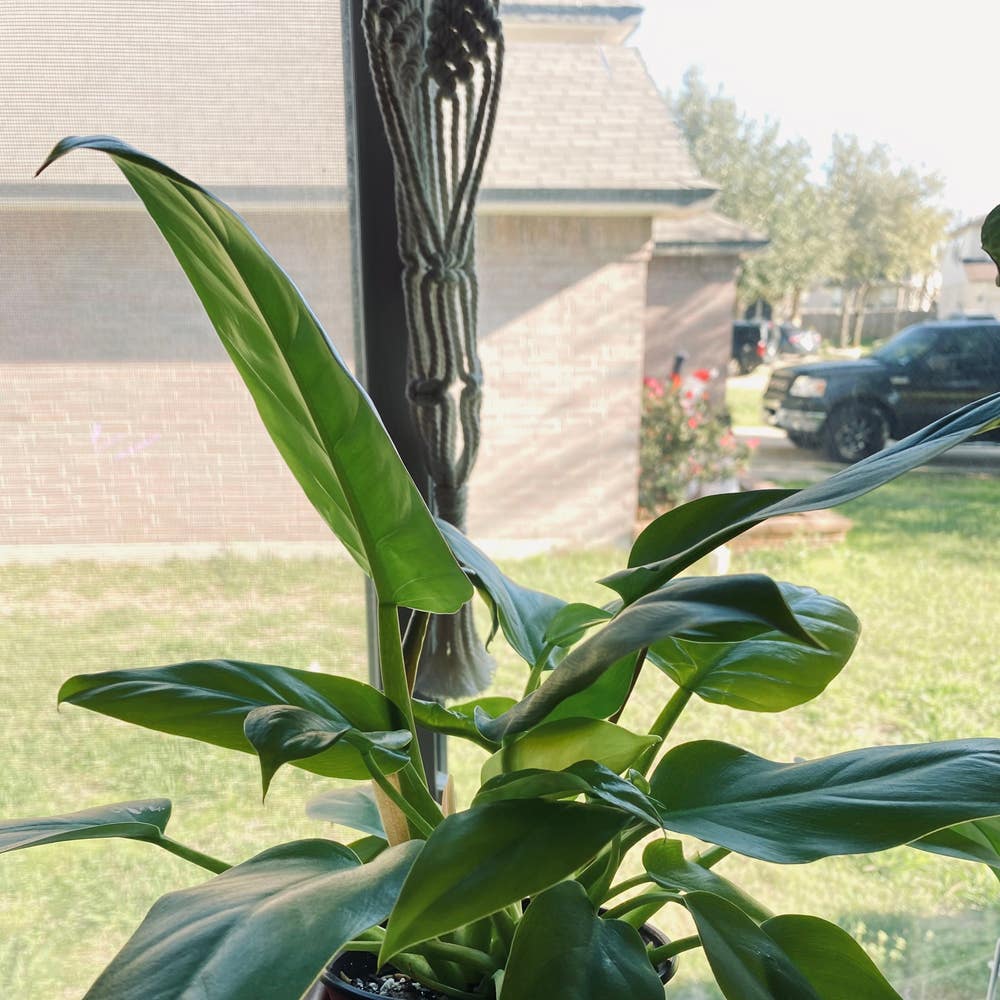
💧 Why Are My Philodendron melinonii Leaves Mushy?
Philodendron melinonii
By the Greg Editorial Team
Jun 18, 2024•3 min read
This article was created with the help of AI so we can cover more plants for you. May contain errors. See one? Report it here.
Rescue your Philodendron from mushy leaf misery 🍂 with these essential care tips and tricks!
- Overwatering? Yellow leaves and brown spots are your clue.
- Root rot signs: Mushy roots and a soft plant base.
- Prevent fungal foes with proper watering, soil, and cleanliness.
Spotting the Trouble: Signs Your Philodendron melinonii Has Mushy Leaves
🚰 Overwatering Symptoms
Yellowing leaves are your Philodendron melinonii's way of saying, "Ease up on the H2O!" If the foliage feels like a wet sponge, you're overdoing it. Look for brown spots that tell a tale of waterlogged woe. And if the soil smells like it's fermenting, your plant's roots are drowning in excess moisture.
🍄 Root Rot Red Flags
When your plant's leaves droop like they've lost all hope, it's a sign of root rot. Dark, mushy roots and a base that's softer than mushy peas are screaming for an intervention. A foul odor emanating from the soil is the equivalent of a plant's cry for help. Don't ignore these signs; root rot is a silent assassin.
🍄 Fungal Infections: More Than Just Mush
Fungal infections are the party crashers nobody invited. Look for dark spots on leaves or a fluffy gray mold that's as welcome as a cold call. If the soil sticks to your fingers like unwanted gum, it's a clear sign of excess moisture. Remember, fungicides can show fungi the door, but they can't repair the damage already done.

First Aid for Your Philodendron: Fixing Mushy Leaves
🚱 Rescuing Overwatered Plants
Cease watering immediately. Your Philodendron melinonii isn't a fish; it doesn't need to swim. Unpot the plant and bid farewell to any leaves that have turned into mush. It's a harsh world, but survival requires tough love.
🩹 Root Rot Recovery
Root rot is like a bad roommate—it takes over and leaves a mess. Inspect the roots: healthy ones are firm and white, while rotten ones are a disaster zone. With sterilized scissors in hand, perform an emergency trim. Be thorough, your plant's life is on the line. After the operation, repot in fresh, well-draining soil and promise yourself you'll do better.
🍄 Fungal Infection Fallout
Fungal infections are the silent invaders of the plant world. If you spot any funky business, it's time for fungicides. Read the label like it's the last plant-care manual on Earth. Apply with precision, and remember: prevention is the new mantra. Keep an eye out for recovery signs and resist the urge to fertilize—your plant isn't ready for a feast just yet.

Keeping Your Philodendron Firm: Prevention Strategies
💧 Watering Wisdom
Water only when necessary. Check the top inch of soil; if it's dry, it's time to water. Your Philodendron melinonii isn't a fan of wet feet, so avoid a soggy soil situation at all costs.
🌱 Soil and Drainage Savvy
Well-draining soil is non-negotiable. Mix in perlite, vermiculite, or sand to ensure breathability. The right pot size and drainage holes are your plant's lifeline—choose wisely to prevent water from overstaying its welcome.
🧼 Cleanliness and Care
Sanitize your tools; they can spread disease. Increase air circulation around your Philodendron to discourage pests and fungal growth. Group plants to maintain humidity, but monitor levels with a hygrometer to prevent a moisture overload. Remember, water the soil, not the leaves, and do it in the morning to allow time for drying.

⚠️ Safety First
This content is for general information and may contain errors, omissions, or outdated details. It is not medical, veterinary advice, or an endorsement of therapeutic claims.
Always consult a qualified healthcare professional before using any plant as food, medicine, or supplement.
Never eat any plant (or feed one to pets) without confirming its identity with at least two trusted sources.
If you suspect poisoning, call Poison Control (800) 222-1222, the Pet Poison Helpline (800) 213-6680, or your local emergency service immediately.
Spotted an error? Please report it here.
Rescue your Philodendron melinonii from the dreaded mush with Greg's custom reminders to water wisely 💧, keeping your green friend happy and healthy!