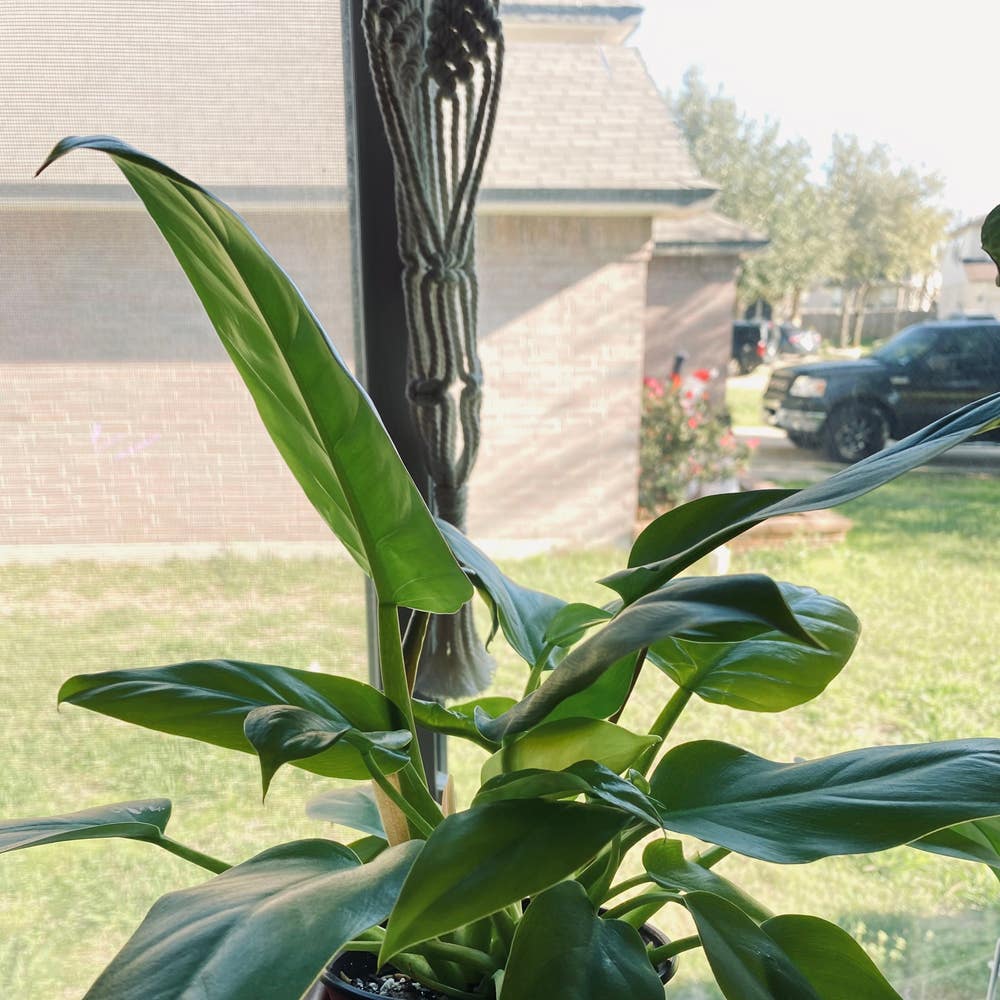
🌞 Is Direct Sunlight Good for My Philodendron melinonii?
Philodendron melinonii
By the Greg Editorial Team
Jun 18, 2024•4 min read
This article was created with the help of AI so we can cover more plants for you. May contain errors. See one? Report it here.
Learn how to perfect your Philodendron melinonii's glow with its love for gentle, indirect sunlight. 🌿🌤️
- 🌿 Philodendron melinonii loves bright, filtered light, not direct sun.
- 🌞 Morning sun is okay; afternoon sun risks burns—location matters.
- 🏡 Adjust placement seasonally for optimal growth and health.
Sunlight Simplified: Direct vs. Indirect
☀️ What is Direct Sunlight?
Imagine the sun as a giant flashlight shining directly on your Philodendron melinonii. This is direct sunlight – no clouds, curtains, or shades in the way, just pure, unfiltered sunshine. It's like standing outside at noon on a clear day; the sun's rays are hitting you and your plant head-on.
🌿 The Other Side of the Coin: Indirect Sunlight
Now picture the sun's light gently bouncing around before it whispers to your plant. This is indirect sunlight. It's the dappled light under a tree or the soft glow in a room away from the window. It's not as intense as direct sunlight and doesn't come with the same risk of sunburn for your leafy friend. Indirect sunlight is what your Philodendron melinonii experiences when it's placed in a bright room but out of the direct line of the sun's rays.

Philodendron Melinonii's Sunlight Preferences
🌿 Native Habitat Insights
Philodendron melinonii hails from the rainforest canopy, a place of dappled sunlight and lofty living. This high-rise lifestyle gives us a clue about its light preferences: bright but filtered, like sunlight sifting through a leafy sieve.
🍃 Leaf Language
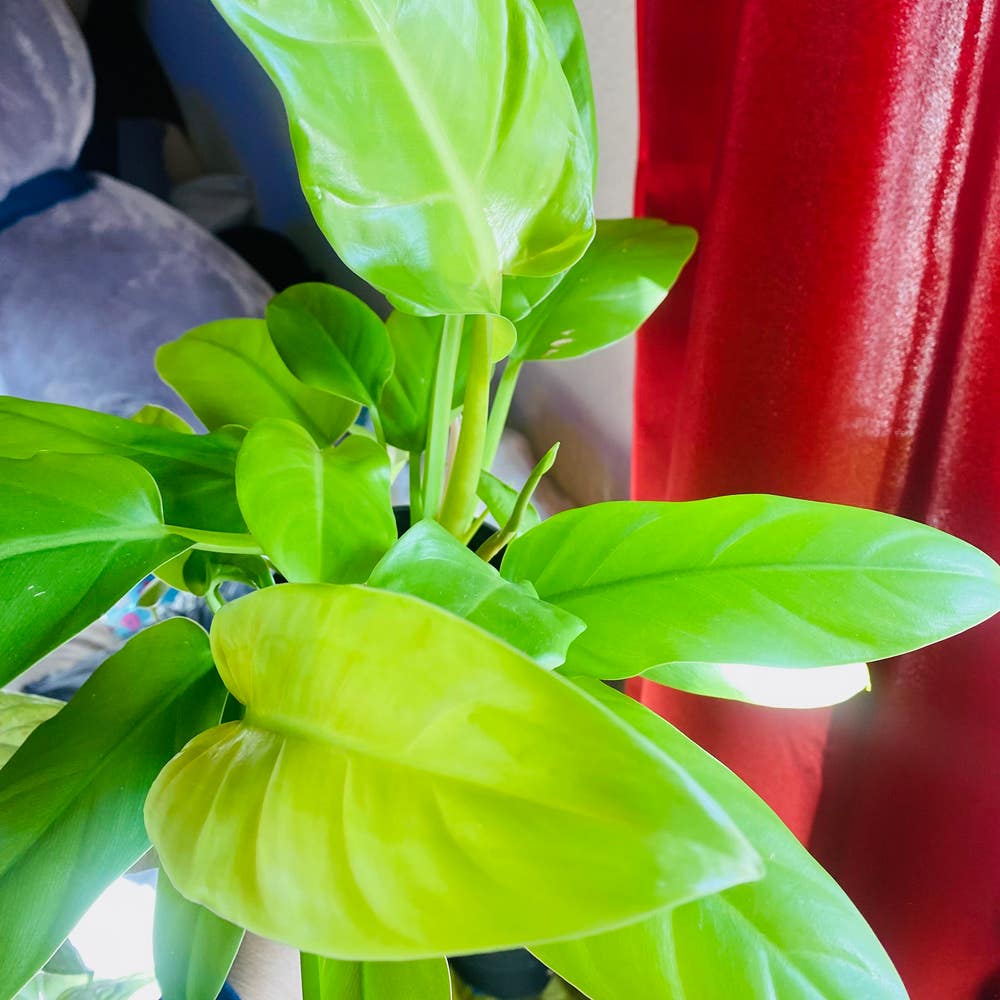
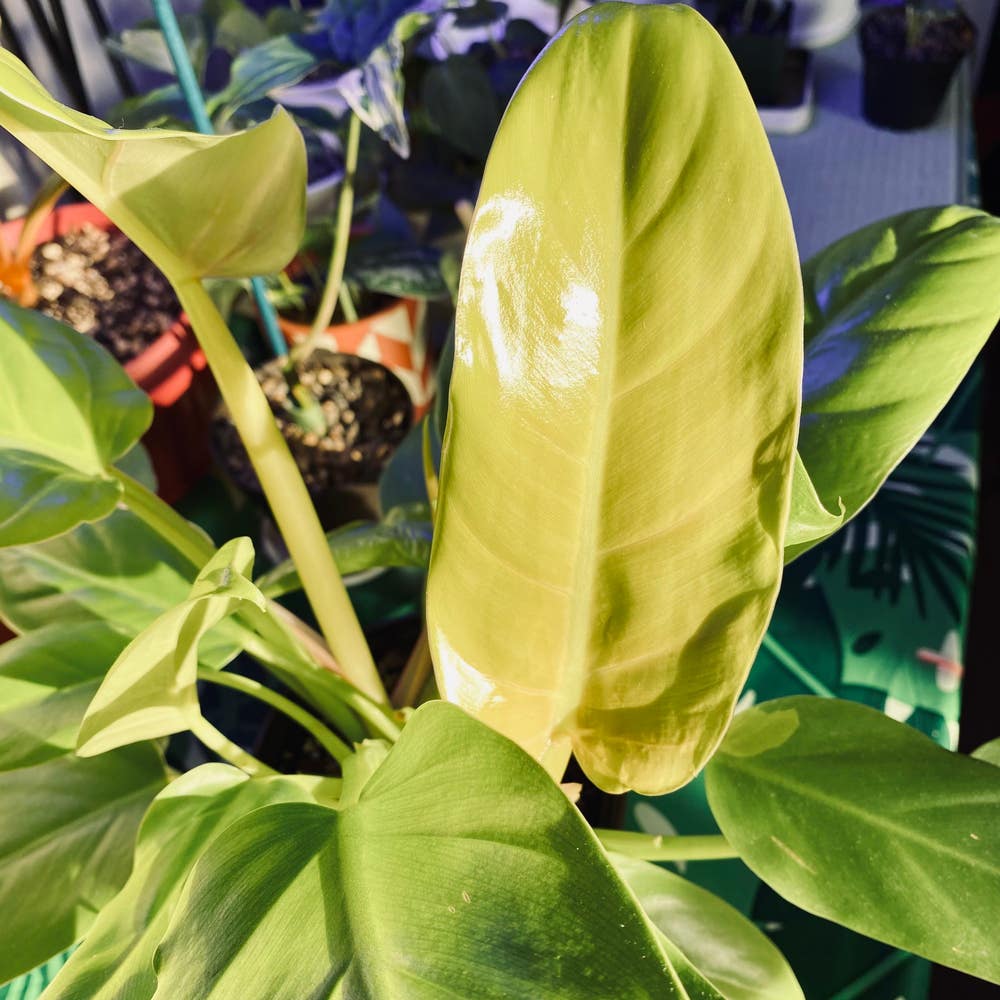
The leaves speak volumes. Bright yellow-green leaves suggest a penchant for more light, while darker foliage indicates a tolerance for shade. If the leaves could talk, they'd probably ask for a spot that's just right—not too sunny, not too dim.
🌞 The Verdict on Direct Sunlight
Direct sunlight? In moderation. Philodendron melinonii can handle a bit of morning sun, but it's not a sunbather. An hour of afternoon rays is its limit before it starts to feel the burn. Think of it as a plant that enjoys a light sun-kissed glow rather than a full-on tan.

The Window Compass: Navigating Light in Your Home
⬆️ Direction Matters
Windows are like personal sun dials for your Philodendron melinonii. Orientation is key. South-facing windows are the sun lounges, dishing out bright light all day. Ideal for sunbathers, but for your Philodendron, it's a no-go zone without some sheer curtains to soften the blow. East-facing windows? They're the gentle morning yoga sessions of the plant world, offering a calm start with mild light. West-facing windows come in like a summer blockbuster, intense and dramatic in the afternoon. And north-facing windows, they're the chill-out rooms, providing consistent, soft light that your Philodendron can bask in all day long.
🌍 Hemisphere Highlights
Your spot on the globe spins the wheel on this whole light show. Northern Hemisphere folks, your south-facing windows are the main stage for sunlight. Flip the script in the Southern Hemisphere, and it's the north-facing windows that steal the spotlight. But don't sweat it if your compass doesn't point to the ideal window; play around with plant placement, and throw some shade with curtains or blinds when the sun gets too pushy. Remember, it's about mimicking the dappled light of a Philodendron's natural groove, not roasting it on a spit.

Keeping Your Philodendron Melinonii Happy in the Sun
🌞 Finding the Sweet Spot
Philodendron melinonii is a bit of a diva when it comes to light. Bright, indirect sunlight is its jam. To avoid the crispy leaf debacle, place it near an east-facing window where the morning sun gently kisses it awake. South or west windows can work, but you'll need to pull out the sheer curtains to soften the sun's harsh rays.
🌱 Seasonal Shifts and Light Tweaks
As the seasons change, your Philodendron melinonii's needs shift too. Summer means longer days, so you might need to scoot it back from the window to avoid a sunburn. Winter, on the other hand, could call for a closer spot to the light source or even a pep talk with a grow light. Remember, your plant's not trying to make your life harder. It's just trying to survive, and a little light adjustment goes a long way.
⚠️ Safety First
This content is for general information and may contain errors, omissions, or outdated details. It is not medical, veterinary advice, or an endorsement of therapeutic claims.
Always consult a qualified healthcare professional before using any plant as food, medicine, or supplement.
Never eat any plant (or feed one to pets) without confirming its identity with at least two trusted sources.
If you suspect poisoning, call Poison Control (800) 222-1222, the Pet Poison Helpline (800) 213-6680, or your local emergency service immediately.
Spotted an error? Please report it here.
Keep your Philodendron melinonii leaf-perfect 🌿 with Greg's tailored light monitoring, ensuring just the right amount of dappled sunshine for your green companion.