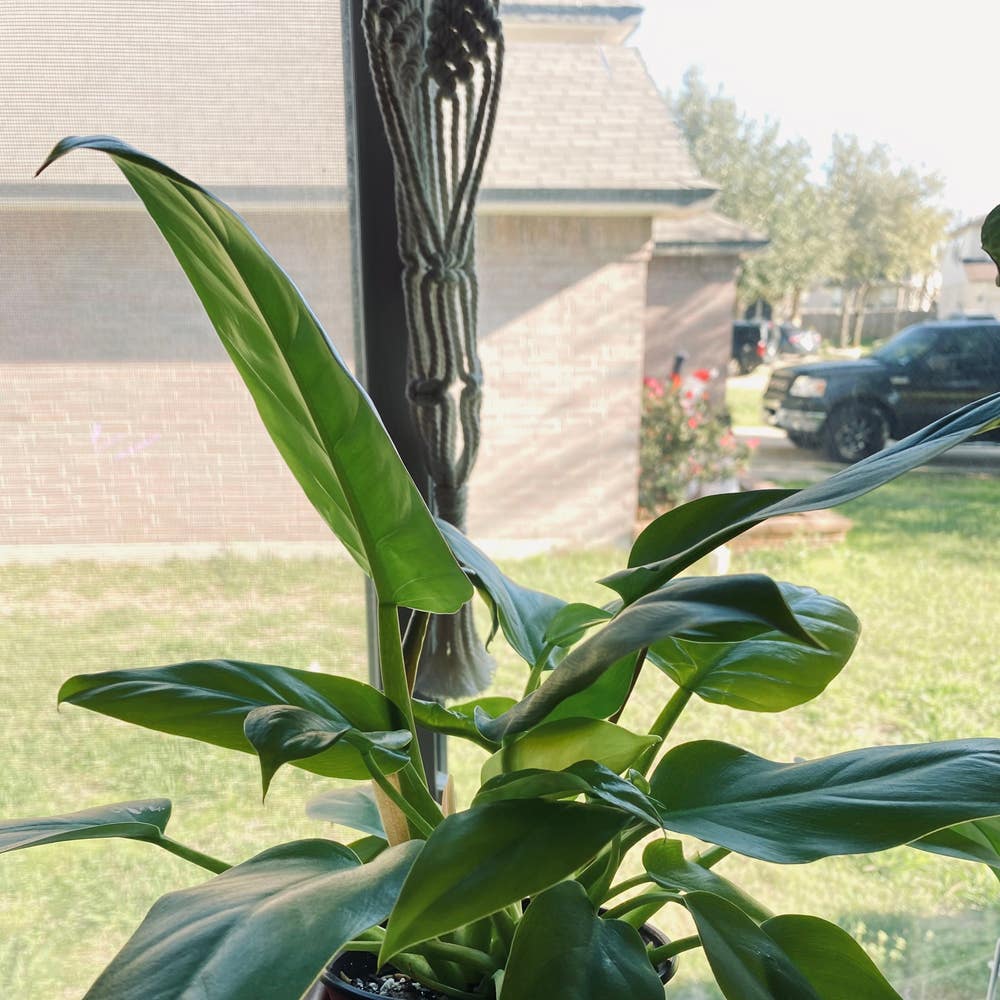
💧 How Much Humidity Does My Philodendron melinonii Need?
Philodendron melinonii
By the Greg Editorial Team
Jun 18, 2024•3 min read
This article was created with the help of AI so we can cover more plants for you. May contain errors. See one? Report it here.
Unlock lush growth for your Philodendron melinonii 🌿 by mastering its ideal humidity sweet spot!
- 60-70% humidity ideal for Philodendron melinonii's lush growth.
- 🍂 Dry, brown tips signal a need for more humidity.
- Monitor with hygrometer, adjust using humidifiers or ventilation.
Spotting Your Philodendron's Humidity Sweet Spot
💧 The Humidity Range Philodendron melinonii Adores
Philodendron melinonii thrives in 60-70% relative humidity. This range mimics its native tropical habitat, promoting lush growth and vibrant leaves.
🌵 Signs Your Plant is Thirsty for More Humidity
Dry, brown leaf tips are your Philodendron's SOS for more moisture. A lack of humidity can lead to a dull, lifeless appearance. Yellowing leaves and crispy edges are clear distress signals.
🚱 When Humidity Overstays Its Welcome
Too much of a good thing can spell disaster. Watch for yellow or brown spots on leaves, a telltale sign of fungal issues. If the leaves start dropping like flies, it's time to dial back the humidity.

Measuring and Understanding Your Home's Humidity
🌡️ Getting the Numbers Right
To get a grip on your indoor humidity, grab a hygrometer. This nifty gadget will spill the beans on your air's moisture level. Place it away from direct sunlight and drafts for the most honest reading. Check it throughout the day to catch the full drama of your indoor climate's mood swings.
🌿 What Your Philodendron Thinks of Your Local Humidity
Your Philodendron melinonii's vibe is directly tied to local humidity. Too dry, and it's like living in a desert; too damp, and you're basically throwing a mold party. Seasonal changes can flip your home's humidity on its head, turning your tropical haven into a moisture wasteland or a swampy mess. Keep tabs on these fluctuations to ensure your leafy friend isn't silently screaming for a more humid embrace.

Tailoring Your Humidity Tactics
🌴 Boosting Humidity for Tropical Bliss
Humidifiers are the MVPs of indoor humidity control. They're like your own personal rain cloud, minus the lightning. Keep them clean and at a safe distance from your Philodendron melinonii to prevent a steamy mishap.
Pebble trays are the old-school humidifiers. Just a tray, some rocks, and water, and you've got an evaporation party that your plant will love. Remember to keep the pot above the waterline; we're not looking to create a swamp.
Grouping plants is like throwing a small jungle shindig where everyone brings their own moisture. It's a simple yet effective way to boost humidity naturally. Just ensure there's enough breathing room to prevent a fungal fiesta.
🌧 Dialing Down the Dampness
Ventilation is your friend when the air gets too moist. A gentle breeze from a fan or a cracked window can keep the air moving and prevent your home from turning into a tropical swamp.
Dehumidifiers are the unsung heroes when humidity levels soar too high. They're like a dry sponge in a wet world, discreetly sipping excess moisture from the air. Use them to strike a balance between the Amazon and the Sahara.
Keep an eye on your Philodendron melinonii; it'll tell you when the humidity is just right. Too much and you risk a moldy mess, too little and you're in a dry spell. Adjust your tactics as needed, and your plant will thrive in its happy humidity haven.

⚠️ Safety First
This content is for general information and may contain errors, omissions, or outdated details. It is not medical, veterinary advice, or an endorsement of therapeutic claims.
Always consult a qualified healthcare professional before using any plant as food, medicine, or supplement.
Never eat any plant (or feed one to pets) without confirming its identity with at least two trusted sources.
If you suspect poisoning, call Poison Control (800) 222-1222, the Pet Poison Helpline (800) 213-6680, or your local emergency service immediately.
Spotted an error? Please report it here.
Keep your Philodendron melinonii thriving 🌿 with Greg's personalized humidity tracking and reminders, ensuring your green friend never dries out or gets too damp.