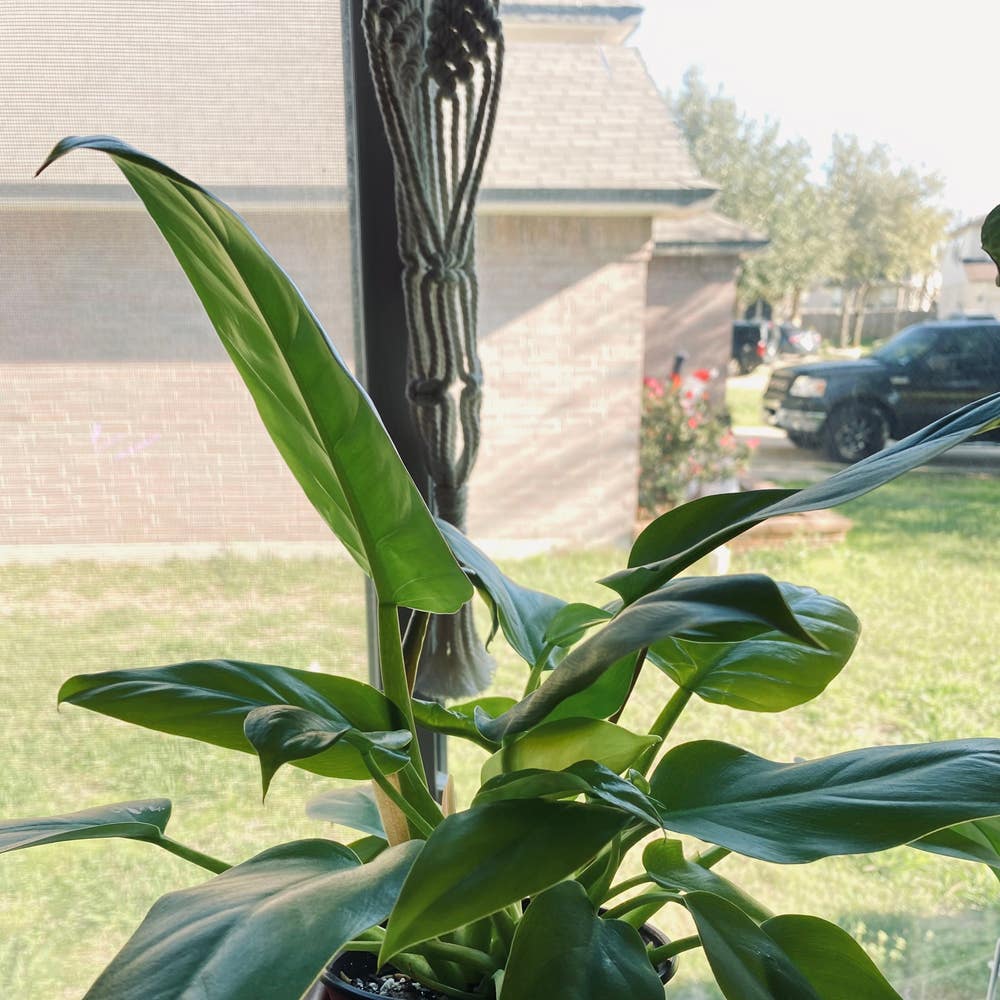
💧 What Is The Best Way To Water a Philodendron melinonii?
Philodendron melinonii
By the Greg Editorial Team
Jun 18, 2024•5 min read
This article was created with the help of AI so we can cover more plants for you. May contain errors. See one? Report it here.
Nurture your Philodendron melinonii to lush perfection with our tailored watering wisdom 🌿💧!
- 🍃 Droopy leaves and light pot signal it's time to water.
- Adjust water for light, temperature, humidity, and seasons.
- Bottom watering and top watering each have unique benefits.
Spotting Thirsty Philodendron Melinonii
🌱 Visual and Tactile Cues
Droopy leaves and dry soil are your Philodendron melinonii's way of crying out for hydration. When the edges of the leaves start to crisp up, it's a clear distress signal.
To confirm, perform the touch test: insert your finger into the soil up to the first knuckle. If the soil feels dry, your plant is telling you it's time for a drink.
🏋️ The Weight of Water
A surprisingly light pot can also indicate that your Philodendron melinonii is thirsty. Lift the pot; if it feels like it's barely holding anything, that's a sign the soil is dry and your plant needs water.
Remember, the heft of the pot is a reliable indicator, so get used to how it feels after watering to better gauge when it's time to water again.

Tailoring Watering to Your Philodendron's Lifestyle
🏡 Home Environment Factors
Light, temperature, and humidity aren't just weather talk—they're the trifecta of your Philodendron melinonii's watering needs. A sun-drenched room will have your plant guzzling water like there's no tomorrow, while a dim, cool corner means less frequent drinks. Humidity acts like a wildcard; high levels can turn your watering schedule on its head.
🌱 The Role of Pot and Soil
Pot size and soil mix are the unsung heroes of moisture management. A snug pot means less soil, less water, and a happy Philodendron melinonii. But get this: the soil mix is your plant's personal bartender—it needs to mix the perfect drink, balancing drainage and moisture retention. Too heavy on the peat, and you're setting up a soggy disaster; too gritty, and your plant's thirst won't be quenched.

Watering Techniques That Philodendron Melinonii Loves
💧 The Art of Bottom Watering
Philodendron melinonii roots thrive when they stretch deep into the soil, and bottom watering is your secret weapon to encourage this. Simply place your pot in a shallow tray of water and let the plant sip what it needs. This method not only promotes healthy root growth but also keeps those dreaded signs of overwatering at bay. Remember: Drain any excess water to avoid soggy conditions that can spell disaster.
💦 Top Watering Tips
While bottom watering is like a spa day for your Philodendron melinonii, top watering is the quick shower it sometimes needs. Aim for even moisture distribution by watering around the plant until it starts to drain from the bottom. This ensures the entire root ball gets hydrated without leaving the soil waterlogged. Lukewarm water is your friend here; it's like giving your plant a comforting hug without the shock of cold water. And don't forget to let the top inch of soil dry out before the next watering rendezvous.

Seasonal Watering Rhythms
🌧️ Summer vs. Winter Watering
Philodendron melinonii's watering needs shift with the seasons. In the summer, it's all about keeping up with your plant's thirst. The heat ramps up its water intake, so you'll want to visit the watering can more often. But when winter rolls around, it's a different story. Your plant's water consumption drops. It's not party time anymore; it's more about conservation. You'll be watering less, letting the soil dry out a bit more between sessions.
🌍 Responding to Environmental Shifts
Your Philodendron melinonii doesn't live in a bubble; it's affected by environmental changes. When a heat wave hits, your plant might as well be sunbathing in the Sahara—crank up the watering. But if a cold snap is more your climate's style, ease up. It's like your plant is bundling up and conserving its resources. Always keep an eye on the thermometer and your plant's mood swings to adjust your watering strategy accordingly.
Troubleshooting Common Watering Mishaps
💦 Overwatering Overhaul
Yellowing leaves and a soggy soil feel are telltale signs of overwatering your Philodendron melinonii. To rescue your plant, first assess root health. Gently remove the plant from its pot and inspect the roots. Healthy roots are firm and white, while overwatered roots are mushy and brown. Trim any damaged roots with sterilized scissors to prevent rot from spreading.
Next, repot the plant in fresh, well-draining soil. Choose a pot with adequate drainage holes to prevent water from pooling. If you're feeling the aftermath of overzealous watering, let the soil dry out before giving it another drink. Remember, it's about finding that moisture sweet spot.
🏜️ Underwatering Undo
On the flip side, a Philodendron melinonii gasping for water will have droopy leaves and dry soil that pulls away from the pot's edges. To revive an underwatered plant, start by soaking the pot in a tray of water, allowing the soil to absorb moisture from the bottom up. This method helps to rehydrate the soil evenly without compacting it.
After the soak, allow excess water to drain. Going forward, establish a more consistent watering schedule. Your Philodendron melinonii isn't a camel; it can't store water for drought days. Check the soil moisture weekly, and when the top inch feels dry, it's time to water. Keep a watchful eye, as your green friend will need you to be its lifeline.
⚠️ Safety First
This content is for general information and may contain errors, omissions, or outdated details. It is not medical, veterinary advice, or an endorsement of therapeutic claims.
Always consult a qualified healthcare professional before using any plant as food, medicine, or supplement.
Never eat any plant (or feed one to pets) without confirming its identity with at least two trusted sources.
If you suspect poisoning, call Poison Control (800) 222-1222, the Pet Poison Helpline (800) 213-6680, or your local emergency service immediately.
Spotted an error? Please report it here.
Ensure your Philodendron melinonii never goes thirsty or drowns with custom watering plans 💧 from Greg, tailored to your plant's needs and your unique home environment.