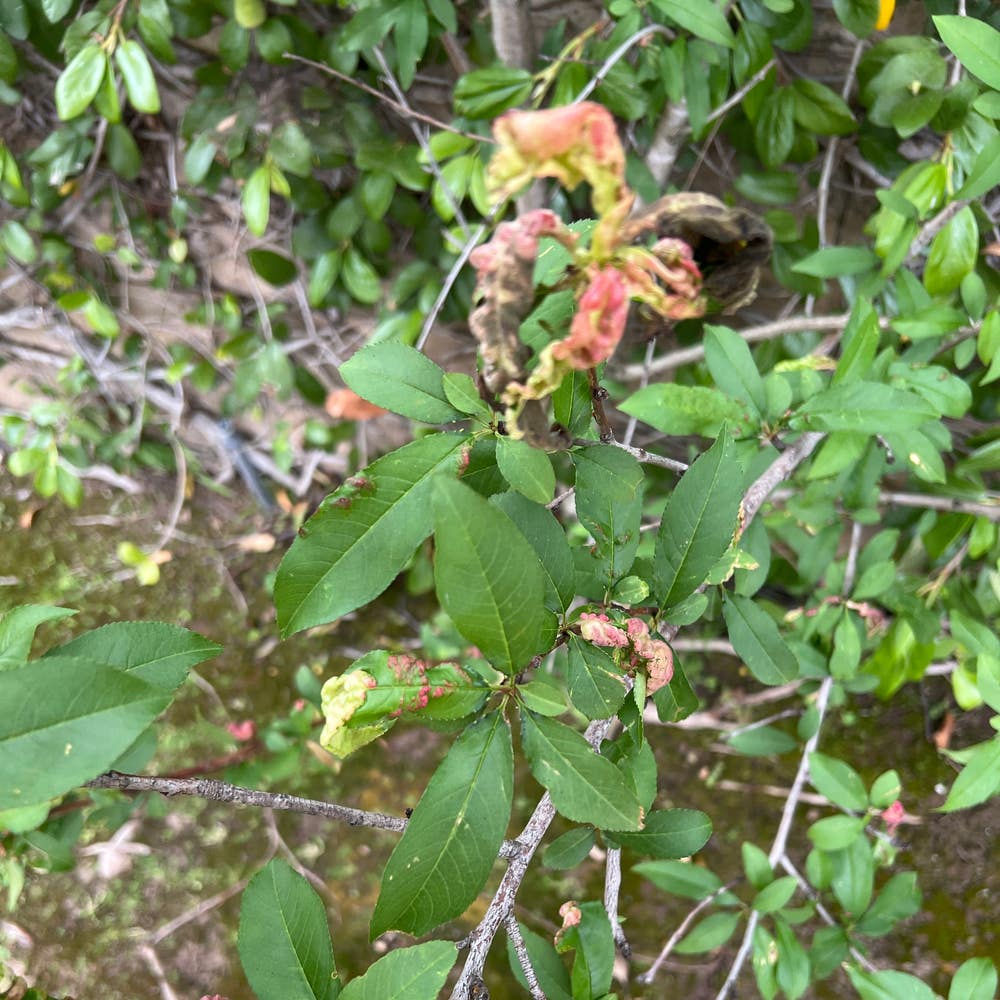
🍑 Peach Tree Wilting: Causes and Solutions
Prunus persica
By the Greg Editorial Team
Jul 28, 2024•5 min read
This article was created with the help of AI so we can cover more plants for you. May contain errors. See one? Report it here.
- Water and heat stress lead to peach tree wilting; check leaves and soil moisture.
- Disease symptoms include bark splitting and oozing cankers; combat with pruning and fungicides.
- Prevent wilting with proper location, shade, consistent watering, and good drainage.
Identifying Wilting Causes
💧 Water Stress Indicators
Peach Trees communicate their hydration needs through their leaves. Here's what to watch for:
- Leaves drooping during the day but recovering at night suggest temporary water stress.
- Permanent wilting, where leaves don't revive overnight, indicates a more severe hydration issue.
- Yellowing leaves and mushy stems often point to overwatering, while leaf drop signals underwatering.
To assess water stress:
- Check the soil moisture. Dry, crumbly soil means it's time to water, while soggy soil suggests overwatering.
- Inspect the root zone. Roots peeking out or a tightly packed root ball can restrict water uptake.
🌡️ Heat Stress Effects
Peach Trees under heat stress may show these signs:
- Leaves with brown spots or a burnt appearance, especially if they're also curling inward.
- General yellowing of leaves, which might also appear droopy or wilted.
To mitigate heat stress:
- Provide shade during the hottest part of the day.
- Ensure adequate watering to help the tree stay cool and hydrated.
🦠 Disease-Related Wilting
Keep an eye out for these symptoms of disease in Peach Trees:
- Bark splitting and cankers oozing sap, characteristic of bacterial canker.
- Yellowing leaves during the growing season, which could signal a pest or disease.
When addressing disease-related wilting:
- Isolate the tree if possible to prevent spreading.
- Prune affected areas with sterile tools and dispose of them properly.
- Consult with a plant expert or local nursery if the issue is severe or you're unsure of the diagnosis.
Diagnosing Wilting in Peach Trees
🕵️♂️ Conducting a Visual Inspection
To get to the root of wilting in your peach tree, start with a thorough visual inspection. Look for these telltale signs:
- Leaves drooping or curling at the edges.
- Discoloration, such as yellowing or browning leaves.
- A mix of healthy and unhealthy branches, which could indicate a disease like X-Disease or Phytophthora root rot.
Interpreting these visual cues is crucial. For instance, if wilting is uniform across the tree, it's likely a systemic issue like root rot. However, if only certain branches are affected, it could be a localized problem or pest infestation.
💧 Soil Moisture Assessment
Next, let's check the soil moisture to confirm or rule out water stress:
- Use a moisture meter for an accurate reading. Insert it gently into the soil near the base of the tree, avoiding root damage.
- Alternatively, the finger test: Insert your finger a few inches into the soil. If it's dry, your tree is thirsty; if it's soggy, you might be overwatering.
Remember, the goal is to maintain soil moisture at a level that's just right—neither waterlogged nor bone dry. Tools like moisture meters or even simple observation can provide valuable insights into your tree's watering needs.
Treating Wilting Issues
🌊 Correcting Water Stress
Peach Trees are sensitive to their hydration levels, and water stress can lead to wilting. Here's how to correct it:
- Adjust your irrigation schedule based on the season and weather conditions. Peach Trees need more water during dry spells and less during cooler, wetter periods.
- Ensure proper drainage to avoid waterlogged roots. If necessary, amend the soil with organic matter or create raised beds to improve drainage.
🌡 Managing Heat Stress
Heat stress can cause Peach Trees to wilt, especially during hot spells. Protect your trees with these strategies:
- Provide temporary shade during the hottest part of the day using shade cloths or strategically placed plants.
- Mulch around the base of the tree to retain soil moisture and keep roots cooler. Suitable materials include bark, straw, or leaves.
🦠 Combating Diseases
Disease can lead to wilting in Peach Trees. To combat this:
- Prune any diseased or damaged branches to prevent the spread of pathogens. Always use clean, sharp tools.
- Apply appropriate fungicides if you identify a fungal issue. Copper-based sprays are often recommended for Peach Trees, but be sure to follow the label instructions carefully.
- Promote good air circulation by spacing trees appropriately and keeping the area around them clear of debris.
Remember, the key to treating wilting issues is prompt and appropriate action. With these measures, you can help your Peach Tree recover and thrive.
Preventing Future Wilting
🌱 Optimal Growing Conditions
Creating a nurturing habitat for Peach Trees is key to preventing wilting. Here's how to foster an ideal growing environment:
- Ensure consistent watering, tailoring the schedule to seasonal needs—more during dry spells, less when it's cooler.
- Promote good drainage to prevent root issues, using soil that retains moisture without becoming waterlogged.
- Keep a vigilant eye on your Peach Tree's health, adjusting care routines as necessary to preempt wilting.
🌍 Environmental Adjustments
The right location and microclimate tweaks can make all the difference in wilting prevention:
- Choose a sunny spot with some afternoon shade to protect from scorching heat.
- Use mulch to help regulate soil temperature and moisture levels.
- Implement windbreaks or plant strategically to shield from strong winds that can stress the tree.
- Consider row covers or shade cloth during extreme weather to buffer against heat stress.
Remember, a Peach Tree's environment is as crucial as its care. Regular monitoring and adjustments can keep wilting at bay.
When to Seek Expert Help
Recognizing the Need for Professional Advice
Sometimes, despite our best efforts, Peach Trees continue to wilt. Here are signs that it's time to consult a nursery or plant expert:
- Persistent wilting that doesn't improve with adjusted care.
- Unfamiliar symptoms that don't match common issues like water or heat stress.
- Recurring problems after multiple treatment attempts.
In addition to local resources, consider tapping into the collective wisdom of online communities like Greg for support. These platforms offer a space to share experiences and solutions that might just be the lifeline your Peach Tree needs.
⚠️ Safety First
This content is for general information and may contain errors, omissions, or outdated details. It is not medical, veterinary advice, or an endorsement of therapeutic claims.
Always consult a qualified healthcare professional before using any plant as food, medicine, or supplement.
Never eat any plant (or feed one to pets) without confirming its identity with at least two trusted sources.
If you suspect poisoning, call Poison Control (800) 222-1222, the Pet Poison Helpline (800) 213-6680, or your local emergency service immediately.
Spotted an error? Please report it here.
Combat peach tree wilting by tracking hydration 🌱 with Greg's moisture alerts and tapping into community wisdom for disease prevention and care tips.