Why Is My Paphiopedilum spicerianum Not Doing Well?
Paphiopedilum spicerianum
By the Greg Editorial Team
Apr 06, 2024•4 min read
This article was created with the help of AI so we can cover more plants for you. May contain errors. See one? Report it here.
- Water wisely: Over/under-watering leads to mushy stems or deflated leaves.
- Ideal conditions: Bright, indirect light and 65°F-80°F temperatures are best.
- Pest & disease vigilance: Regularly check and treat for pests and fungal issues.
When Water Gets Tricky: Over and Under-Watering Woes
🚰 Spotting the Signs
🏜️ Under-Watering
If your Paphiopedilum spicerianum looks like it's been on a diet of air, you've got an under-watering issue. Leaves that resemble a deflated balloon are crying out for water. When the soil has shrunken away from the pot's edge, it's past time for a drink.
🌊 Over-Watering
On the flip side, if your plant's roots are swimming in soil soup, you're drowning it in love. Mushy stems and a soil scent that reminds you of a swamp are the plant's way of saying, "I need a lifeboat!"
Balancing Act
Getting the watering right is like finding the perfect coffee strength—it's personal and crucial. Adjust with the seasons: your plant's thirst changes with the weather. When in doubt, feel the soil an inch down. If it's dry, it's time to water; if it's damp, give it a break.
SOS for Roots
🌱 Root Rot Rescue
If you've been heavy-handed with the H2O and now have root rot, it's time for surgery. Trim the dead, mushy parts away. Then, repot with a well-draining mix and ensure the pot has drainage holes to avoid a repeat performance.
Light and Temperature: The Goldilocks Zone
🍃 Reading the Leaves
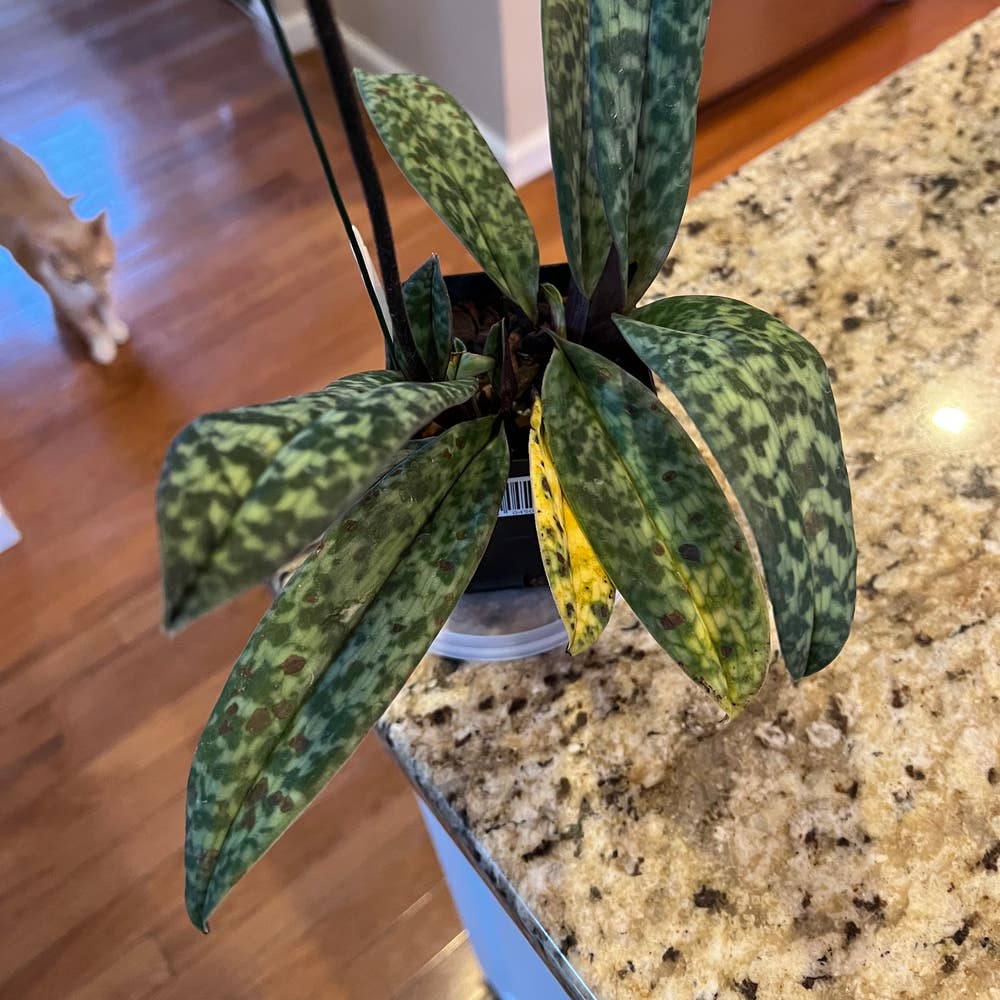
Leaves are the tattletales of the plant world. When your Paphiopedilum spicerianum's leaves sport crispy tips or develop brown patches, they're shouting, "I'm roasting here!" Conversely, a plant stretching towards the light is silently pleading for more.
🌞 Making Adjustments
Bright, indirect sunlight is the sweet spot for your Paphiopedilum spicerianum. It's like finding the perfect pair of jeans; not too tight, not too loose, just right. If your plant's leaves are turning a pale, sickly color, it's time to play musical chairs with its location.
Rotate your plant to ensure even light exposure; it's like giving each leaf its moment in the sun. As for temperature, keep it cozy between 65°F and 80°F (18°C to 27°C). Steer clear of cold drafts and the Sahara-like heat of radiators.
Remember, your plant doesn't need a weather app; it feels every chill and every burn. Use thermometers and light meters to take the guesswork out of the equation. This isn't just about being a good plant parent—it's about being a plant detective.
Uninvited Guests and Unseen Foes: Pests and Fungal Issues
🐛 Pests on Parade
Aphids, mealybugs, and scale insects are the usual suspects when your Paphiopedilum spicerianum starts looking under the weather. These pests are tiny but mighty, causing distorted leaves and leaving behind a sticky mess. Regular inspections are key—flip those leaves and peek into crevices. If you spot these freeloaders, it's time for eviction: a strong water spray or insecticidal soap should send them packing.
🍄 Fungus Among Us
Fungal issues like powdery mildew and black spot are the silent saboteurs of your orchid's health. Powdery mildew coats leaves with a ghostly film, while black spot leaves its mark like an unwanted tattoo. Catch these fungal fiends early by keeping an eye out for unusual spots or a dusty appearance. Improve air circulation, let in some sunlight, and if necessary, apply a fungicide—just follow the label to the letter. Remember, it's about creating an environment where these party crashers can't thrive. Keep your plant's home dry and breezy to be the ultimate gatekeeper against these uninvited guests.
Environmental Stress Signals: Leaf Scorching and Other Cries for Help
🚨 Telltale Marks
Leaf scorch signals distress. Crispy edges and faded colors are your plant's version of a white flag. It's had too much sun or is reacting to temperature extremes. Discoloration isn't just a fashion statement; it's a symptom of the plant's discomfort, possibly due to heat stress or a drafty chill.
🛡️ Creating a Safe Space
Adjust the environment to prevent stress damage. Shield your plant from the sun's harsh rays with strategic placement or the use of shade cloths. Ensure consistent temperatures; avoid placing your plant near heat sources or in the path of cold drafts. Regularly rotate your plant to promote even growth and prevent one side from getting more light than the other. Remember, stability is key—your plant craves a predictable lifestyle.
⚠️ Safety First
This content is for general information and may contain errors, omissions, or outdated details. It is not medical, veterinary advice, or an endorsement of therapeutic claims.
Always consult a qualified healthcare professional before using any plant as food, medicine, or supplement.
Never eat any plant (or feed one to pets) without confirming its identity with at least two trusted sources.
If you suspect poisoning, call Poison Control (800) 222-1222, the Pet Poison Helpline (800) 213-6680, or your local emergency service immediately.
Spotted an error? Please report it here.
Ensure your Paphiopedilum spicerianum never feels like a deflated balloon or a swamp dweller by using Greg's custom watering plans 💧 and environmental monitoring for that just-right touch.