Why Are My Paphiopedilum spicerianum Leaves Mushy?
Paphiopedilum spicerianum
By the Greg Editorial Team
Apr 06, 2024•3 min read
This article was created with the help of AI so we can cover more plants for you. May contain errors. See one? Report it here.
- Overwatering and poor drainage lead to mushy leaves and roots.
- Adjust watering and repot with proper drainage to prevent damage.
- Combat infections with fungicides and maintain 40-70% humidity.
Spotting Trouble: Signs Your Paphiopedilum spicerianum Has Mushy Leaves
🚱 Recognizing Overwatering Symptoms
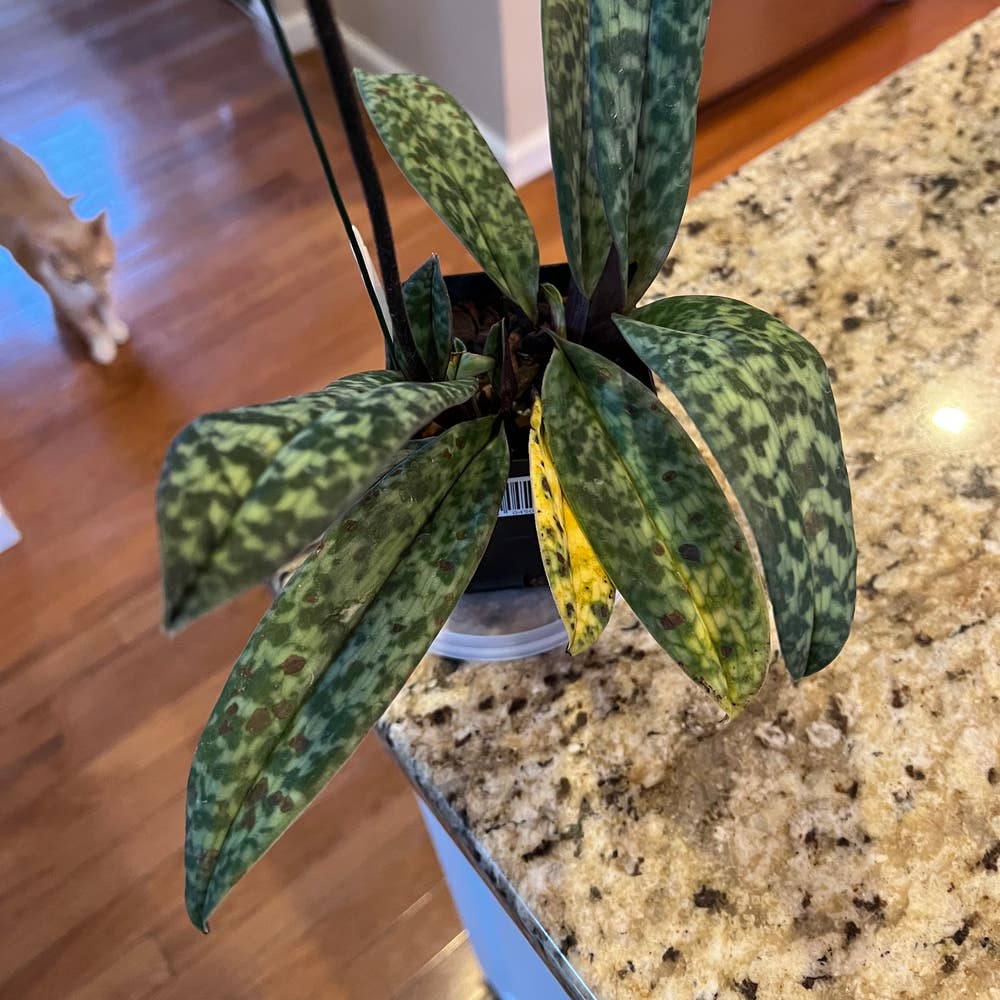
Yellow leaves waving the white flag and roots that feel like overripe fruit are classic signs your orchid is drowning in excess H2O. If the potting medium feels like a wet sponge, you've been too generous with the watering can.
🚰 Identifying Poor Drainage Distress
When your plant's pot is as watertight as a submarine, you're setting the stage for a soggy disaster. If pressing gently on the leaves leaves an indentation, it's time to rethink your drainage strategy.
🍄 Detecting Infections Early
Dark spots on leaves or a surprise mushroom at the base are like neon signs pointing to fungal or bacterial invaders. These pathogens love the damp decay in mushy leaves, so act fast to prevent them from turning your orchid into a goner.
First Aid for Mushy Leaves
💧 Adjusting Your Watering Technique
Overwatering is the prime suspect in the case of mushy leaves. Your Paphiopedilum spicerianum doesn't want to swim; it prefers a light mist. Check the soil before watering—dry to the touch is your green light. Water thoroughly but infrequently, ensuring the roots are quenched, not drowned.
🏡 Upgrading Your Plant's Living Quarters
Think of repotting as a home upgrade. Your orchid's roots need room to breathe, so choose a pot with drainage holes. A snug fit is key—too large, and you're back to mush city. The potting mix? It should be airy, like a well-fluffed pillow, not a soggy blanket.
🐜 Battling the Bugs and Fungus Among Us
When fungi gatecrash the party, it's time to bring out the big guns—a fungicide that's tough yet tender on your plant. Trim away any mushy casualties to prevent the spread. And remember, airflow is your ally; a fan can help keep the air moving and the pathogens at bay.
Keeping Your Paphiopedilum spicerianum Happy and Healthy
💧 Nailing the Watering Routine
Watering your Paphiopedilum spicerianum isn't about sticking to a strict schedule. It's about tuning into the plant's needs and adapting to the environment. Seasonal shifts mean you'll water less in winter and potentially more during the summer heat. Use the finger test to gauge moisture before watering; if the mix feels dry a couple of inches down, it's time to hydrate.
🌿 Crafting the Perfect Environment
Creating the right environment is a balancing act. Humidity should be maintained between 40-70%, but avoid turning your home into a tropical rainforest. A pebble tray or humidifier can help maintain consistent moisture levels in the air. Temperature-wise, aim for a daytime range of 70-80°F with a slight drop at night. Good air circulation is crucial to prevent disease, so consider a fan to keep the air moving. Remember, direct sunlight is a no-no; these orchids prefer their light like their martinis – bright but indirect.
⚠️ Safety First
This content is for general information and may contain errors, omissions, or outdated details. It is not medical, veterinary advice, or an endorsement of therapeutic claims.
Always consult a qualified healthcare professional before using any plant as food, medicine, or supplement.
Never eat any plant (or feed one to pets) without confirming its identity with at least two trusted sources.
If you suspect poisoning, call Poison Control (800) 222-1222, the Pet Poison Helpline (800) 213-6680, or your local emergency service immediately.
Spotted an error? Please report it here.
Avoid the mush and achieve orchid excellence 🌟 by letting Greg customize your watering routine to keep your Paphiopedilum spicerianum thriving.