Why Are My Paphiopedilum spicerianum Leaves Curling?
Paphiopedilum spicerianum
By the Greg Editorial Team
Apr 06, 2024•4 min read
This article was created with the help of AI so we can cover more plants for you. May contain errors. See one? Report it here.
- 🌿 Light and water balance is crucial; avoid both low light and over/underwatering.
- 🌡️ Maintain ideal temps between 65-75°F and humidity at 50-60%.
- 🕵️♂️ Monitor for pests, diseases, and nutrients; consistency in care prevents curling.
When Light Levels Just Aren't Right
🌑 The Lowdown on Low Light
In the dim world of low light, Paphiopedilum spicerianum leaves may start to curl, as if trying to hug the scarce light. To combat this, rotate your orchid periodically, ensuring all sides receive their fair share of illumination.
☀️ Too Much Sun, Too Little Fun
Conversely, too much light can have leaves curling up tighter than a rolled yoga mat. Shield your plant from the harsh midday sun by placing it in a spot with bright, yet indirect light—perhaps near a north-facing window or behind a sheer curtain.
Water Woes: Finding the Balance
💧 The Perils of Drowning Roots
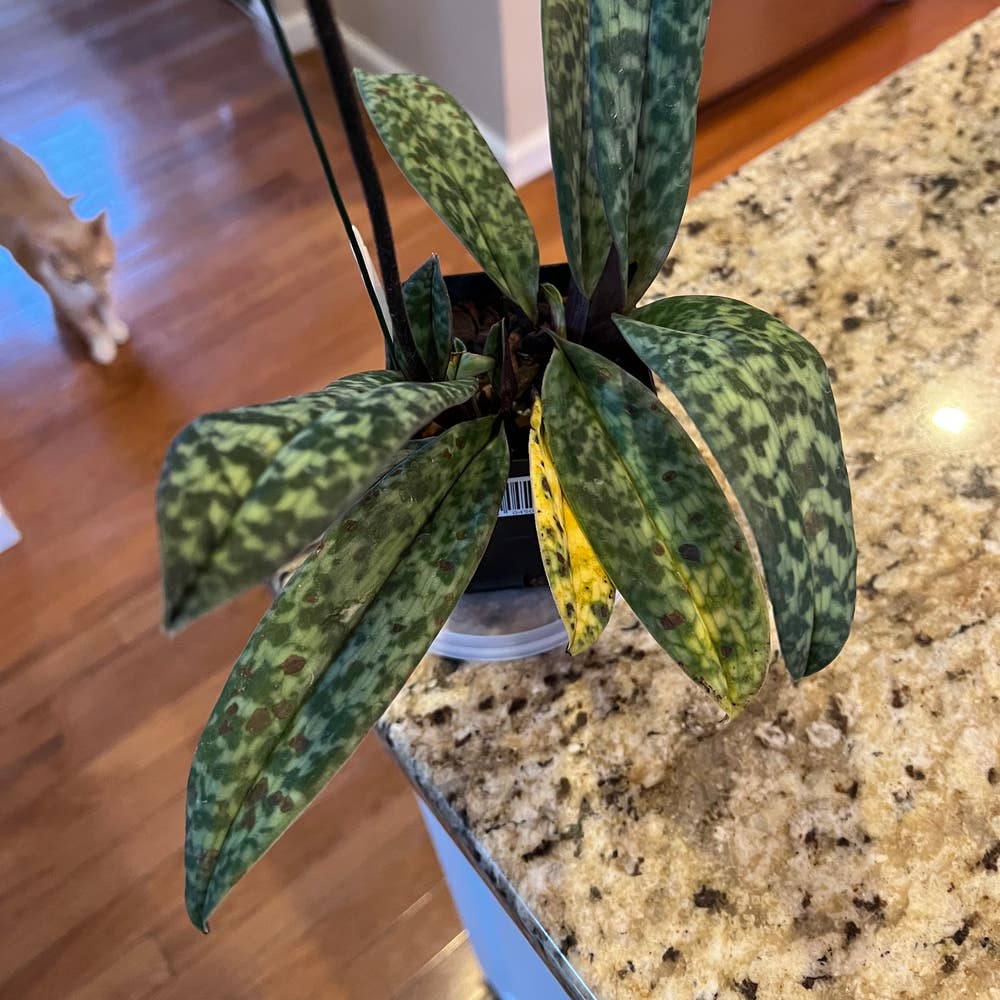
Overwatering transforms your Paphiopedilum spicerianum's roots into an unwanted swamp, leading to leaf curling. Yellow leaves or a pot that feels heavier than it should might signal you've gone overboard with the H2O. To adjust, let the soil dry out a bit between waterings. Ensure your pot has adequate drainage and consider a soil mix with perlite for better aeration.
🏜️ When Thirsty Leaves Curl
Underwatering leaves your orchid's roots parched, causing leaves to curl as they desperately conserve water. Dry, crispy leaves and soil that feels like a desert are distress signals. The pot will feel lighter than usual, indicating it's time for a drink. Water your plant deeply but allow the soil to dry slightly before the next watering, promoting strong roots and preventing curling.
Climate Control: Temperature and Humidity
🌡️ Too Hot to Handle
When your Paphiopedilum spicerianum starts looking like it's trying to fold itself into origami, it's likely heat stress. The leaves curl to conserve moisture when they're feeling the burn. Keep the temperature steady between 65-75°F (18-24°C). If your plant is baking in the sun, give it some shade or a light misting. Think of it as applying sunscreen to your sensitive-skinned friend.
❄️ Chilly and Frilly: Cold Stress
Conversely, if your orchid's leaves are curling like they're bracing for a blizzard, it's probably too cold. These tropical treasures despise the cold as much as you hate stepping on a Lego. Keep them away from drafts and maintain a cozy temperature that doesn't dip below 65°F (18°C). It's like ensuring your plant has a warm blanket during a snowstorm.
💦 Humidity: The Goldilocks Principle
Humidity is the invisible embrace your orchid craves. Aim for a humidity level of 50-60%—not too dry, not too moist. If your air is drier than a comedian's wit, consider a humidifier or a pebble tray. If it's more like a sauna, a dehumidifier might be in order. Remember, these plants want a tropical vibe without the sweatiness.
Battling Pests, Diseases, and Nutrient Nightmares
🐜 Unwanted Guests: Pests That Cause Curling
Pests are public enemy number one when it comes to leaf curling in Paphiopedilum spicerianum. Aphids and spider mites top the list, treating your orchid's leaves like an all-you-can-eat buffet. To catch these critters, flip the leaves and look for telltale signs: sticky residue or fine webbing.
Organic pesticides or natural predators can be your first line of defense. For more stubborn cases, insecticidal soaps or horticultural oils are your go-to. Remember, overuse can harm more than pests, so moderation is key.
🦠 Sickly Symptoms: Diseases That Curl Leaves
Fungal diseases are the stealthy ninjas of the plant world, often invisible until the damage is done. Powdery mildew leaves a ghostly residue, while other diseases twist leaves into sad shapes. If you spot these symptoms, it's time for action.
Remove affected areas and adjust your watering habits. Fungicides may be necessary, but always read labels and use as directed. Prevention is paramount—maintain a clean environment and avoid overhead watering.
🌱 Hungry for Nutrients
Nutrient deficiencies can leave your orchid's leaves curling like a ribbon. A soil test will tell you what's missing. Then, it's time for a balanced meal—use fertilizers judiciously to give your plant what it's craving.
For a quick fix, consider foliar feeding. However, the real game-changer is soil health. Use a balanced fertilizer, but stick to the recommended dosage. Overdoing it can lead to more problems, so keep it balanced.
Proactive Plant Parenting: Preventing Leaf Curling
🌿 Consistency is Key
In the realm of Paphiopedilum spicerianum care, consistency reigns supreme. Like clockwork, establish a routine for watering, feeding, and pruning. This isn't just about keeping your plant alive—it's about helping it thrive.
🕵️ Monitoring for Mischief
Vigilance is your ally in the quest for flat, healthy leaves. Regularly scrutinize your orchid for early signs of distress. Catching issues early is akin to nipping them in the bud—literally.
⚠️ Safety First
This content is for general information and may contain errors, omissions, or outdated details. It is not medical, veterinary advice, or an endorsement of therapeutic claims.
Always consult a qualified healthcare professional before using any plant as food, medicine, or supplement.
Never eat any plant (or feed one to pets) without confirming its identity with at least two trusted sources.
If you suspect poisoning, call Poison Control (800) 222-1222, the Pet Poison Helpline (800) 213-6680, or your local emergency service immediately.
Spotted an error? Please report it here.
Prevent leaf curling 🌀 in your Paphiopedilum spicerianum by letting Greg track and adjust your plant's care routine for a thriving orchid experience.