Black Spots on My Paphiopedilum spicerianum Leaves
Paphiopedilum spicerianum
By the Greg Editorial Team
Apr 06, 2024•3 min read
This article was created with the help of AI so we can cover more plants for you. May contain errors. See one? Report it here.
- Fungal and bacterial infections cause black spots; look for yellow halos or foul odor.
- Treat with fungicides, sterilize shears, and remove affected areas for plant health.
- Adjust environment and watering to prevent stress and susceptibility to diseases.
Spotting the Culprit: Identifying the Cause of Black Spots
🍄 Fungal Foes: Recognizing Fungal Infections
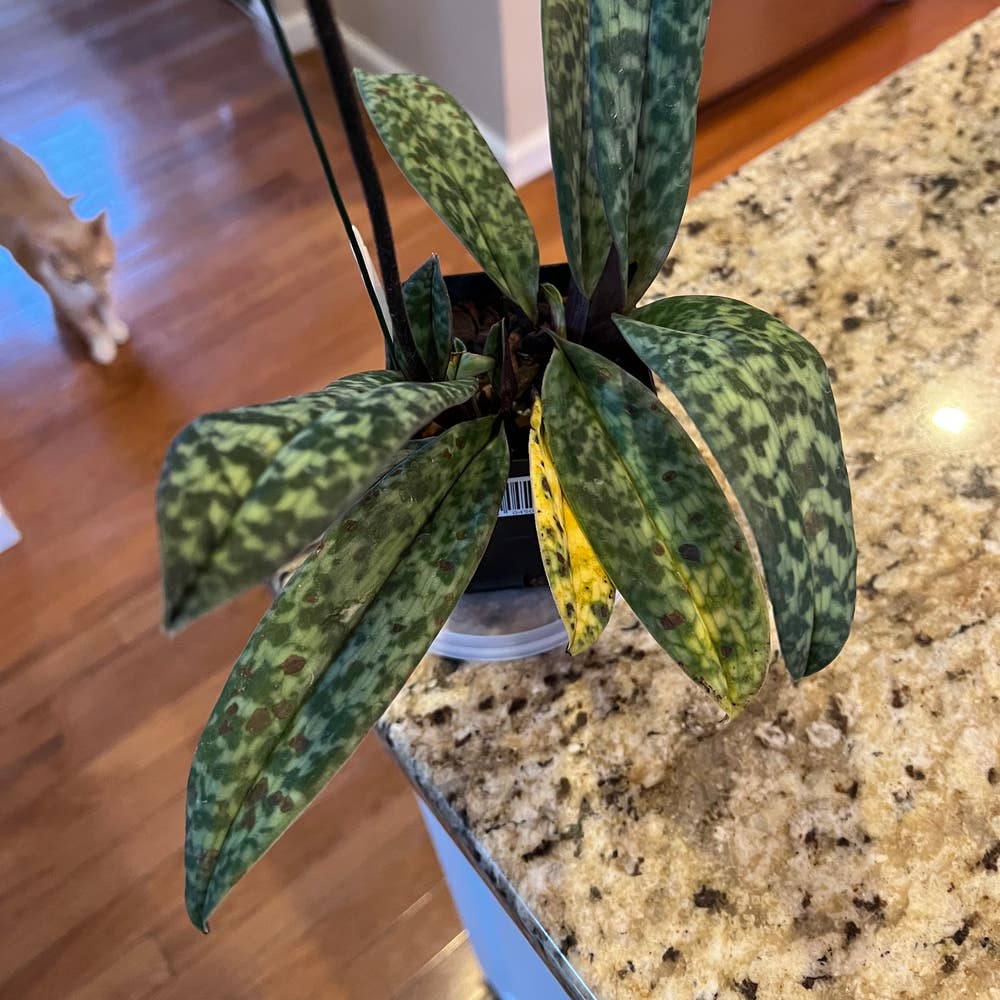
Fungal infections aren't just a cosmetic issue; they're a threat to your Paphiopedilum spicerianum's health. Look for circular lesions or spots with a yellowish halo—classic signs of a fungal party on your plant's leaves. These invaders thrive in conditions where there's too much moisture and not enough air circulation.
🦠 Bacterial Baddies: Spotting Bacterial Issues
Bacterial infections can be slimy troublemakers, often leaving behind water-soaked spots. These spots may later turn black or brown and have a foul odor. If you're dealing with bacteria, it's time to isolate your plant and consider antibacterial treatments.
🌿 Environmental Stress: Understanding the Impact of Care
Sometimes, the black spots are a cry for help, signaling that your plant is not happy with its environment. Overwatering, excessive light, or heat can stress your plant, making it more susceptible to diseases. Consistent care is key—ensure your Paphiopedilum spicerianum has the right balance of water, light, and temperature to keep it stress-free and healthy.
First Aid for Foliage: Treating Black Spots
🍄 Battling Fungus Among Us: Antifungal Tactics
Fungi on your Paphiopedilum spicerianum don't stand a chance when you're armed with the right fungicide. Make sure it's a match for your specific fungal nemesis. When applying, treat every leaf, top to bottom, like you're painting a masterpiece. Consistency in your application schedule is your secret weapon.
💉 Bacteria Be Gone: Antibacterial Approaches
Bacterial spots? Time for some plant surgery. Sterilize your shears and cut away the infected areas with the precision of a diamond cutter. Cleanliness is your plant's best friend, so disinfect your tools before and after to keep those bacterial baddies at bay.
🌿 Adjusting Care: Environmental Tweaks for Plant Health
Sometimes, it's all about the environment. Overcrowding is like a festival for fungi, so space out your plants. Water in the morning to let leaves dry by nightfall, and consider a fan to keep the air moving. It's like giving your plant its own personal weather system.
Keeping the Leaves Clean: Prevention Strategies
🌿 Perfecting the Paphiopedilum Environment
Consistency is key in keeping your Paphiopedilum spicerianum in top shape. Think of its environment as a stage that needs the right lighting and temperature to keep the performance going. Avoid drastic changes; your orchid isn't a fan of surprises.
💧 Watering Wisdom: Hydration without Harm
Overwatering invites trouble. Water at the base to keep leaves dry and happy. Let the soil's moisture level dictate your watering schedule, not the calendar. If the top inch of soil feels dry, it's time for a drink—no sooner.
💨 Airflow and Humidity: Balancing the Atmosphere
Humidity and airflow aren't just good to have; they're non-negotiable for plant health. Use a hygrometer to nail that perfect humidity level. A fan or an open window can prevent air from going stale, thwarting the advances of fungal invaders.
⚠️ Safety First
This content is for general information and may contain errors, omissions, or outdated details. It is not medical, veterinary advice, or an endorsement of therapeutic claims.
Always consult a qualified healthcare professional before using any plant as food, medicine, or supplement.
Never eat any plant (or feed one to pets) without confirming its identity with at least two trusted sources.
If you suspect poisoning, call Poison Control (800) 222-1222, the Pet Poison Helpline (800) 213-6680, or your local emergency service immediately.
Spotted an error? Please report it here.
Keep your Paphiopedilum spicerianum spot-free 🌿 with Greg's personalized care reminders, ensuring a thriving environment for your orchid without the guesswork.