Why Are There Brown Spots on My Paphiopedilum spicerianum?
Paphiopedilum spicerianum
By the Greg Editorial Team
Apr 06, 2024•4 min read
This article was created with the help of AI so we can cover more plants for you. May contain errors. See one? Report it here.
- Fungal, bacterial, sunburn, or damage cause brown spots on orchids.
- Diagnose with visual inspection for spot patterns and textures.
- Prevent with proper care: balanced watering, humidity, and protection.
Spotting the Culprits: Common Causes of Brown Spots
🍄 Fungal Foes
Fungal infections are like party crashers, leaving brown spots as their calling cards. These spots can be circular, with a yellow halo or concentric rings. High humidity and poor air circulation roll out the red carpet for these uninvited guests.
🦠 Bacterial Bullies
Bacterial spots are the plant's version of a bad cold—slimy, water-soaked, and unpleasant. They often have a distinctive edge, usually red or yellow. Overwatering and poor drainage are like sending an open invitation to these microscopic invaders.
🌞 Sunburn and Scars
Sunburn spots are the plant's silent scream for less light, often mistaken for pathogen-induced spots. Physical damage, on the other hand, can mimic disease symptoms with dry, rusty patches. It's crucial to differentiate between these and true infections to treat your Paphiopedilum spicerianum correctly.
Playing Detective: How to Diagnose Brown Spots
🔍 Visual Inspection Tips
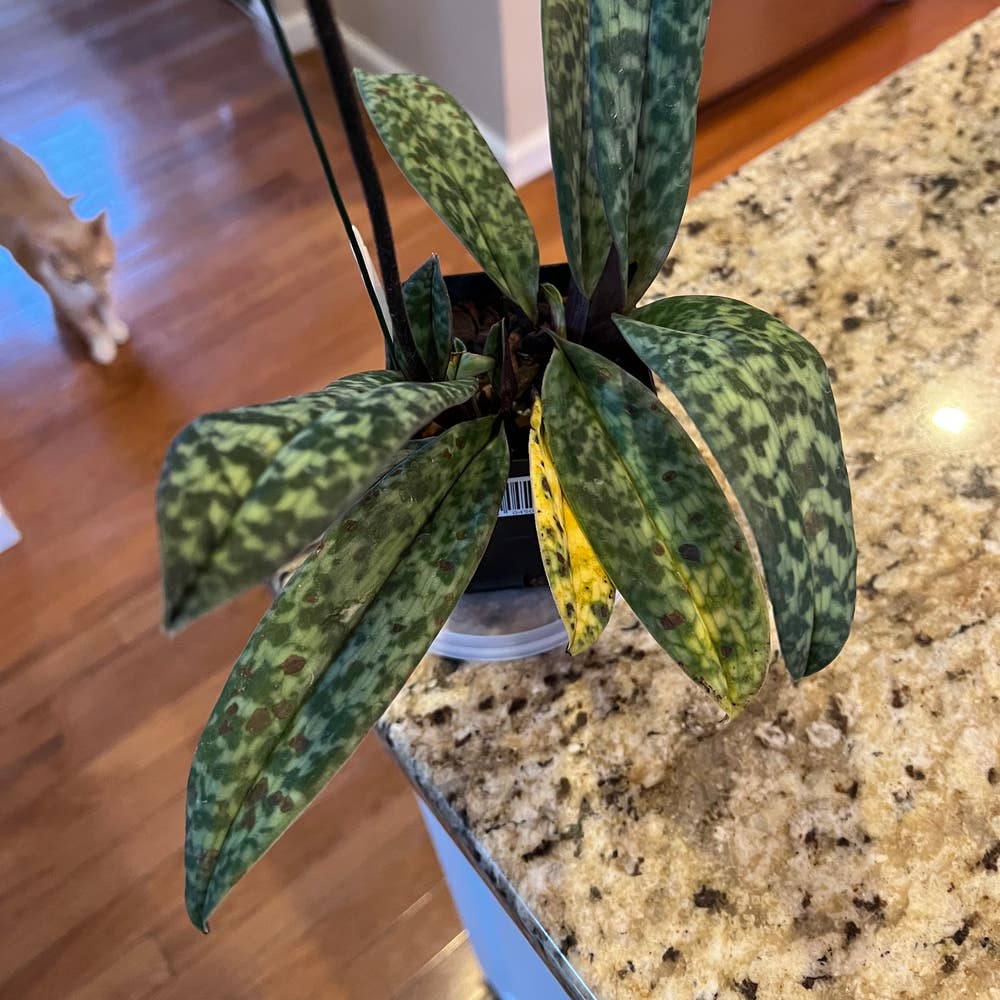
Get up close with your Paphiopedilum spicerianum. During your leaf check-up, look for patterns and textures. Spots could be a fungal rave or a bacterial block party. Check the undersides of leaves—sometimes that's where the party is really at.
Symptom Analysis
Match symptoms with probable causes. Are spots uniform or random? This could be the difference between sunburn and disease. Color changes or halos around spots often scream infection. Leaf texture is a telltale sign; crispy equals thirsty, while mushy screams overwatering.
When to Seek Professional Help
If your detective work hits a wall, call in the cavalry. Snap some clear photos and reach out to a plant pathologist or local extension service. They've got the tools and the brains to diagnose those spots. Remember, the right diagnosis is like finding the right key—it unlocks the door to recovery.
The Treatment Plan: Remedies for Each Cause
🍄 Battling Fungi
Fungi are no joke when it comes to your Paphiopedilum spicerianum. Antifungal treatment starts with selecting the right fungicide. Read those labels as if they contain the secrets of the universe; they'll guide you to the right product for your orchid's ailment. Apply with the precision of a master craftsman, adhering to a strict schedule. It's like setting your DVR to record your must-see show—don't miss a treatment.
🦠 Bacterial Spot Shutdown
Bacterial spots are trickier. They're like unwanted guests who don't take a hint. To show them the door, copper-based bactericides are your go-to. Think of them as the bouncers at the club of your orchid's leaves. Apply them with care and only as needed, because overuse can lead to resistant strains of bacteria. It's a delicate balance, like finding the perfect temperature in a finicky shower.
☀️ Healing Sunburn and Wounds
For sunburn or physical damage, it's all about tender loving care. Imagine you're nursing a sunburnt friend—gentle, soothing treatments are key. Increase shade, adjust your watering habits, and give your orchid a break from the harsh elements. It's like giving your plant a spa day after a rough weekend. Keep an eye on the healing process, and with time, your orchid should bounce back to its former glory.
Fortifying Your Orchid: Prevention Strategies
💧 Watering Wisdom
Watering your Paphiopedilum spicerianum is like playing Goldilocks—not too much, not too little, just right. Early morning is prime time to water, allowing leaves to dry before nightfall. Stick your finger in the soil; if it feels like a damp sponge, hold off on the H2O.
💨 Humidity and Airflow Harmony
Keep your orchid's air circulation on point. A gentle breeze that makes the leaves dance is perfect, but avoid turning your plant into a windblown mess. Balanced humidity is key; aim for that tropical middle ground, not a desert or a rainforest.
🛡️ Physical Protection Protocols
Sunburn and mechanical damage are the silent assassins of the orchid world. Position your plant where the sun is a gentle kiss, not a scorching slap. Rotate your orchid regularly to prevent leaning and lopsided growth, and keep those pruners sharp and clean to avoid unnecessary injury.
⚠️ Safety First
This content is for general information and may contain errors, omissions, or outdated details. It is not medical, veterinary advice, or an endorsement of therapeutic claims.
Always consult a qualified healthcare professional before using any plant as food, medicine, or supplement.
Never eat any plant (or feed one to pets) without confirming its identity with at least two trusted sources.
If you suspect poisoning, call Poison Control (800) 222-1222, the Pet Poison Helpline (800) 213-6680, or your local emergency service immediately.
Spotted an error? Please report it here.
Keep your Paphiopedilum spicerianum spot-free 🍃 with Greg's tailored care reminders, helping you prevent those pesky brown spots before they start!