Your Paphiopedilum spicerianum's Light Requirements
Paphiopedilum spicerianum
By the Greg Editorial Team
Apr 06, 2024•5 min read
This article was created with the help of AI so we can cover more plants for you. May contain errors. See one? Report it here.
- 🌱 Bright, indirect light is key—north or east/west-facing windows are ideal.
- 🌞 Prevent leaf burn with curtains or blinds; watch for discoloration.
- 💡 LED grow lights recommended for full spectrum, energy-efficient indoor cultivation.
Crafting the Perfect Indoor Light Environment
⛅️ Finding the Sweet Spot: Bright but Indirect Light
Identifying the ideal location for your Paphiopedilum spicerianum is like a stakeout for the perfect light - you want coverage without overexposure. North-facing windows or areas near east or west-facing windows are prime spots. They offer bright, indirect light without the harshness of direct sun. Remember, south-facing windows can be too intense, but a sheer curtain can act as a protective buffer.
🌞 Managing Light Intensity Through the Seasons
As the sun's angle shifts with the seasons, so should your plant's position. Use a light meter or your phone's sensor to track changes in light throughout the day. Adjust the plant's location to maintain that sweet spot of bright, indirect light. During darker months, consider supplemental lighting to keep your orchid happy.
🛡️ Shielding from the Sun's Kiss: Preventing Leaf Burn
Curtains and blinds are your allies in controlling light exposure. They let you tweak the amount of light your Paphiopedilum spicerianum receives, preventing the dreaded leaf burn. It's like giving your plant sunglasses for those overly sunny days.
🚨 Recognizing Signs of Excessive Light Exposure
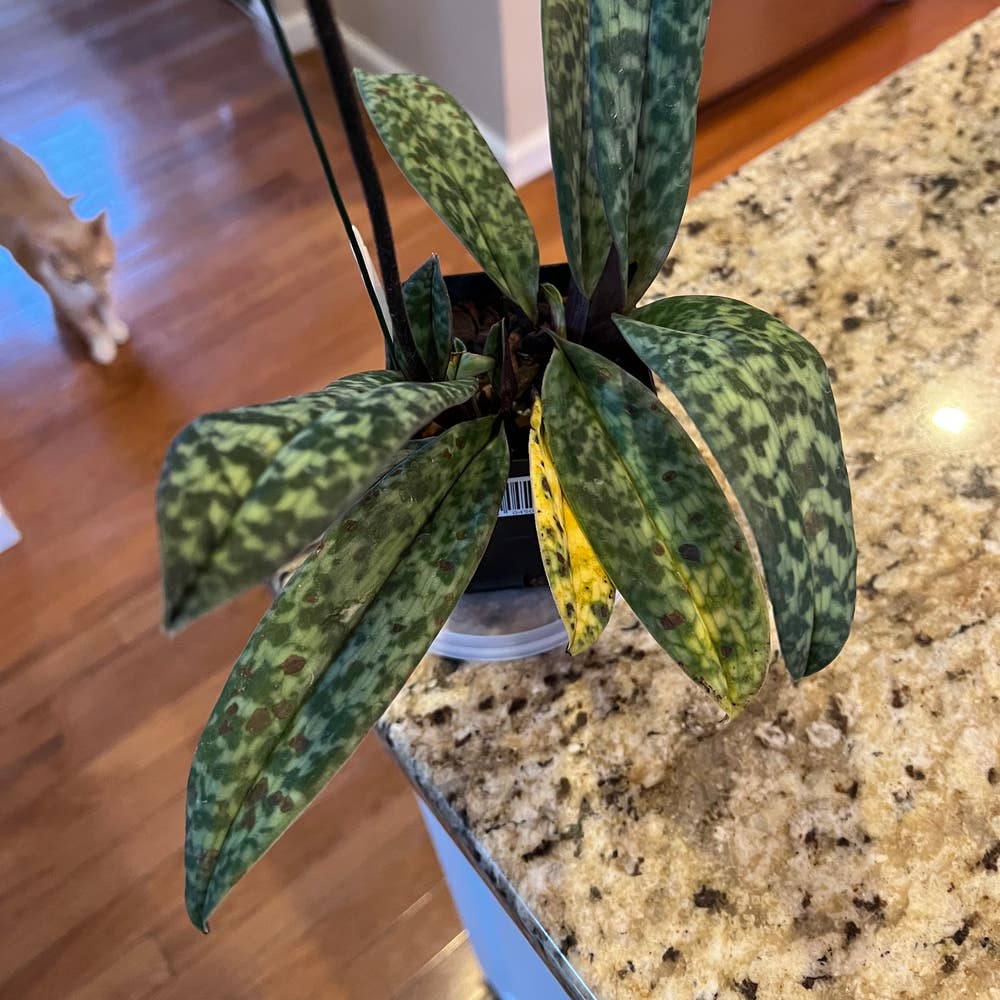
Keep an eye out for leaf discoloration or a crispy texture - sure signs that your orchid is getting too much sun. If you spot these symptoms, it's time to move your plant to a less exposed area or diffuse the light. Remember, your plant's leaves should look healthy and vibrant, not like they've had a day too long at the beach.
Emulating the Great Outdoors
⛅️ Shady Business: Replicating Natural Dappled Sunlight
Your Paphiopedilum spicerianum craves dappled sunlight, akin to the filtered light of its natural forest floor habitat. To achieve this outdoors, scout for spots that offer partial shade, such as beneath a tree or beside a building that casts intermittent shadows.
Artificial shade can be crafted using tools like garden umbrellas or shade cloths. These mimic the canopy's effect, protecting your orchid from intense direct sunlight while still providing the bright conditions it loves.
🌞 Weathering the Sun: Seasonal Adjustments
As the seasons change, so does the light. Your Paphiopedilum spicerianum's needs will shift. In spring and fall, light is generally milder, so your orchid can enjoy longer periods outdoors without much risk of scorching.
Come summer, the sun's rays intensify. It's crucial to beef up shade provisions or move your plant to a location that receives morning light and afternoon shade. This helps avoid the midday heat that could stress your orchid.
Transitioning between indoor and outdoor settings requires patience. Start by placing your orchid in a shaded outdoor area for a few hours each day, gradually increasing exposure. This acclimatization helps prevent shock from the sudden change in environment. Keep a close eye on your plant for signs of distress, adjusting its position as needed to find that sweet spot of light.
Let There Be Light... and Flowers!
⏰ Timing is Everything: Light Duration and Flowering Cycles
To trigger blooms in your Paphiopedilum spicerianum, light duration is key. These orchids need a specific balance of light and darkness to signal the start of their flowering cycle.
Understanding the Light Cycle
Paphiopedilum spicerianum is not a fan of the spotlight 24/7. It prefers a light cycle that closely mimics its natural habitat. Consistent light periods followed by restful darkness coax the plant into blooming mode.
Adjusting Light Exposure
Adjust your light exposure to promote flowering. This might mean using grow lights with timers to ensure your plant gets the right amount of light, especially if your living space is on the darker side. Remember, it's not just about the light; the dark period is equally important. Ensure your orchid gets its beauty sleep without any interruptions.
🛡️ Shielding from the Sun's Kiss: Preventing Leaf Burn
Keep an eye out for signs of leaf burn. If your Paphiopedilum spicerianum's leaves are turning yellow or brown, it might be getting too much direct sunlight. Use sheer curtains or blinds to diffuse the light and protect your plant from the harsh rays.
Recognizing Signs of Excessive Light Exposure
If the leaves are looking a bit crispy or bleached, it's a cry for help. Your orchid is telling you it's had too much sun. Dial back the light intensity and give it some shade. Remember, bright but indirect light is the sweet spot for these plants.
Grow Lights: Your Indoor Sun
💡 Choosing Your Artificial Sun: Types of Grow Lights
When the sun's rays aren't enough, grow lights step up to the plate. LED grow lights are the heavy hitters, offering a full spectrum of light with energy efficiency that's hard to beat. They're like the cool, sophisticated tech in the plant world, providing everything your Paphiopedilum spicerianum needs without the heat that could wilt its delicate petals.
Fluorescent lights, on the other hand, are the reliable old-timers. They're more cost-effective and still do a decent job of simulating the sun's spectrum. But let's not forget about high-intensity discharge (HID) lights – they're the power lifters, great for larger setups, but they'll hike up your electricity bill and heat up your space.
💡 Setting the Stage: Placement and Timing
Proper placement is non-negotiable. Think of your grow light as the sun's understudy – it needs to hit all the right spots. Position it overhead to bathe your orchid in even light, but keep it at a respectful distance. Too close and you risk leaf burn, too far and your plant might as well be in the dark.
Timing is just as crucial. Orchids thrive on routine, so hook your lights up to timers to mimic the natural ebb and flow of day and night. This isn't just about convenience; it's about tricking your Paphiopedilum spicerianum into thinking it's basking in its natural habitat, which can be the difference between a plant that survives and one that thrives.
⚠️ Safety First
This content is for general information and may contain errors, omissions, or outdated details. It is not medical, veterinary advice, or an endorsement of therapeutic claims.
Always consult a qualified healthcare professional before using any plant as food, medicine, or supplement.
Never eat any plant (or feed one to pets) without confirming its identity with at least two trusted sources.
If you suspect poisoning, call Poison Control (800) 222-1222, the Pet Poison Helpline (800) 213-6680, or your local emergency service immediately.
Spotted an error? Please report it here.
Let Greg's PlantVision pinpoint the ideal spot 📍 for your Paphiopedilum spicerianum, ensuring it gets just the right amount of dappled sunlight without the guesswork.