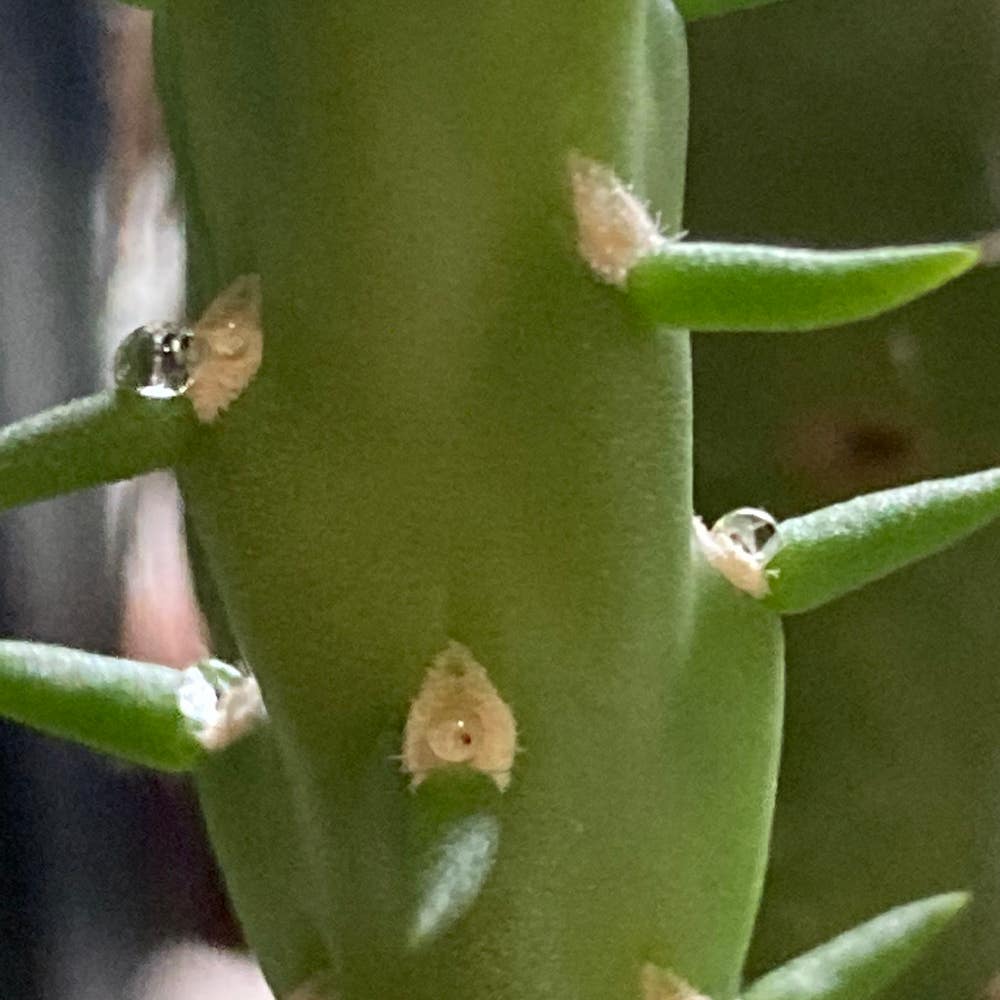
🌵 How Can You Tell If A Hoffmann's Teddy Bear Cholla Is Dying?
Cylindropuntia fosbergii
By the Greg Editorial Team
Feb 29, 2024•4 min read
This article was created with the help of AI so we can cover more plants for you. May contain errors. See one? Report it here.
- Shriveled or mushy stems signal watering issues; adjust soil moisture.
- 🌞 Irregular light and temperature cause color and growth changes; stabilize environment.
- Combat pests and mold with insecticidal soaps and improved airflow.
When Watering Goes Wrong
🚱 Signs of Inconsistent Watering
Shriveled stems scream dehydration; they're your Cholla's way of begging for a drink. Conversely, mushy stems are a distress signal of overwatering; they indicate your Cholla might be drowning in excess moisture.
🌊 Turning the Tide on Watering Woes
To nail the perfect watering schedule, let the soil's moisture level be your guide. Dry? Time to hydrate. Moist? Hold off on the H2O. Remember, your Cholla's not on a strict calendar; it's living on cactus time.
Light and Shade: Finding the Balance
🌵 Symptoms of Irregular Light Exposure
Hoffmann's Teddy Bear Cholla, like any self-respecting cactus, craves its sun time. Color changes in your Cholla are the first red flags; a fade to pale means it's starved for light, while a scorch to brown screams sunburn. Growth issues are just as telling. A Cholla stretching out more than usual is literally reaching for more light, a condition known as etiolation.
🌞 Let There Be (The Right Amount of) Light!
Adjusting your Cholla's light exposure is less about guesswork and more about observation. If it's looking more bleached than a 90s boy band, it's time to inch it closer to the light. Conversely, if it's sporting brown patches, it's pleading for a break from the rays. Rotate your plant periodically to ensure even sun worship. Remember, the goal is to mimic the natural desert conditions—bright, indirect light is your Cholla's best friend.
Temperature Tantrums
🌡️ Spotting Temperature Stress
The Hoffmann's Teddy Bear Cholla doesn't take kindly to temperature swings. Stunted growth is your first clue that your cactus is feeling the cold shoulder. If the vibrant green starts to fade or you spot unusual color changes, it's time to reassess your Cholla's living conditions.
🌞 Keeping the Heat Just Right
Keep your Cholla away from drafts and sources of extreme cold. Consistent temperatures are crucial; fluctuations are the nemesis of your desert dweller. Aim to maintain a cozy environment, ideally within the 20 to 40 °F range in winter, as per its comfort zone. Remember, while your Cholla loves the heat, it appreciates a cooler period during the dormant winter months.
The Perils of Pests and Pathogens
🐜 Unwanted Guests: Pests
Your Hoffmann's Teddy Bear Cholla might be hosting a pest party without your invite. Spider mites, aphids, and mealybugs are the usual suspects. They're tiny but can cause significant damage, leaving your Cholla stressed and sickly.
🍄 Fungal Foes: Mold and Root Rot
Mold and root rot are the silent saboteurs of your Cholla's wellbeing. Fuzzy growths or a musty smell from the soil are distress signals. These fungal foes thrive in overly moist conditions and can quickly turn your Cholla's roots into a mushy mess.
⚔️ Battling Back Against Bugs and Blight
To evict these pests, insecticidal soaps or neem oil are your go-to bouncers. For mold and root rot, cut back on watering, improve airflow, and consider a fungicide. Introducing predatory insects like ladybugs can also help maintain the balance. Remember, cleanliness is crucial—keep those tools sanitized and remove any plant debris to prevent future invasions.
Environmental Extremes: Too Much or Too Little
💧 Over-watering and Under-watering
Telltale signs
Over-watering can turn your Hoffmann's Teddy Bear Cholla into a mushy mess. You'll see discolored stems and a general droopiness that screams "help!" Under-watering, on the other hand, leaves your Cholla shriveled and gasping for a drink. The soil will be as dry as a stand-up comic's wit, pulling away from the pot's edges.
Striking a moisture balance
To hit the moisture sweet spot, let the soil dry out between waterings. Think of it as a well-wrung-out towel, not a swamp or a desert. Use room-temperature water to avoid shocking your Cholla's roots. If you're an over-lover with the watering can, set reminders to check the soil moisture before giving it a drink.
🌡️ Scorching and Chilling: Extreme Temperatures
Protecting from temperature trauma
Extreme temperatures can cook or freeze your Cholla's roots, leading to a plant meltdown. Scorching shows up as brown, crispy patches, while chilling makes your Cholla look deflated and defeated. Keep your Cholla away from drafts, direct heat sources, and intense sunlight during peak hours.
Climate stabilization
Aim for a consistent temperature range, avoiding the drama of temperature tantrums. Gradually acclimate your Cholla to new environments to prevent temperature shock. Use a thermometer to keep an eye on the ambient temperature, ensuring it's just right for your desert dweller. Remember, stability is key—your Cholla craves predictability.
⚠️ Safety First
This content is for general information and may contain errors, omissions, or outdated details. It is not medical, veterinary advice, or an endorsement of therapeutic claims.
Always consult a qualified healthcare professional before using any plant as food, medicine, or supplement.
Never eat any plant (or feed one to pets) without confirming its identity with at least two trusted sources.
If you suspect poisoning, call Poison Control (800) 222-1222, the Pet Poison Helpline (800) 213-6680, or your local emergency service immediately.
Spotted an error? Please report it here.
Keep your Hoffmann's Teddy Bear Cholla thriving 🌵 with Greg's personalized care reminders, ensuring the perfect balance of water and light every time.