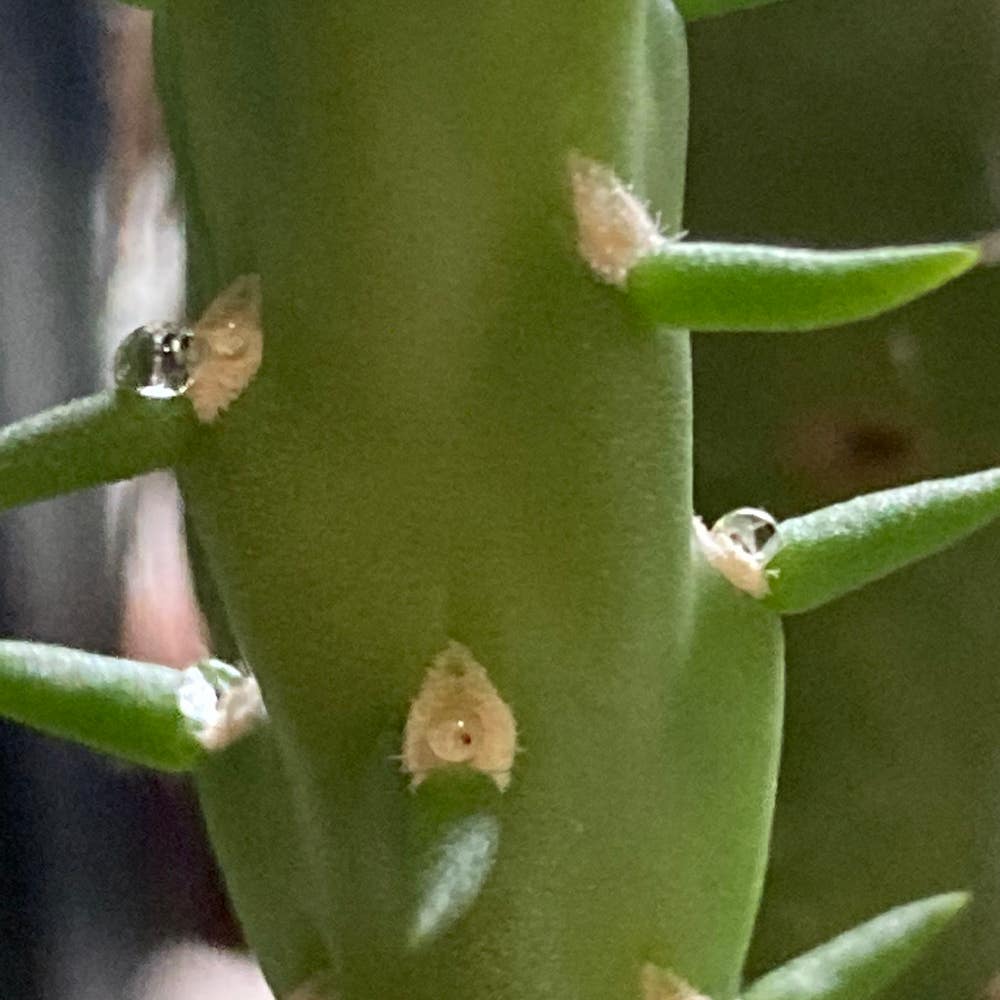
🌵 Why Are My Hoffmann's Teddy Bear Cholla Leaves Droopy?
Cylindropuntia fosbergii
By the Greg Editorial Team
Feb 29, 2024•4 min read
This article was created with the help of AI so we can cover more plants for you. May contain errors. See one? Report it here.
- Under/overwatering causes droopiness, find the watering sweet spot.
- Mimic Cholla's desert habitat with proper light, temperature, and air circulation.
- Regular inspections and pruning maintain health and prevent droopy leaves.
Pinpointing the Culprits Behind Droopy Leaves
💧 Lack of Water: When Thirst Leads to Droop
Underwatering turns Hoffmann's Teddy Bear Cholla leaves into a sad display of droopiness. Leaves may appear deflated, signaling a desperate need for water. The soil will feel like a barren wasteland, dry and unforgiving to the touch. This lack of moisture directly impacts the leaves' turgidity, leaving them limp and lifeless.
💦 Too Much Love: The Perils of Overwatering
Conversely, overwatering is like drowning your Cholla in misguided affection. Symptoms include yellowing leaves and a soft, mushy base, reminiscent of overripe fruit. This excess moisture can lead to a condition as severe as root rot, where the roots are suffocated, unable to breathe or take in nutrients.
😓 Feeling Stressed: Environmental Factors That Cause Droop
Temperature swings are like unexpected plot twists for Cholla cacti, causing leaves to droop in shock. Extreme heat or cold can wreak havoc on leaf health. Similarly, lighting plays a crucial role; too little light leaves leaves weak and droopy, while too much can scorch and stress them. Proper lighting maintains leaf rigidity and overall plant happiness.
First Aid for Droopy Leaves
💧 Adjusting the Watering Regimen
Finding the sweet spot for watering your Hoffmann's Teddy Bear Cholla is like tuning a guitar – it needs to be just right. Water deeply when the soil is dry to the touch about an inch down, then let it completely dry out before the next session.
🌱 Techniques for Checking Soil Moisture
Before reaching for the watering can, do the finger test or use a soil moisture meter to ensure accuracy. This isn't a guessing game; it's precision plant care.
🌞 Tweaking the Environment
Adjust light and temperature to mimic the Cholla's natural habitat. Bright light and warm temperatures during the day with cooler nights are ideal.
💨 Importance of Proper Air Circulation
Ensure your plant has good air circulation but avoid placing it in the path of harsh drafts. This isn't about creating a wind tunnel; it's about simulating a gentle desert breeze.
Turning Things Around: Long-Term Care for Perky Leaves
💧 Establishing a Watering Routine
Watering your Hoffmann's Teddy Bear Cholla isn't a set-it-and-forget-it deal. Craft a schedule that mimics the natural desert cloudbursts followed by dry spells. Water deeply when the soil is bone dry, then give it a break until the next dry period.
- Use a soil moisture meter to take the guesswork out of watering, or trust the good ol' finger test.
- Adjust for seasons: less in winter, more in summer.
- Remember, it's about consistency, not rigidity.
🌵 Crafting the Ideal Cholla Habitat
Your Cholla's environment is its kingdom. Bright, indirect light is its throne, and stable temperatures are its crown. Keep it royal by avoiding the drama of temperature swings.
- Monitor humidity; Cholla isn't a fan of the tropics, but it doesn't want to live in a desert mirage either.
- Ensure proper air circulation; think of it as the plant's personal breathing space.
- Keep the habitat consistent, and your Cholla will be less drama queen and more desert king.
Keeping an Eye Out: Routine Monitoring and Maintenance
🕵️ Regular Check-Ups
Regular check-ups are crucial for your Hoffmann's Teddy Bear Cholla. Inspect the plant for early signs of droopiness, which can indicate various issues. Look for leaf curling, discoloration, or brown spots that could signal dehydration, overwatering, or even pest infestations.
Respond to your plant's feedback promptly. If you notice any troubling signs, it's time to reassess your care routine. Adjustments might involve changing the watering schedule, shifting the plant's location, or dealing with pests.
✂️ Pruning for Health and Happiness
Pruning plays a key role in preventing droopy leaves. Remove dead or dying segments to encourage healthy growth and improve air circulation around the plant.
Use clean, sharp tools for pruning to avoid damaging the cactus. Always be cautious of the spines, and dispose of removed plant material properly to prevent any potential spread of disease. Remember, a little trim can go a long way in maintaining the health of your Cholla.
⚠️ Safety First
This content is for general information and may contain errors, omissions, or outdated details. It is not medical, veterinary advice, or an endorsement of therapeutic claims.
Always consult a qualified healthcare professional before using any plant as food, medicine, or supplement.
Never eat any plant (or feed one to pets) without confirming its identity with at least two trusted sources.
If you suspect poisoning, call Poison Control (800) 222-1222, the Pet Poison Helpline (800) 213-6680, or your local emergency service immediately.
Spotted an error? Please report it here.
Revive your Cholla's vigor 🌵 with Greg's tailored reminders, ensuring it never suffers from droopy leaves due to underwatering or environmental woes.