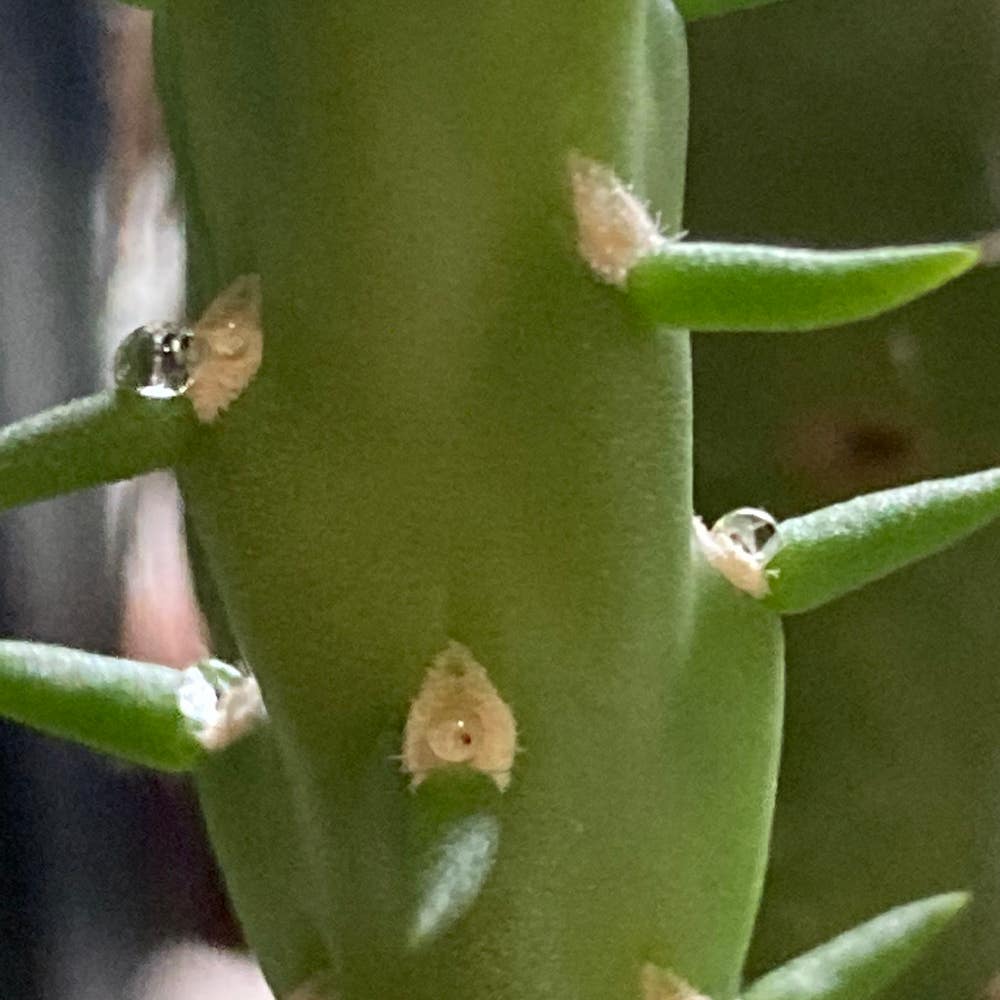
🧸 10 Tips for Fertilizing Your Teddy Bear Cactus
Cylindropuntia fosbergii
By the Greg Editorial Team
Jul 28, 2024•4 min read
This article was created with the help of AI so we can cover more plants for you. May contain errors. See one? Report it here.
- 🌵 Fertilize in growth season: Spring to summer, less in fall and winter.
- 💧 Apply with care: Dilute, water soil first, and avoid over-fertilization.
- 🍂 Monitor plant health: Watch for signs of over-fertilization and nutrient deficiencies.
Timing and Frequency
🌸 Seasonal Fertilization Schedule
Spring is a time of awakening for the Teddy Bear Cactus. Begin fertilizing as new growth emerges to give your cactus a nutrient boost. Continue this support through the summer months. As fall approaches, taper off the fertilization to coincide with the plant's natural slowing of growth. Winter is a rest period for the cactus; in colder climates, it's best to reduce fertilization to once a month or pause it entirely.
📅 Fertilization Frequency
- Growth Season (Spring to Summer): A bi-weekly fertilization schedule is a solid starting point. Observe your cactus's response and adjust as needed.
- Dormant Season (Fall to Winter): Fertilize sparingly, if at all. Over-fertilization during dormancy can harm more than help, potentially leading to issues like split bark or susceptibility to pests.
Application Techniques
🌱 Proper Fertilizer Application
Applying fertilizer to your Teddy Bear Cactus isn't just about feeding it; it's about doing so in a way that promotes health and vitality. Here's how to nail it:
- Check the Label: Begin by reading your fertilizer's instructions for any specific application guidelines.
- Dilute Wisely: Mix liquid fertilizer with water to create a half-strength solution. This prevents nutrient shock and protects the roots.
- Moist Soil First: Water your cactus before applying fertilizer to avoid root burn.
- Even Distribution: For granular fertilizers, sprinkle around the plant base, not directly on the stem, and water immediately.
- Monitor and Adjust: Observe your cactus's reaction after fertilization and adjust the dilution and quantity as needed.
🚫 Avoiding Fertilizer Burn
Fertilizer burn can leave your Teddy Bear Cactus looking more distressed than dapper. To prevent this:
- Less is More: When in doubt, use less fertilizer than you think you need.
- Watering Technique: Always water your plant before and after applying fertilizer to dilute the nutrients and protect the roots.
- Salt Buildup: Look out for a white, crusty layer on the soil, which indicates over-fertilization. If you spot this, flush the soil with water to remove excess salts.
- Post-Burn Care: If your cactus does suffer from fertilizer burn, hold off on further fertilization and consider repotting if damage is severe.
Monitoring Plant Health
Signs of Over-Fertilization
- Burned leaf edges on your Teddy Bear Cactus? That's a classic sign you've gone overboard with the fertilizer.
- A visible crust of excess fertilizer on the soil surface is a clear indicator that it's time to ease up on feeding.
- If your cactus is wilting despite the soil being moist, or if the roots appear dark and limp, these are distress signals from your plant.
- Keep an eye out for increased susceptibility to pests and diseases, as over-fertilization can weaken your cactus's defenses.
🚩 Detecting Nutrient Deficiencies
- Stunted growth or a lack of flowers could mean your Teddy Bear Cactus is starving for nutrients.
- Yellowing leaves are the cactus's way of waving a yellow flag for attention.
- Thin leaves and spindly stems? That's your cactus telling you it's on an involuntary fast.
- Regularly check for these signs and adjust your fertilization strategy to ensure your cactus thrives.
Special Considerations
🌱 Organic vs. Synthetic Fertilizers
Organic fertilizers are known for their slow release of nutrients, which supports soil health over time and aligns with the natural growth rhythm of Teddy Bear Cactus. They feed soil microbes, enhancing the soil ecosystem. Synthetic fertilizers, on the other hand, offer precise nutrient ratios and quick results, which can be particularly useful for correcting deficiencies swiftly.
Organic Fertilizers:
- Slow nutrient release, mimicking natural growth conditions
- Improve soil structure and microbial health
- Less risk of root burn with proper use
Synthetic Fertilizers:
- Fast-acting, providing immediate nutrient availability
- Consistent and controlled dosing
- Generally more cost-effective
🌸 Fertilizing During Bloom and Dormancy
Adjusting fertilization practices according to the Teddy Bear Cactus's life cycle is crucial. During the blooming season, the cactus may benefit from a bit more fertilizer to support flower production. However, in the dormant season, typically in cooler months, it's best to reduce or halt fertilization to prevent stress on the plant.
Blooming Season:
- Slightly increase fertilization to encourage blooms
- Use a fertilizer with a higher phosphorus content for flower support
Dormant Season:
- Reduce or stop fertilizing as growth slows
- Excess nutrients can accumulate and potentially harm the cactus when it's not actively growing
⚠️ Safety First
This content is for general information and may contain errors, omissions, or outdated details. It is not medical, veterinary advice, or an endorsement of therapeutic claims.
Always consult a qualified healthcare professional before using any plant as food, medicine, or supplement.
Never eat any plant (or feed one to pets) without confirming its identity with at least two trusted sources.
If you suspect poisoning, call Poison Control (800) 222-1222, the Pet Poison Helpline (800) 213-6680, or your local emergency service immediately.
Spotted an error? Please report it here.
Ensure your Teddy Bear Cactus thrives with seasonal fertilizing reminders 📅 from Greg, tailored to keep your spiky pal healthy without the guesswork.