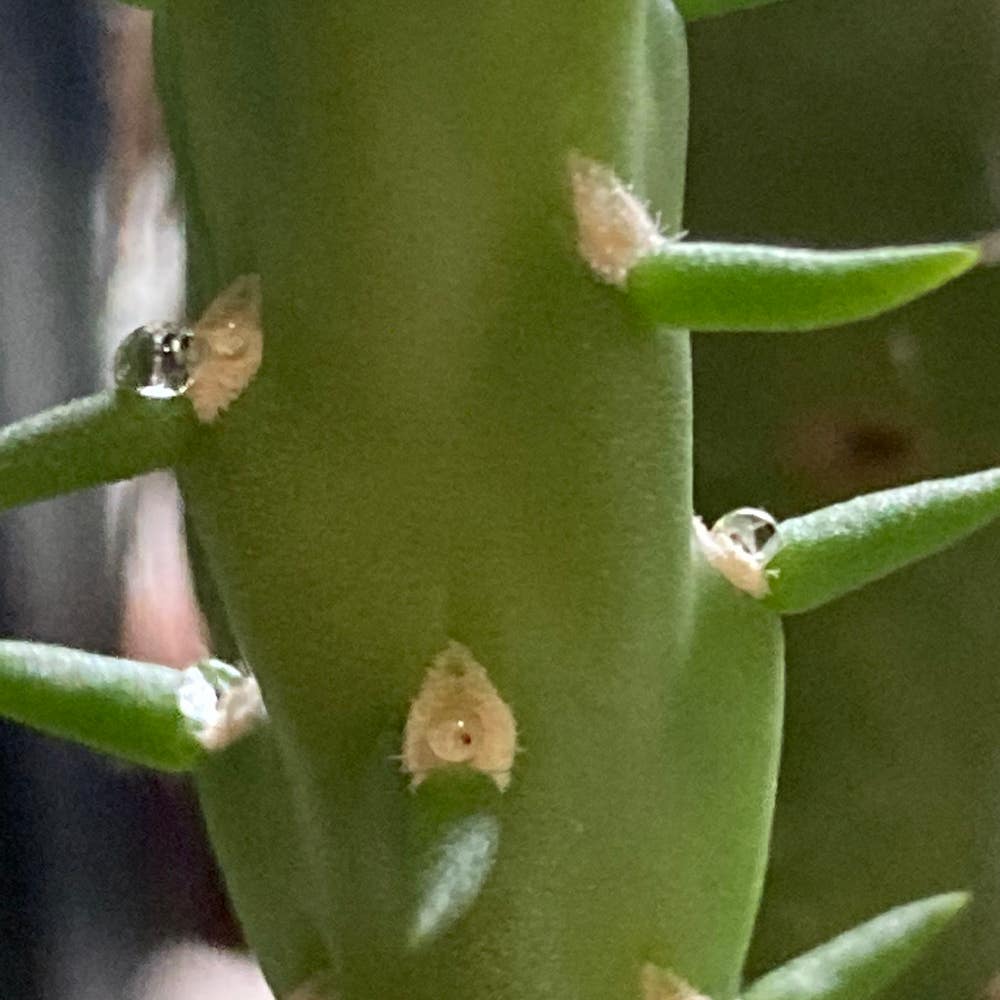
🧸 Why Your Teddy Bear Cactus Leaves Are Falling Over
Cylindropuntia fosbergii
By the Greg Editorial Team
Jul 28, 2024•3 min read
This article was created with the help of AI so we can cover more plants for you. May contain errors. See one? Report it here.
- 🌵 Over/underwatering and light issues cause leaf droop in Teddy Bear Cactus.
- 🌞💧 Adjust watering and light exposure to prevent and fix drooping leaves.
- 🪴 Choose correct soil and pot; repot as needed for root health.
Identifying Leaf Droop Causes
Signs of Overwatering
🌊 Overwatering can turn your cactus into a limp, yellowed version of its former self. Look out for these red flags:
- Soft, mushy stems that feel like overripe fruit.
- Soil that's more swamp than desert, indicating poor drainage.
- Yellowing leaves and a base softer than a plush toy, signaling excess moisture.
Underwatering Symptoms
🏜️ A thirsty Teddy Bear Cactus has its own SOS signals:
- Leaves losing their firmness, indicating a lack of turgidity.
- Wrinkled leaves that resemble crumpled paper, a clear sign of dehydration.
Light Exposure Issues
🌞 Your cactus's leaves can tell you if it's basking in too much or too little light:
- Discoloration or brown spots may point to sunburn from excessive exposure.
- Stretched-out growth or large gaps between leaves suggest a need for more sunlight.
Soil and Pot Concerns
🌱 The right soil and pot size are crucial for healthy roots:
- Non-porous soil or an incorrect pot size can lead to compacted soil and root-bound conditions.
- If water runs straight through when watering, it's a sign that roots may have taken over the pot.
Immediate Care Solutions
💧 Watering Adjustments
Overzealous watering often leads to droopy cactus leaves. Here's how to get back on track:
- Check the soil moisture before watering. If the top inch is dry, it's time to water.
- Use tools like moisture meters or the trusty finger test to avoid guesswork.
- After watering, ensure excess water drains to prevent root rot.
☀️ Light Optimization
Lighting is crucial for a perky Teddy Bear Cactus:
- Gradually move your cactus to a spot with bright, indirect sunlight.
- Monitor the light throughout the day to avoid prolonged direct exposure.
- Consider the changing seasons; your cactus may need more or less light as days grow shorter or longer.
🌱 Repotting Steps
When your cactus's pot becomes a tight squeeze, follow these steps:
- Choose a pot one size larger with proper drainage holes.
- Repot using a well-draining cactus mix, adding perlite or coarse sand for aeration.
- Water sparingly after repotting to help roots settle without stress.
Long-Term Prevention Strategies
📅 Routine Care Schedule
Creating a care calendar for your Teddy Bear Cactus isn't just about ticking boxes; it's about ensuring the longevity and vibrancy of your spiky friend. Here's how to keep on track:
- Watering: Establish a watering routine that reflects the cactus's natural arid environment—infrequent but thorough.
- Feeding: Fertilize sparingly, as overfeeding can do more harm than good.
- Pruning: Trim only when necessary to remove dead or damaged parts, encouraging healthy growth.
Regular observation is crucial. Like a silent partner, your cactus relies on you to notice subtle changes that may indicate issues.
🌵 Environmental Stability
Stable conditions are the bedrock of a healthy cactus. Here's what to keep in mind:
- Temperature: Aim for a consistent temperature range, avoiding sudden fluctuations that can stress the plant.
- Humidity: Keep humidity levels steady, mimicking the dry climate of the cactus's natural habitat.
- Airflow: Ensure good air circulation around the plant to prevent pest infestations and diseases.
Remember, your cactus thrives on predictability. By mirroring its native conditions, you're setting the stage for a long and healthy life.
⚠️ Safety First
This content is for general information and may contain errors, omissions, or outdated details. It is not medical, veterinary advice, or an endorsement of therapeutic claims.
Always consult a qualified healthcare professional before using any plant as food, medicine, or supplement.
Never eat any plant (or feed one to pets) without confirming its identity with at least two trusted sources.
If you suspect poisoning, call Poison Control (800) 222-1222, the Pet Poison Helpline (800) 213-6680, or your local emergency service immediately.
Spotted an error? Please report it here.
Prevent your Teddy Bear Cactus from drooping by leveraging Greg's PlantVision 🌵 to optimize watering and light, ensuring your spiky friend thrives in its pot.