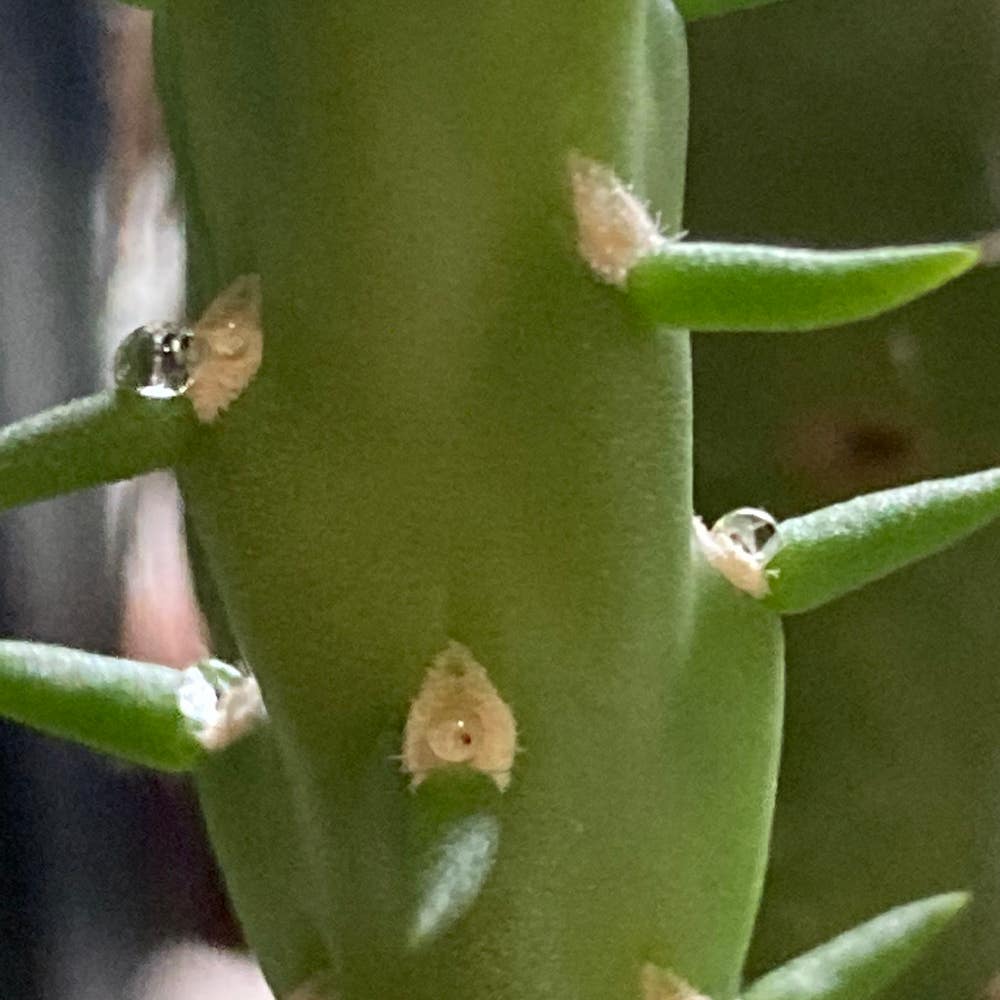
🧸 Dealing with Droopy Leaves on Your Teddy Bear Cactus
Cylindropuntia fosbergii
By the Greg Editorial Team
Jul 28, 2024•3 min read
This article was created with the help of AI so we can cover more plants for you. May contain errors. See one? Report it here.
- 🌵 Water wisely to prevent droopy leaves; check soil before watering.
- ☀️ Bright, indirect light is key; too much direct sun causes droopiness.
- 🌡️ Stable temperatures and consistent care routine are crucial for cactus health.
Identifying Droopy Leaves
Recognizing Symptoms
- A Teddy Bear Cactus with droopy leaves might display stems that sag or bend, straying from their typical upright posture.
- Firmness is key; a gentle touch should not find the stems yielding easily.
Diagnostic Tips
- Assess the plant's environment, considering light and water intake, to pinpoint potential causes of droopiness.
- If drooping persists or worsens, seeking professional advice is a wise step to ensure the health of your cactus.
Causes and Solutions
Overwatering and Underwatering
Droopy leaves on your Teddy Bear Cactus can be a cry for help, signaling water-related stress. Here's how to strike the right balance:
- Signs of overwatering: Leaves may turn a lighter shade of green and feel squishy. The soil will stay wet for too long, which can lead to root rot.
- Signs of underwatering: Look for brown leaf tips or an overall wilted appearance. The soil will feel bone dry.
- Adjusting habits: Water only when the top inch of soil is dry. This simple check can prevent both overwatering and underwatering, keeping your cactus happy.
Light and Temperature Factors
Your cactus loves the sun, but too much direct light can cause droopiness, much like a bad sunburn. Here's how to keep the balance:
- Light exposure: Aim for bright, indirect light. If you notice the leaves starting to droop, try moving your cactus to a spot with a bit more shade.
- Temperature conditions: Keep the temperature steady. Sudden changes are as shocking to plants as they are to us. Avoid placing your cactus near drafty windows or heating vents.
Reviving Droopy Leaves
🚑 Immediate Care Steps
When your Teddy Bear Cactus starts to slump, it's time for some quick action. Here's what you need to do:
- Check the soil moisture. If it's dry, water the plant thoroughly but cautiously. If it's wet, hold off on watering and consider improving drainage.
- Trim any damaged leaves with sterilized scissors to focus the plant's energy on recovery.
- Move your cactus to a stable environment, away from drafts or direct heat sources, to avoid temperature stress.
- Gradually adjust the plant's location if you suspect light issues, avoiding sudden changes that could shock it.
🌱 Long-Term Health Strategies
To keep your Teddy Bear Cactus standing tall in the long run, adopt these strategies:
- Establish a consistent watering schedule, adjusting for seasonal changes in temperature and light.
- Monitor the plant's reaction to your care, logging any changes to spot patterns and adjust as needed.
- Keep an eye out for early signs of distress, such as yellowing or browning leaves, and react promptly.
- Ensure the plant receives consistent light and is protected from harsh environmental conditions year-round.
Prevention Tactics
🌵 Consistent Care Routine
Consistency is the backbone of a thriving Teddy Bear Cactus. Here's how to solidify your care routine:
- Establish a regular watering schedule, allowing the soil to dry out completely between sessions.
- Choose a well-draining soil mix to prevent water retention and root rot.
☀️ Environmental Control
Crafting the right environment is crucial for your cactus to stand tall and proud:
- Position your cactus in bright, indirect sunlight to mimic the soft glow of a desert dawn.
- Maintain a stable temperature, steering clear of drafts and sudden changes.
- Ensure good airflow around your cactus to ward off pests and promote health.
Protecting your cactus from environmental stressors is about balance and attention to detail. Regular checks and minor adjustments can make all the difference in preventing droopy leaves.
⚠️ Safety First
This content is for general information and may contain errors, omissions, or outdated details. It is not medical, veterinary advice, or an endorsement of therapeutic claims.
Always consult a qualified healthcare professional before using any plant as food, medicine, or supplement.
Never eat any plant (or feed one to pets) without confirming its identity with at least two trusted sources.
If you suspect poisoning, call Poison Control (800) 222-1222, the Pet Poison Helpline (800) 213-6680, or your local emergency service immediately.
Spotted an error? Please report it here.
Ensure your Teddy Bear Cactus stands tall and thrives 🌵 with Greg's precise soil moisture checks and light monitoring, tailored to keep those leaves perky!