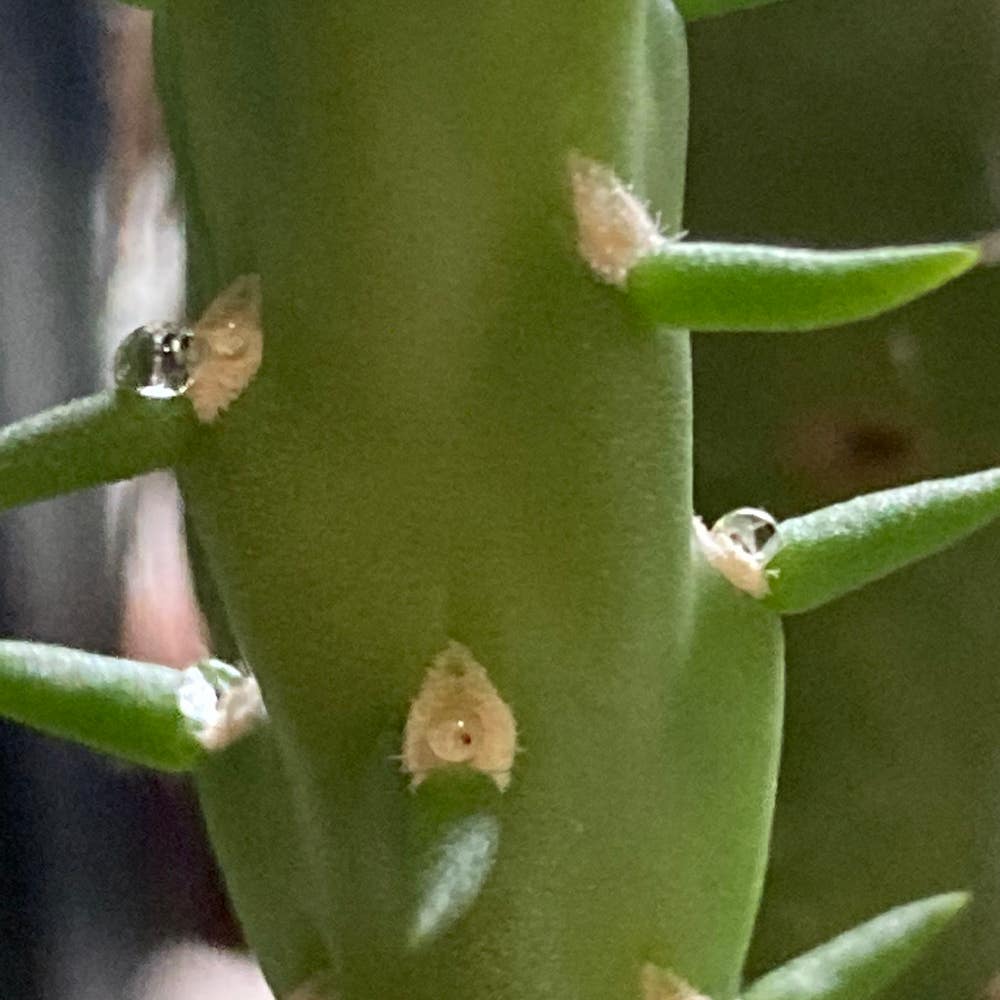
🧸 Propagating Teddy Bear Cactus: Step-by-Step Guide
Cylindropuntia fosbergii
By the Greg Editorial Team
Jul 28, 2024•4 min read
This article was created with the help of AI so we can cover more plants for you. May contain errors. See one? Report it here.
- 🌵 Three methods to propagate Teddy Bear Cactus: Offsets, Stem Cuttings, Seed Propagation.
- 🌱 Healthy offsets and stems are key; let cuttings callous before rooting.
- 🚫 Troubleshoot common issues: Overwatering, rot, pests, and slow germination.
Offsets Division
🌱 Identifying Offsets
Identifying the right offsets is like picking the best candidate for a job—they should be healthy, robust, and ready to stand on their own. Here's how to spot them:
- Look for offsets at the base of the parent Teddy Bear Cactus.
- Choose offsets that resemble miniatures of the parent plant, with a substantial size and their own roots.
🪓 Separating Offsets
Separating offsets is a delicate task, akin to performing a gentle surgery. Follow these steps for a smooth operation:
- Use a sterilized, sharp knife or tool to ensure a clean cut.
- Gently twist or cut the offset from the parent plant, taking care not to damage the roots.
- Allow the offset to dry for a day or two before planting, to reduce the risk of rot.
🌿 Planting Offsets
Once you've got your offsets, it's time to give them a new home. Planting them correctly is crucial for their growth and independence:
- Select a well-draining soil mix and a pot with drainage holes to prevent waterlogged conditions.
- Plant each offset shallowly, just enough to support it upright without burying it too deep.
- Position the pot in a spot with indirect light and water sparingly, keeping the soil moist but not soggy.
Stem Cuttings
🌱 Selecting a Stem
- Look for a stem that's firm and green, showing no signs of distress or disease.
- Choose a stem segment with several leaf nodes, which are the points where roots are most likely to sprout.
🪓 Preparing the Cutting
- Use sterilized shears or a knife to make a clean, angled cut below a node.
- Remove lower leaves to prevent rot and leave a few at the top for photosynthesis.
- Allow the cutting to callous over for a few days, creating a protective barrier against rot.
🌿 Rooting the Cutting
- Decide between rooting in soil, which provides stability, or water, which allows for easy root monitoring.
- For soil rooting:
- Plant the calloused cutting in well-draining soil, burying at least one node.
- Keep the soil moist but not soggy, and consider using a rooting hormone for a better success rate.
- For water rooting:
- Use a clear vessel with filtered or distilled water to avoid chemicals.
- Submerge the cut end, ensuring no leaves are in the water to prevent decay.
- Be patient, as roots take time to develop; resist the urge to tug on the cutting to check for roots.
Seed Propagation
🌵 Collecting Seeds
Harvesting seeds from your Teddy Bear Cactus is an exciting start to propagation. Follow these steps to ensure you collect viable seeds:
- Wait for the fruit of the Teddy Bear Cactus to dry out naturally on the plant.
- Carefully remove the dried fruit and open it to access the seeds.
- Clean the seeds by removing any fruit remnants to prevent fungal growth.
- Store the seeds in a cool, dry place until you're ready to plant them.
🌱 Sowing Seeds
Sowing Teddy Bear Cactus seeds requires precision and patience. Here's how to do it:
- Fill a shallow tray or pot with a well-draining cactus mix.
- Sprinkle the seeds evenly over the soil surface, pressing them in lightly.
- Cover the seeds with a thin layer of sand or fine soil to keep them in place.
- Moisten the soil with a fine mist, ensuring it's damp but not waterlogged.
- Create a greenhouse effect by covering the tray with plastic wrap, avoiding direct sunlight.
🌿 Growing Seedlings
Once your Teddy Bear Cactus seeds have germinated, it's time to focus on seedling care:
- Gradually remove the plastic covering to acclimate the seedlings to the environment.
- Protect the delicate seedlings from direct sunlight, gradually increasing light exposure.
- When seedlings have a few true leaves, transplant them into individual pots.
- Continue to provide bright light and water sparingly to encourage strong growth.
Troubleshooting Propagation
🌱 Offsets Challenges
Offsets are your propagation shortcuts, but they can hit roadblocks. Here's how to keep them on track:
- Non-rooting offsets need firm soil contact. If they're loose, they won't grow roots.
- Rot signals overwatering or poor drainage. Check the pot's drainage and adjust your watering schedule.
✂️ Stem Cuttings Complications
Stem cuttings can be finicky. To prevent them from drying out or developing mold:
- Maintain a moist, but not soggy, soil environment.
- Ensure good airflow around the cutting to prevent mold. If mold appears, reduce moisture and consider a fungicide.
🌱 Seedling Growth Issues
Seedlings are the infants of the plant world, and they need extra care:
- Overwatering is a common culprit for poor growth. Keep the soil damp, not waterlogged.
- If germination is slow, verify that the temperature and light conditions are optimal.
- Vigilance against pests is crucial. Inspect regularly and treat promptly if needed.
⚠️ Safety First
This content is for general information and may contain errors, omissions, or outdated details. It is not medical, veterinary advice, or an endorsement of therapeutic claims.
Always consult a qualified healthcare professional before using any plant as food, medicine, or supplement.
Never eat any plant (or feed one to pets) without confirming its identity with at least two trusted sources.
If you suspect poisoning, call Poison Control (800) 222-1222, the Pet Poison Helpline (800) 213-6680, or your local emergency service immediately.
Spotted an error? Please report it here.
Ensure your Teddy Bear Cactus propagation is foolproof 🌵 with Greg's personalized care reminders and troubleshooting tips for offsets, stem cuttings, and seeds!