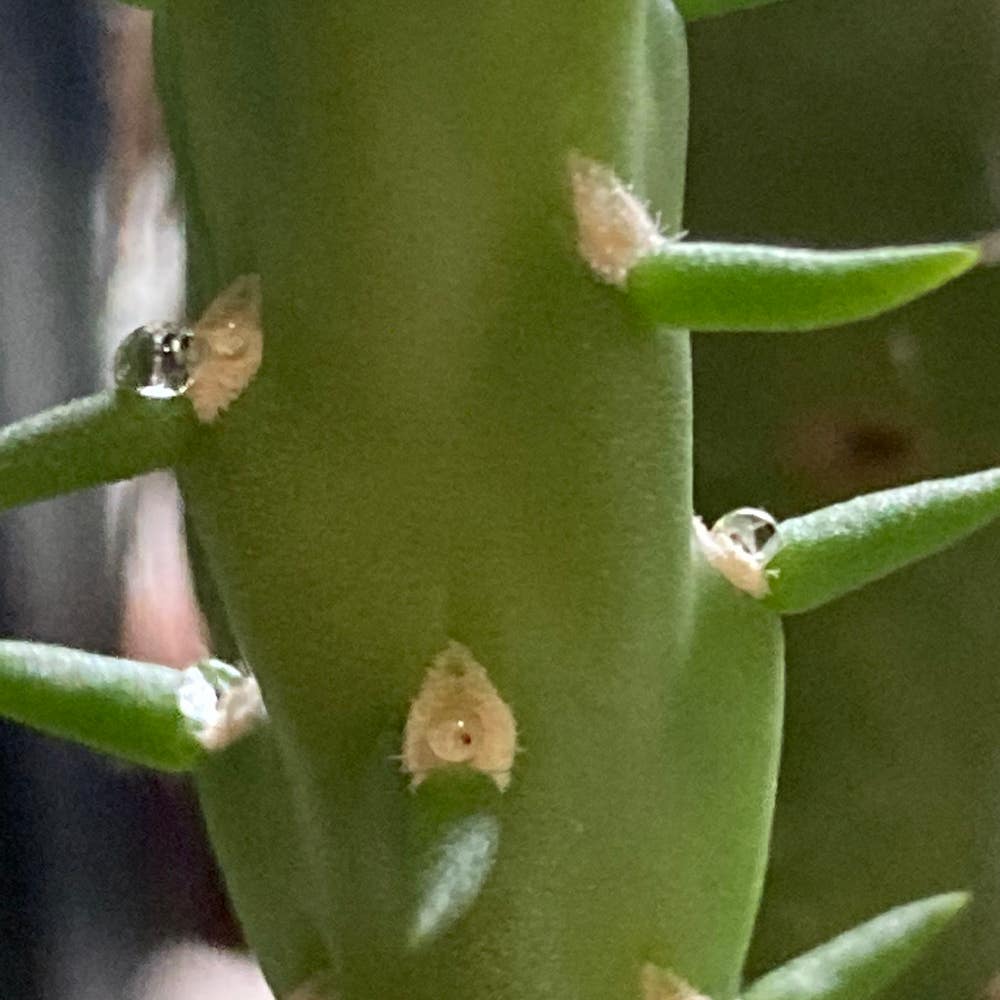
🌵 How to Fix Curling Leaves on Your Teddy Bear Cactus
Cylindropuntia fosbergii
By the Greg Editorial Team
Jul 28, 2024•5 min read
This article was created with the help of AI so we can cover more plants for you. May contain errors. See one? Report it here.
- 🌵 Curling leaves signal distress; look for twisting, discoloration, and texture changes.
- 💧☀️ Adjust water, light, and temperature to fix and prevent leaf curling.
- 🌿 Regular monitoring and balanced nutrients keep your cactus happy and healthy.
Diagnosing Leaf Curling
🕵️ Spotting the Signs
Leaf curling in Teddy Bear Cacti can be a subtle yet telling sign of distress. Here's what to look out for:
- Leaves twisting into tight spirals or folding upwards, resembling a closed book.
- Edges that appear crumpled or curled inwards, similar to a rolled-up scroll.
- Discoloration accompanying the curling, with leaves turning yellow, brown, or showing necrotic spots.
- A texture change in the leaves, from firm to brittle or papery.
🕵️ Common Causes
Identifying the root of the problem is crucial. Common factors leading to leaf curling include:
- Watering Issues: Both overwatering and underwatering can lead to leaf curl. The soil should feel like a well-wrung sponge—moist but not soggy.
- Light Stress: Too much direct sunlight can cause leaves to curl as a shield against the harsh rays, while insufficient light can lead to stretching and curling as the plant searches for more.
- Temperature Fluctuations: Teddy Bear Cacti prefer a stable climate. Sudden changes can trigger a stress response, resulting in curled leaves.
- Pests and Diseases: Keep an eye out for signs of infestation or infection, such as bite marks, webbing, sticky residue, or powdery mildew.
- Nutrient Imbalances: A lack of essential nutrients can also lead to curling leaves as the plant struggles to maintain its health.
Watering Adjustments
Assessing Moisture Needs
Teddy Bear Cacti are as unique as their name suggests, especially when it comes to their thirst. To prevent those leaves from curling, you'll want to get the watering just right. Here's how to gauge your cactus's moisture needs:
- Check the top inch of soil before reaching for the watering can. If it feels dry, it's time to water. If it's still damp, give it a bit more time.
- Consider using a moisture meter for a no-guess approach. It's like having a secret window into your cactus's world.
- The finger test is a classic: insert your finger into the soil up to the first knuckle. If it's dry, your cactus is ready for a drink.
🚿 Correcting Watering Issues
Got a cactus with curling leaves? It's time to play detective and adjust your watering habits. Here's what to do:
- If you've been over-watering, let the soil dry out completely before watering again. This might just be the breather your cactus needs.
- In the case of under-watering, give your cactus a thorough but gentle watering. Then, set a reminder to check the soil more frequently.
- Observe your plant's response after watering. New growth and happy leaves mean you're on track. If the curling persists, tweak your routine until you find that sweet spot.
- Remember, your cactus's watering needs can change with the seasons. More water may be needed during dry spells, and less when it's cooler.
Light and Temperature Control
Ideal Lighting Conditions 🌵
Teddy Bear Cacti flourish in bright, indirect sunlight. Direct exposure can lead to stress and leaf curling, so aim for a spot that mimics their natural, dappled desert habitat. Here's how to achieve that:
- Position the cactus in a location where sunlight is filtered through a sheer curtain or blinds.
- Rotate the plant periodically to ensure even light distribution and prevent leaning.
Temperature Management 🔥
Consistent temperatures are key to keeping your Teddy Bear Cactus happy. They prefer a stable environment that avoids the extremes:
- Maintain daytime temperatures around 70-100°F (21-38°C) and cooler nights, ideally between 50-70°F (10-21°C).
- Protect the cactus from drafts and direct heat sources like radiators or air conditioners to prevent stress and leaf curling.
Nutrient Balance
🌿 Detecting Deficiencies
Recognizing the signs of nutrient-related leaf curling in your Teddy Bear Cactus is crucial. Look for symptoms such as:
- Yellowing leaves, which may indicate a nitrogen shortage.
- Leaf tips with a burnt appearance, suggesting a lack of potassium.
- Stunted growth or a poor bloom, which can signal an overall nutrient deficiency.
Regular soil testing can act as a health check-up, revealing any missing nutrients before they cause significant damage.
🌱 Fertilization Techniques
Once deficiencies are identified, it's time to nourish your cactus with precision:
- Use a balanced, slow-release fertilizer with an even NPK (nitrogen, phosphorus, potassium) ratio.
- Apply a water-soluble fertilizer monthly during the growing season, observing your plant's response to adjust as needed.
- Avoid over-fertilization, which can lead to salt buildup and nutrient lockout, by following the recommended dosages.
- Incorporate organic matter into the soil to improve nutrient uptake and soil health.
By maintaining a balanced diet for your Teddy Bear Cactus, you can correct and prevent nutrient-related leaf curling.
Preventing Future Curling
🕵️♂️ Routine Monitoring
Routine inspections are your first line of defense against leaf curling. Think of them as regular health check-ups for your Teddy Bear Cactus.
- Check for early signs of curling, pests, and diseases during each inspection.
- Rotate the cactus periodically to promote even light exposure.
- Adjust your care routine with the changing seasons, watering less in winter and providing more shade in summer.
🌍 Environmental Stability
Consistency in the cactus's environment is like a steady drumbeat—it's essential for preventing stress that can lead to leaf curling.
- Strive for stable temperatures and avoid placing your cactus in drafty areas.
- Maintain a consistent watering schedule, ensuring the soil moisture is just right.
- Keep the surrounding area clean to deter pests and create a stress-free zone for your cactus.
⚠️ Safety First
This content is for general information and may contain errors, omissions, or outdated details. It is not medical, veterinary advice, or an endorsement of therapeutic claims.
Always consult a qualified healthcare professional before using any plant as food, medicine, or supplement.
Never eat any plant (or feed one to pets) without confirming its identity with at least two trusted sources.
If you suspect poisoning, call Poison Control (800) 222-1222, the Pet Poison Helpline (800) 213-6680, or your local emergency service immediately.
Spotted an error? Please report it here.
Ensure your Teddy Bear Cactus leaves stay perfectly unfurled 🌵 with Greg's custom care plan that monitors and adjusts watering, light, and nutrients to prevent curling.