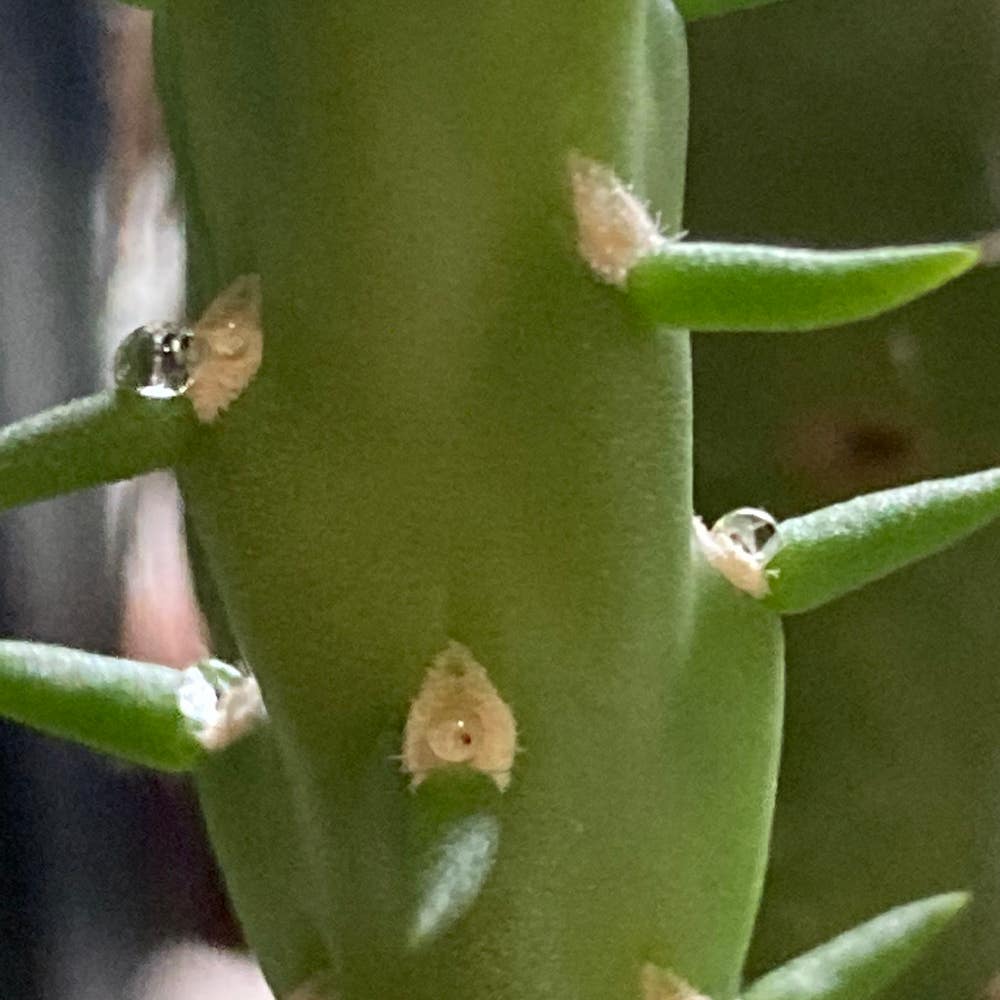
🌵 10 Indoor Teddy Bear Cactus Care Hacks
Cylindropuntia fosbergii
By the Greg Editorial Team
Jul 28, 2024•5 min read
This article was created with the help of AI so we can cover more plants for you. May contain errors. See one? Report it here.
- 🌵 Water using 'soak and dry' method to prevent overwatering.
- 🌡️ Keep temperatures 65°F-80°F and humidity 40-60% for cactus health.
- 🌞💧 Choose well-draining soil, fertilize seasonally, and place in indirect light.
Watering and Humidity Control
Mastering the art of watering your Teddy Bear Cactus is like tuning an instrument; it requires attention and a gentle touch. Here's how to hit the right notes:
- Water thoroughly when the soil is completely dry, typically every 1-2 weeks, depending on the season and indoor conditions.
- Use the "soak and dry" method: drench the soil until water runs out of the drainage holes, then wait for it to dry out before watering again.
Recognizing the signs of improper watering will keep your cactus thriving:
- Overwatering: Look out for yellowing or mushy stems, a clear SOS from your cactus.
🏜️ Underwatering: Wrinkled or shriveled appearance indicates your cactus is thirsty for more.
Managing indoor humidity is crucial for mimicking the cactus's natural habitat:
- Aim for indoor humidity levels between 40-60%.
- Use a hygrometer to monitor the air moisture and adjust your watering accordingly.
- If the air is too dry, consider a pebble tray or a humidifier to raise humidity around the plant.
Remember, your Teddy Bear Cactus is a desert native that values its personal space when it comes to water. Keep a watchful eye and adjust your care to the rhythms of your home environment.
Ideal Temperature and Soil
Teddy Bear Cactus thrives in a stable and warm environment, just like its natural desert habitat. Aim to maintain indoor temperatures between 65°F and 80°F (18°C to 27°C) to keep your spiky friend comfortable. Monitor the temperature with thermometers and use thermostats to avoid fluctuations that can stress the plant. Remember, no sudden chills or heat waves—consistency is key.
🌱 Crafting the Perfect Soil Mix
The right soil mix is a game-changer for your Teddy Bear Cactus. Here's what you need:
- A well-draining cactus or succulent potting mix.
- Additives like perlite or sand to improve drainage.
- A pot with drainage holes to prevent waterlogging.
🪴 Soil Aeration and Drainage
Soil aeration is like giving your cactus's roots a breath of fresh air. Here's how to maintain it:
- Loosen the soil surface occasionally without disturbing the roots.
- Ensure the potting mix doesn't compact over time, which can suffocate the roots.
- Keep the soil dry between waterings—cacti prefer a drought to a flood.
Fertilization Schedule
Understanding your Teddy Bear Cactus's nutritional needs is like cracking a code that unlocks vigorous growth and vibrant health. Here's how to get it right:
- Decoding Nutritional Needs: Teddy Bear Cacti thrive on a balanced diet. During the growing season, a half-strength balanced fertilizer monthly does the trick. Look for a mix high in phosphorus to encourage blooming.
- Timing and Technique: Fertilize when your cactus is actively growing, typically in spring and summer. Dilute your fertilizer to prevent nutrient overload. In the dormant winter months, hold off completely to avoid disturbing your cactus's rest.
🕰️ When to Fertilize
- Spring to Summer: This is your cactus's growing season. Fertilize monthly with a diluted balanced fertilizer.
- Fall: Begin to reduce the frequency as growth slows down.
- Winter: No fertilizer needed—your cactus is resting.
🌱 How to Fertilize
- Dilution is Key: Mix your fertilizer to 1/4-1/2 the strength recommended on the package.
- Choose the Right Type: Liquid, granular, slow-release, or organic options like worm castings are all suitable. Select based on your convenience and the cactus's response.
- Observe and Adjust: Keep an eye on your cactus's reaction to fertilization and adjust as needed. Signs of over-fertilization include salt buildup and leaf discoloration.
By following these guidelines, you'll ensure your Teddy Bear Cactus has just the right amount of nutrients to flourish without the risk of overfeeding.
Indoor Growing Challenges
Indoor gardening can throw a curveball or two when it comes to nurturing your Teddy Bear Cactus. Let's tackle the common issues head-on.
🌵 Identifying and Solving Common Indoor Cactus Issues
- Keep an eye out for signs of distress in your cactus, such as discoloration, soft spots, or stunted growth.
- Ensure your cactus isn't sitting in soggy soil, which can lead to root rot—a common indoor cactus killer.
- Rotate your cactus periodically to promote even growth and prevent leaning towards the light source.
🦗 Implementing Pest Prevention and Control
- Regularly inspect your cactus for pests like mealybugs, spider mites, and scale insects. Early detection is key!
- Use a mix of water and isopropyl alcohol to combat mealybugs, or opt for eco-friendly insecticidal soaps.
- Encourage beneficial insects, or introduce them if you're up for it, to maintain a natural balance and pest control.
🩺 Dealing with Disease: Prevention and Cure
- Prevent diseases by avoiding overwatering and ensuring proper air circulation around your cactus.
- If you spot any signs of disease, isolate the affected plant to prevent spread and consult a cactus-savvy expert for treatment options.
- Remember, a healthy cactus is your best defense. Provide it with the right light, temperature, and humidity to keep it strong.
Home Placement and Care
🌵 Assessing the Best Spots for Your Cactus
The ideal location for your Teddy Bear Cactus balances sunlight and safety. Aim for a spot with ample indirect light, away from high-traffic areas to minimize the risk of injury from its spines. Consider these factors:
- Avoid drafts and direct heating or cooling vents.
- Ensure the spot receives stable light throughout the day.
- Keep the cactus out of reach of children and pets to prevent accidents.
🛠 Routine Maintenance for a Healthy Cactus
Regular care keeps your cactus happy. Here's a quick maintenance checklist:
- Rotate the cactus periodically for even light exposure.
- Inspect for pests or signs of disease, taking action if needed.
- Clean dust off the spines gently with a soft brush to allow the cactus to breathe.
✂️ Grooming Your Teddy Bear Cactus
Grooming is more than just aesthetics; it's about health. Trim any dead or damaged spines to prevent decay. If your cactus outgrows its space, consider repotting in spring or summer when it's actively growing. Remember, a well-groomed cactus is a healthy cactus.
⚠️ Safety First
This content is for general information and may contain errors, omissions, or outdated details. It is not medical, veterinary advice, or an endorsement of therapeutic claims.
Always consult a qualified healthcare professional before using any plant as food, medicine, or supplement.
Never eat any plant (or feed one to pets) without confirming its identity with at least two trusted sources.
If you suspect poisoning, call Poison Control (800) 222-1222, the Pet Poison Helpline (800) 213-6680, or your local emergency service immediately.
Spotted an error? Please report it here.
Ensure your Teddy Bear Cactus flourishes with spot-on care 🌵 by using Greg to track watering, humidity, and fertilizing schedules from these top hacks.