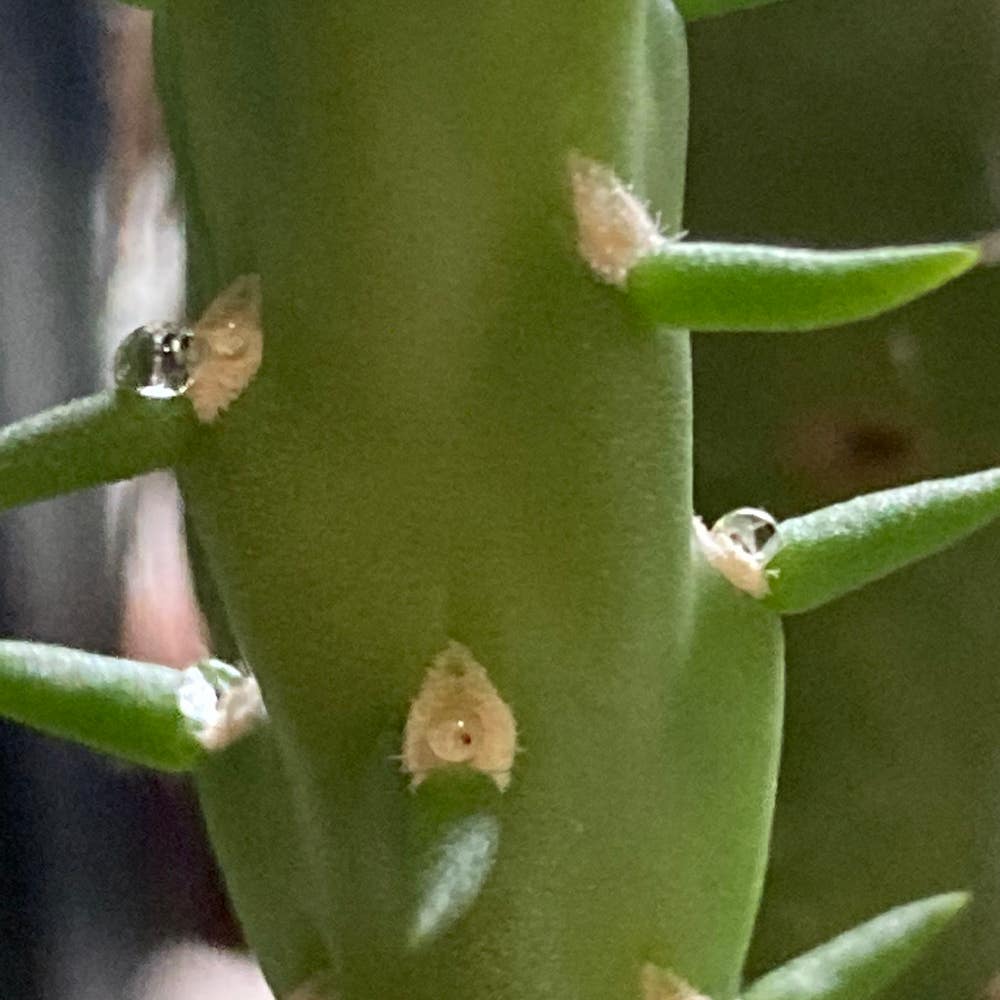
🧸 3 Tips for Healing Black Spots on Your Teddy Bear Cactus
Cylindropuntia fosbergii
By the Greg Editorial Team
Jul 28, 2024•3 min read
This article was created with the help of AI so we can cover more plants for you. May contain errors. See one? Report it here.
- 🌵 Black spots signal issues like fungal infections or sunburn; correct diagnosis is key.
- 💧 Adjust watering and sunlight to prevent and heal black spots on your cactus.
- 🍄 Use fungicides and pruning for fungal infections; maintain a clean environment.
Spotting Black Spots
Signs and Symptoms
Black spots on your Teddy Bear Cactus can sneak up like uninvited guests at a party. They might start as innocuous dots but can grow into larger, more troubling patches. Here's what to watch for:
- Random patterns: Unlike the cactus's natural symmetrical markings, black spots appear without order.
- Texture tells a tale: A powdery feel may suggest a fungal issue, while a slimy surface could indicate bacteria.
- Color cues: Spots often show up in jet black, but keep an eye out for brownish tones or yellow halos that signal distress.
🕵️♂️ Diagnosing the Cause
Pinpointing the cause of black spots is crucial for the right treatment. Here's how to play plant detective:
- Water woes: Overwatering can lead to soft, water-soaked spots. Check the soil's moisture level before you water—only proceed if it's dry.
- Sunburn signs: If the spots are flat and smooth, especially on the sunniest side, your cactus might be telling you it's had too much UV love.
- Fungal flags: Look for a powdery or fuzzy coating, irregular spot shapes, or a ring-like pattern. These are signs that it's time to rethink humidity and airflow around your cactus.
- Trauma traces: Physical damage can leave flat, non-progressive marks. They're a reminder that your spiky friend needs gentle handling.
Treating Black Spots
💧 Watering Adjustments
- Check the soil moisture before watering. Only water when the soil feels dry to the touch.
- Use a drip irrigation system or a long-spout watering can to water at the base, avoiding moisture on the cactus itself.
- Water in the early morning to allow any accidental splashes on the plant to dry out, minimizing fungal growth opportunities.
- Ensure your pot has drainage holes and use well-draining soil to prevent water from pooling at the roots.
☀️ Sunlight Management
- Gradually acclimate your Teddy Bear Cactus to direct sunlight to prevent sunburn, which can cause black spots.
- Find the sweet spot of bright, indirect light where the plant thrives without the risk of scorching.
- Rotate the plant periodically for even light exposure, ensuring all sides receive adequate sunlight.
🍄 Fungal Infection Solutions
- Dry air and sunlight are natural deterrents for bacterial and fungal growth.
- If a fungal infection is suspected, consider using a fungicide or antibacterial treatment as directed.
- Prune any affected areas carefully to prevent the spread of infection and improve air circulation around the plant.
- Adjust the plant's environment to promote better health, such as moving it to a spot with more suitable light and ensuring good air flow.
Preventing Black Spots
🌿 Environmental Control
Maintaining a stable environment is crucial for preventing black spots on your Teddy Bear Cactus. Here's how to create a spot-resistant habitat:
- Ensure consistent temperatures and humidity levels to minimize plant stress.
- Position your cactus in a location with bright, indirect sunlight to avoid sunburn.
- Promote good air circulation around your plant to deter fungal growth.
- Keep the surrounding area free of debris and fallen leaves to reduce pathogen risks.
🛡️ Regular Care Routine
A vigilant care routine is your best defense against black spots. Implement these practices to keep your cactus healthy:
- Conduct regular inspections for early detection of black spots.
- Water only when the soil is dry to the touch, preventing overwatering and fungal issues.
- Prune away any dead or damaged foliage with sterilized tools to prevent infection spread.
- Quarantine new plants before introducing them to your collection to avoid cross-contamination.
- Clean your gardening tools after each use to maintain a hygienic environment.
⚠️ Safety First
This content is for general information and may contain errors, omissions, or outdated details. It is not medical, veterinary advice, or an endorsement of therapeutic claims.
Always consult a qualified healthcare professional before using any plant as food, medicine, or supplement.
Never eat any plant (or feed one to pets) without confirming its identity with at least two trusted sources.
If you suspect poisoning, call Poison Control (800) 222-1222, the Pet Poison Helpline (800) 213-6680, or your local emergency service immediately.
Spotted an error? Please report it here.
Ensure your Teddy Bear Cactus stays spotless 🌵 with Greg's environmental monitoring and care reminders, tailored to keep those black spots at bay.