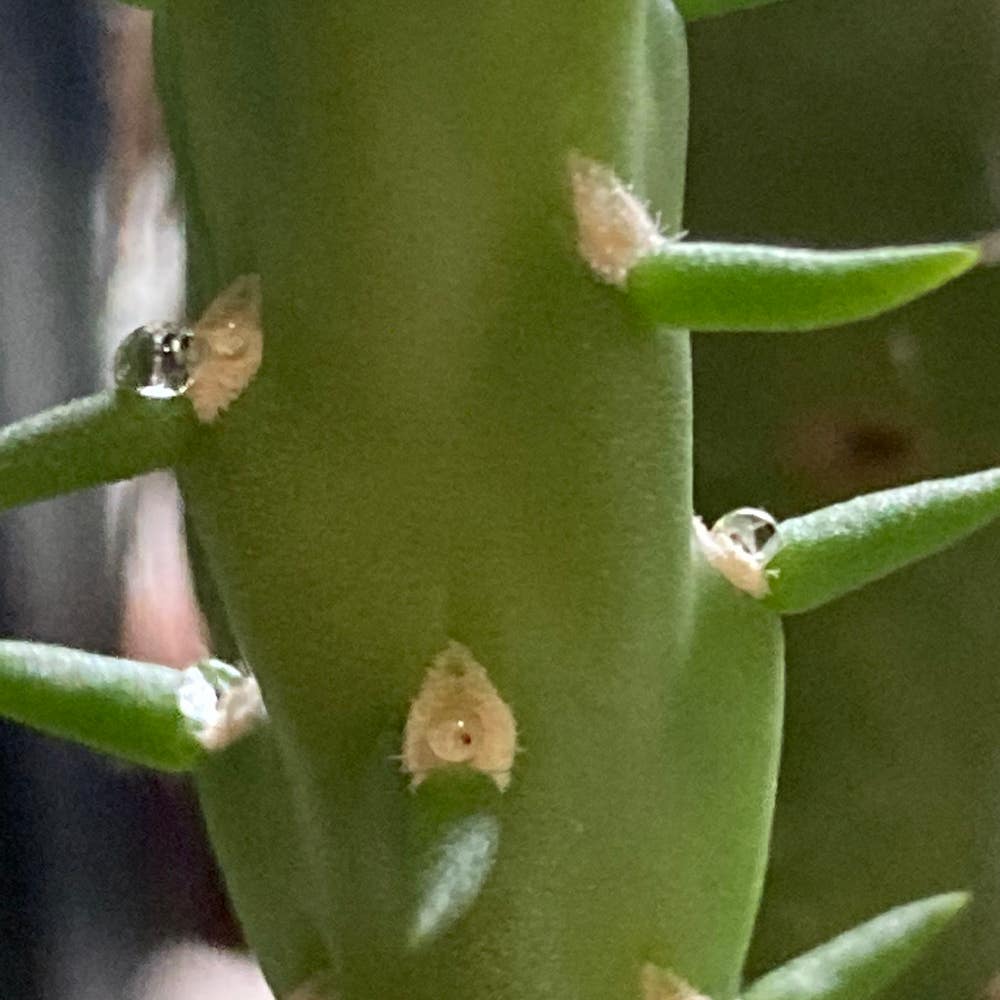
🌵 Teddy Bear Cactus Wilting: Causes and Solutions
Cylindropuntia fosbergii
By the Greg Editorial Team
Jul 28, 2024•5 min read
This article was created with the help of AI so we can cover more plants for you. May contain errors. See one? Report it here.
- 🌵 Water and heat stress are main causes of Teddy Bear Cactus wilting.
- 🚿💡 Adjust watering and shade to prevent and treat wilting symptoms.
- 🩺 Seek expert help if wilting persists despite adjustments.
Identifying Wilting Causes
💧 Water Stress Indicators
A Teddy Bear Cactus showing signs of distress might be struggling with water stress. Here's how to tell:
- Overwatering: Look out for yellowing or swollen stems, a soil scent that's off, or a pot that feels heavier than usual.
- Underwatering: Symptoms include wrinkled or crispy stems, soil pulling away from the pot's edge, and a pot that's lighter than it should be.
Upon noticing these signs, take immediate action:
- Adjust your watering schedule.
- Check the soil moisture with a finger test—dry soil calls for water, while soggy soil means it's time to hold back.
🌡️ Heat Stress Symptoms
Teddy Bear Cactus can also wilt from too much heat. Keep an eye out for:
- Sunburn, which appears as bleached, crispy patches on the skin.
- Wilting or stunted growth, signaling the plant is too hot.
If you spot these symptoms, provide relief by:
- Moving your cactus to a cooler spot.
- Offering shade during the hottest parts of the day.
🦠 Uncommon Disease Factors
Disease-related wilting is rare in Teddy Bear Cactus, but it's good to be vigilant. Look for:
- Mushy stems near the soil.
- Foul-smelling, waterlogged soil.
These could indicate a fungal issue. If you suspect a disease, isolate the plant and consider consulting a plant expert.
Diagnosing Wilting Issues
🌱 Soil and Root Examination
A wilting Teddy Bear Cactus may be sending a distress signal about its soil and root conditions. Here's how to investigate:
- Check the soil moisture: Use your finger or a moisture meter to probe the soil. If it's dry an inch down, it's time to water. Conversely, if it feels like a damp sponge, you may be overwatering.
- Inspect the roots: Carefully remove the cactus from its pot and examine the roots. Healthy roots are firm and white, while unhealthy roots may be mushy or blackened, indicating rot.
🌍 Environmental Analysis
The environment plays a crucial role in the health of your Teddy Bear Cactus. Assess the following:
- Light exposure: Ensure your cactus isn't in direct sunlight, which can scorch its skin, or in too dark an area, which can cause etiolation.
- Temperature and humidity: These cacti prefer stable temperatures and low humidity. Check for drafts or heat sources that could be causing stress.
- Overall placement: Reflect on whether the plant's location has consistent conditions or if it's subject to fluctuations that could lead to wilting.
Treating Wilting Problems
🚰 Correcting Water Imbalance
Watering your Teddy Bear Cactus correctly is crucial to its health. Here's how to strike the right balance:
- Check the soil moisture before watering; it should be dry up to an inch below the surface.
- Adjust your watering schedule with the seasons, watering more in the warm growing season and less in the cooler dormant period.
- Use a pot with drainage holes to prevent water from pooling at the bottom, which can lead to root rot.
🌞 Managing Heat Exposure
Teddy Bear Cacti enjoy warmth but can wilt under too much heat. To keep your cactus cool:
- Provide shade during the peak heat hours, especially if the plant is outdoors.
- Move your cactus to a cooler spot indoors if the temperature soars.
- Use a pebble tray with water to increase humidity around the plant, which can help cool it through evaporation.
🛡️ Disease Prevention Strategies
Keeping your Teddy Bear Cactus healthy also involves preventing disease. Here are some hygiene tips:
- Keep the plant and surrounding area clean to discourage pests and disease.
- Isolate new plants for a few weeks to ensure they don't introduce pests or diseases to your existing plants.
- Inspect your cactus regularly for signs of distress, such as unusual spots or growths, and address any issues promptly.
Preventing Future Wilting
💧 Optimal Watering Techniques
Watering your Teddy Bear Cactus correctly is crucial to prevent future wilting. Here's how to get it right:
- Water deeply but infrequently, allowing the soil to dry out completely between sessions.
- Adjust your watering schedule with the seasons—more in the hot summer months, less during the cooler winter.
- Use the touch test: if the top inch of the soil feels dry, it's time to water.
🌵 Ideal Environmental Conditions
Creating the right environment for your Teddy Bear Cactus will help ward off wilting:
- Position your cactus in bright, indirect light to mimic its natural habitat.
- Maintain a stable temperature, ideally between 60-80°F (16-27°C), avoiding drastic fluctuations.
- Provide shade during the hottest part of the day to protect from heat stress.
- Ensure moderate humidity; too much can be as harmful as too little.
Seeking Expert Help
🌵 Recognizing Persistent Issues
When your Teddy Bear Cactus continues to wilt despite your best efforts, it's time to call in the experts. Here's when and how to seek professional advice:
- If wilting persists for more than a week after adjusting care.
- When leaves show unusual discoloration or texture changes.
- If you suspect disease but can't identify the specific issue.
Reach out to:
- Local nurseries or garden centers for hands-on help.
- Certified arborists or plant pathologists for specialized concerns.
- County Extension offices for science-based guidance and lab services.
🌱 Leveraging Community Support
Don't underestimate the power of community knowledge. Online platforms can offer immediate advice and moral support:
- Join plant care apps like Greg for tailored advice and a supportive network.
- Participate in forums and social media groups dedicated to cactus care.
- Share your experience and learn from others who have faced similar challenges.
Remember, every plant owner encounters setbacks. With the collective wisdom of experts and enthusiasts, you'll find the solution to help your Teddy Bear Cactus thrive.
⚠️ Safety First
This content is for general information and may contain errors, omissions, or outdated details. It is not medical, veterinary advice, or an endorsement of therapeutic claims.
Always consult a qualified healthcare professional before using any plant as food, medicine, or supplement.
Never eat any plant (or feed one to pets) without confirming its identity with at least two trusted sources.
If you suspect poisoning, call Poison Control (800) 222-1222, the Pet Poison Helpline (800) 213-6680, or your local emergency service immediately.
Spotted an error? Please report it here.
Ensure your Teddy Bear Cactus stands tall against wilting by leveraging Greg's optimal watering schedules 🌵 and community insights for a prickly perfect plant!