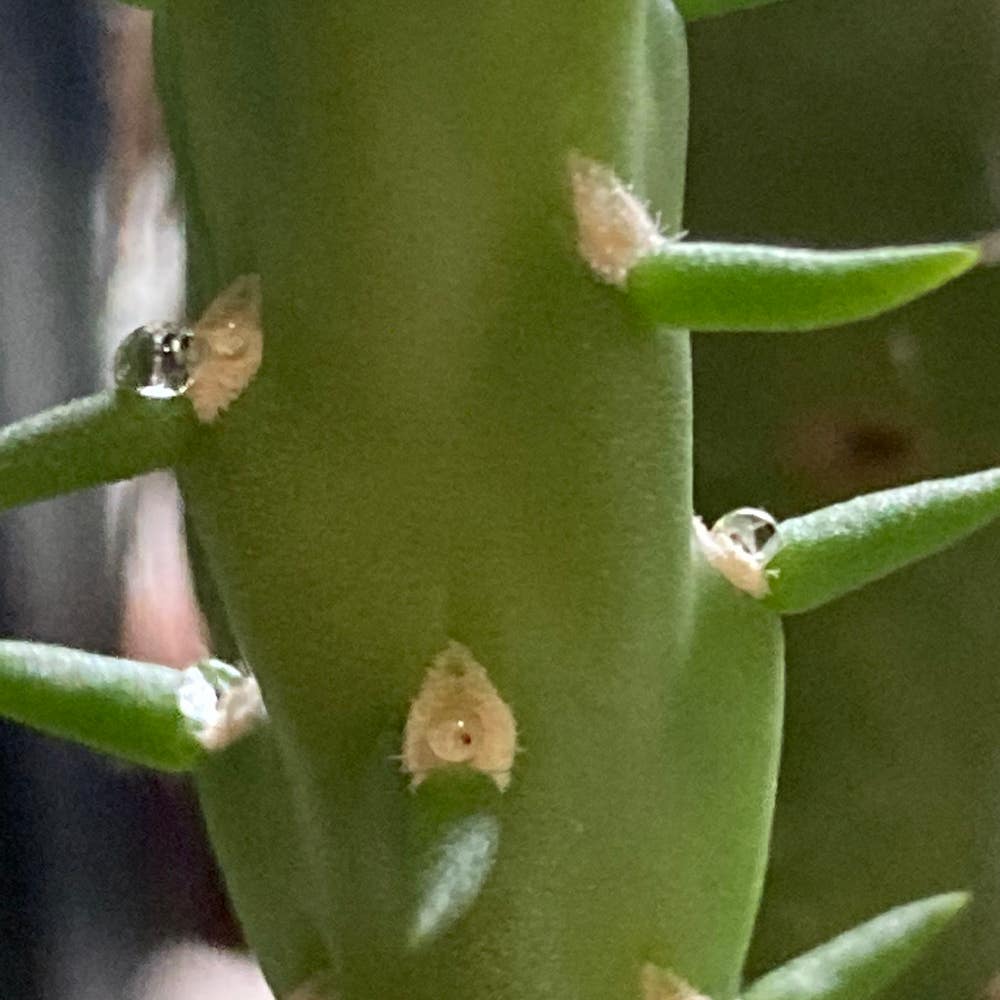
🌵 5 Secrets to Successfully Grow Teddy Bear Cactus
Cylindropuntia fosbergii
By the Greg Editorial Team
Jul 28, 2024•6 min read
This article was created with the help of AI so we can cover more plants for you. May contain errors. See one? Report it here.
- 🌞🌵 Bright sunlight with afternoon shade ensures Teddy Bear Cactus thrives.
- 💧 Water deeply but infrequently to avoid overwatering and root rot.
- 🌿 Well-draining soil and balanced fertilizer are key to healthy growth.
Ideal Growing Conditions
🌞 Sunlight and Shade Balance
Teddy Bear Cactus basks in the glory of the sun, yet it doesn't like to overheat. Here's how to strike the perfect balance:
- Place your cactus where it will receive plenty of bright, direct sunlight, especially during the morning.
- To mimic its native desert habitat, provide some afternoon shade to protect it from the most intense rays.
🌡 Temperature Tolerance
Your cactus is as tough as it looks, but it has its limits. Keep these temperature tips in mind:
- During active growth, maintain a comfortable 18 to 24C (64-75F).
- In rest periods, cooler temperatures around 10C (50F) are preferred.
- Protect your cactus from extremes, avoiding anything below -7C (20F) or above 38C (100F).
Soil and Planting Mastery
🌵 Perfect Soil Mix
Teddy Bear Cactus thrives in a soil mix that's the botanical equivalent of a breathable raincoat—quick to shed excess water yet retaining just enough moisture to keep the plant hydrated. Here's your recipe for success:
- Start with a commercial cactus potting mix as your base for convenience and quality.
- Add coarse sand or pumice to ensure rapid drainage, preventing the roots from becoming waterlogged.
- Mix in perlite or vermiculite to lighten the soil, allowing roots to breathe and grow freely.
- Consider a sprinkle of worm castings or compost for a nutrient boost, but don't overdo it; cacti are not heavy feeders.
- Store your custom mix in a covered bin to maintain its freshness until you're ready to plant.
🌱 Planting Techniques
When it's time to plant, whether in the ground or a container, keep these pointers in mind:
- Choose a spot with ample sunlight, mimicking the cactus's natural desert habitat.
- Ensure the planting area or container has excellent drainage; standing water is a cactus's nemesis.
- For containers, select one with drainage holes and consider adding a layer of gravel at the bottom to further aid in water flow.
- Plant the cactus at the same depth it was growing previously to avoid stressing the plant.
- After planting, wait a week before watering to allow the roots to settle and heal from any potential damage.
Watering Wisdom
💧 Watering Schedule
Watering your Teddy Bear Cactus is a delicate balance. It craves deep, infrequent waterings, mimicking its natural desert habitat. Here's how to get it right:
- Water thoroughly when the top inch of soil is dry. During active growth, this might be weekly; in winter, it could be monthly.
- Adjust based on your environment's humidity and temperature. Hotter, drier conditions mean more frequent watering.
- Always let the soil dry out completely between waterings to prevent root rot.
💦 Signs of Overwatering
Too much love can be harmful. Recognize the signs of overwatering to keep your cactus happy:
- Soft, yellowing tissue is a red flag for too much water.
- A mushy base or an unpleasant odor could indicate root rot.
- If you spot these symptoms, let the soil dry out and adjust your watering schedule accordingly.
- Use a moisture meter for a more accurate assessment of when to water next.
Fertilizing Fundamentals
🌱 Choosing Fertilizers
Selecting the right fertilizer for your Teddy Bear Cactus is like finding the perfect diet for your health—it's all about balance and meeting specific needs. Here's what to look for:
- Low-Nitrogen Fertilizers: A balanced 1-1-1 or a 2-1-1 N-P-K (Nitrogen-Phosphorus-Potassium) ratio is ideal. Too much nitrogen encourages leafy growth, which isn't the goal.
- Micronutrients Matter: Calcium and Magnesium are crucial for cell structure and photosynthesis. They're like the unsung heroes in your cactus's growth story.
- Form Matters: Whether you prefer the ease of slow-release fertilizers or the immediacy of liquid options, ensure it's suitable for cacti.
Remember, your Teddy Bear Cactus is a refined eater, not a garbage disposal. It thrives on quality, not quantity.
📅 Fertilizing Frequency
Timing your fertilization is key to maintaining a healthy cactus. Here's how to schedule it:
- Spring and Summer: This is your cactus's growth season. Maintain a consistent feeding schedule established in the spring to support this active period.
- Winter Dormancy: Hold off on fertilizing. Your cactus is conserving energy, and extra nutrients won't be absorbed effectively.
By following these guidelines, you'll keep your Teddy Bear Cactus in peak condition, avoiding the perils of over or under-fertilization.
Pruning and Maintenance
✂️ Pruning Practices
Pruning your Teddy Bear Cactus is more than a cosmetic fix; it's essential for its health. Here's when and how to do it right:
- When: Prune during the growing season for best recovery.
- How: Use clean, sharp tools to cut away dead or damaged segments, aiming to preserve the cactus's natural shape.
- Aftercare: Post-pruning, check the plant's stability and look out for signs of stress.
🛠️ Routine Care
Regular maintenance is key to a thriving Teddy Bear Cactus. Stay vigilant with these steps:
- Inspect: Regularly check for pests or disease signs, such as discoloration or unusual spots.
- Clean: Gently dust off your cactus to maintain efficient photosynthesis.
- Prevent: Keep the surrounding area tidy to discourage pests from settling in.
- Act: If you spot trouble, address it quickly to prevent further damage.
Overcoming Cactus Challenges
🌵 Root Rot Resilience
Root rot in Teddy Bear Cactus is a stealthy adversary, but with vigilance, you can safeguard your spiky friend. Here's how to keep root rot at bay:
- Be a Watering Wiseman: Only water when the soil is completely dry. Overzealous watering is a common misstep.
- Soil Savvy: Use a well-draining soil mix to prevent water from pooling around the roots.
- Spot the Symptoms: Keep an eye out for discoloration or a mushy base. These are SOS signals from your cactus.
- Act Fast: If rot is detected, remove the plant, trim the affected roots, and repot in fresh soil.
🐛 Pest and Disease Prevention
Pests and diseases are uninvited guests that can crash your cactus party. Stay one step ahead with these tips:
- Inspect Regularly: Check your cactus for any signs of pests like mealybugs or scale insects.
- Cleanliness is Key: Sterilize your tools and pots to prevent the spread of disease.
- Quarantine Newcomers: New plants can carry pests, so keep them isolated before introducing them to your garden.
- Embrace Airflow: Ensure your cactus has good air circulation to deter pests and promote faster soil drying.
⚠️ Safety First
This content is for general information and may contain errors, omissions, or outdated details. It is not medical, veterinary advice, or an endorsement of therapeutic claims.
Always consult a qualified healthcare professional before using any plant as food, medicine, or supplement.
Never eat any plant (or feed one to pets) without confirming its identity with at least two trusted sources.
If you suspect poisoning, call Poison Control (800) 222-1222, the Pet Poison Helpline (800) 213-6680, or your local emergency service immediately.
Spotted an error? Please report it here.
Grow your Teddy Bear Cactus to perfection by following these tips and using Greg to get custom watering schedules 🌵 based on your home's unique conditions.