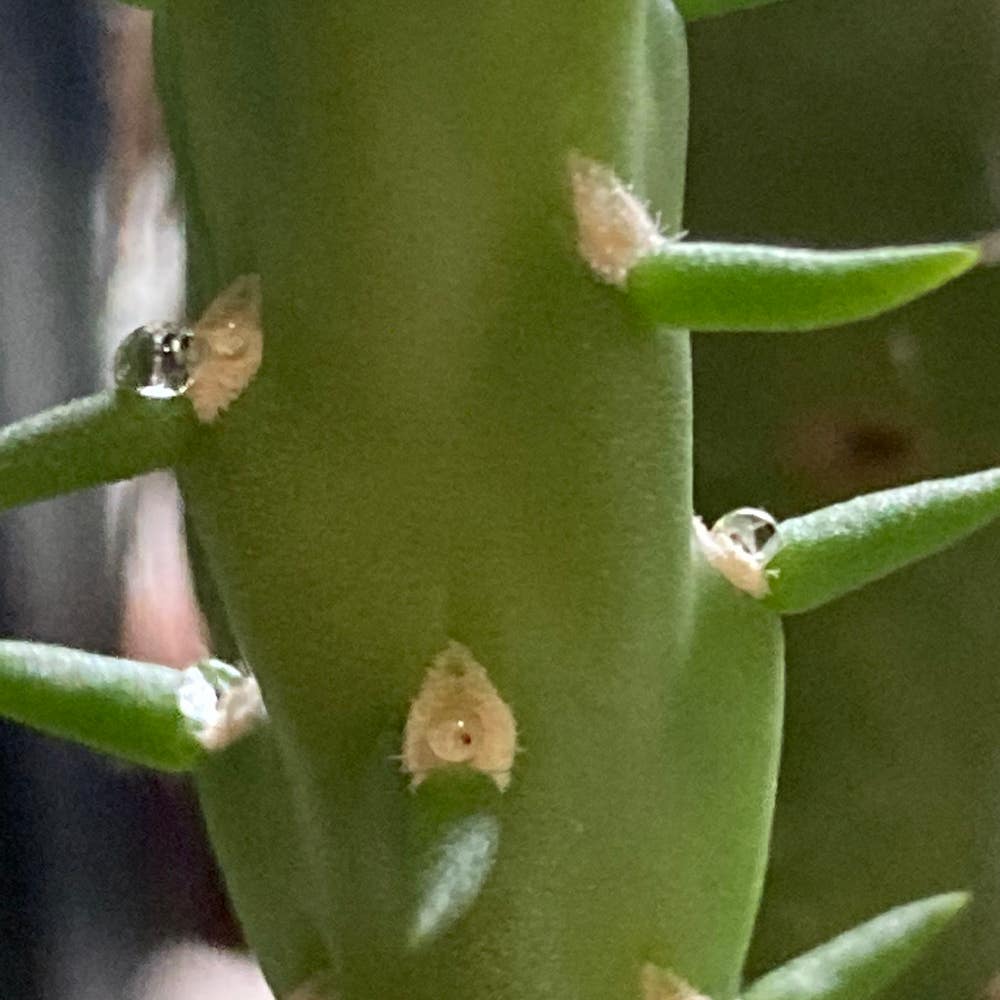
⚠️ Actions to Take When Teddy Bear Cactus Leaves Turn Yellow
Cylindropuntia fosbergii
By the Greg Editorial Team
Jul 28, 2024•5 min read
This article was created with the help of AI so we can cover more plants for you. May contain errors. See one? Report it here.
- 🌵 Adjust light and water to fix yellow leaves on Teddy Bear Cactus.
- 🌱 Well-draining soil and nutrients are essential for cactus health.
- 🤝 Seek professional help if yellowing persists after adjustments.
Identifying Causes
🌞 Insufficient Light
Teddy Bear Cactus thrives in bright environments. When it doesn't get enough light, chlorophyll—the pigment that keeps plants green—breaks down, leading to yellow leaves. This is particularly common in the lower or inner leaves that are shaded by those above.
- Check if your cactus is in a dim area and consider relocating it to a spot with more light.
- Be cautious of too much direct sunlight, which can also cause yellowing or even scorching.
💧 Excess Water
Overwatering is a common misstep that can cause your cactus's leaves to turn yellow. The roots need oxygen to breathe, and too much water pushes this vital element out of the soil, leading to root rot and yellow leaves.
- Before watering, feel the soil. If it's damp, wait; if it's dry, it's time to water.
- Adjust your watering schedule with the seasons—less in winter, more during the growing period.
🌱 Soil and Drainage
The right soil mix is crucial for the health of your cactus. Poor drainage can suffocate roots and prevent water from flowing freely, causing leaves to yellow.
- Use a well-draining, airy soil mix to give roots room to breathe.
- Consider adding soil amendments like perlite or compost to improve drainage and aeration.
🥦 Nutrient Imbalance
Just like humans, plants need a balanced diet. A deficiency in key nutrients such as magnesium, potassium, or nitrogen can cause the leaves to yellow.
- Lower leaves yellowing could indicate a nitrogen deficiency, while the upper leaves may yellow from a lack of sulfur.
- Regular soil testing can help identify what nutrients are missing so you can address the imbalance with the right fertilizer.
Immediate Actions
When your Teddy Bear Cactus leaves start to turn yellow, it's a clear signal that your plant needs help. Here's what you can do right away to set things right.
🌞 Light Adjustment
- Determine if your cactus is getting too much direct sunlight, which can lead to a sunburned appearance and yellowing leaves. Move it to a location with bright, indirect light.
- If the cactus is in too dark of a spot, gradually shift it to a brighter area to avoid shock. This can help restore the natural green hue of the leaves.
💧 Watering Correction
- Check the soil moisture. If it's soggy, hold off on watering and let it dry out. Overwatering can cause root rot, which leads to yellow leaves.
- For under-watered cacti, soak the pot in water for a few minutes, then let it drain completely. This deep watering technique can revive the plant's vibrant color.
🌱 Soil Management
- Ensure your cactus is planted in a well-draining soil mix to prevent waterlogging. If the soil retains too much moisture, consider repotting with a mix that includes sand or perlite.
- If repotting is needed due to poor drainage, remove any black or mushy roots, treat with a fungicide, and place the cactus in fresh, dry soil.
🌿 Nutrient Supplementation
- Apply a balanced cactus fertilizer to address potential nutrient deficiencies. Always water the soil before fertilizing to avoid root burn.
- Monitor the cactus after fertilizing, as over-fertilization can also lead to yellowing. Adjust the frequency and amount of fertilizer according to the plant's response.
Preventing Yellow Leaves
🌵 Routine Care
Just like your morning routine sets the tone for your day, a consistent care routine is the secret to keeping your Teddy Bear Cactus happy and its leaves a vibrant green. Here's what to pencil into your plant care planner:
- Watering Schedule: Stick to a predictable watering routine, adjusting only for seasonal changes.
- Light Exposure: Rotate the cactus periodically to ensure even light distribution and prevent yellowing.
- Soil Checks: Regularly assess the soil moisture and loosen it if it feels too compact.
- Pest Patrol: Keep an eye out for unwanted guests that could stress your cactus.
🏺 Pot Selection and Repotting
Choosing the right home for your Teddy Bear Cactus is more than just an aesthetic choice—it's a health decision. Here's how to pick the perfect pot:
- Drainage is Key: Always opt for pots with drainage holes to prevent waterlogged roots.
- Size Matters: Select a pot that's just right—not too big, not too small—for your cactus.
- Repotting Rhythm: Repot only when necessary, typically when the cactus outgrows its pot or the soil needs refreshing.
Seeking Further Help
Sometimes, despite our best efforts, the yellowing leaves of a Teddy Bear Cactus persist. This is when it's wise to seek professional help. If you've adjusted light, water, soil, and nutrients without success, an expert's eye can be invaluable.
🕵️♂️ When to Consult a Professional
- If the yellowing continues for several weeks despite corrective measures.
- When the plant shows signs of disease or pests that you can't identify or treat.
- If the cactus has significant or rapid deterioration.
📋 Preparing for the Consultation
Before reaching out, gather as much information as possible to aid the professional:
- Take clear photos of the yellow leaves and the entire plant.
- Note any changes in the plant's environment or care routine.
- List any treatments you've already tried.
🔍 Finding the Right Expert
- Contact local nurseries or garden centers; they often have knowledgeable staff or can refer you to a specialist.
- Look for a certified horticulturist or an agricultural extension office in your area.
- Utilize online plant care forums or social media groups for recommendations.
Remember, consulting a professional is not admitting defeat; it's taking the necessary steps to ensure the health and longevity of your Teddy Bear Cactus.
⚠️ Safety First
This content is for general information and may contain errors, omissions, or outdated details. It is not medical, veterinary advice, or an endorsement of therapeutic claims.
Always consult a qualified healthcare professional before using any plant as food, medicine, or supplement.
Never eat any plant (or feed one to pets) without confirming its identity with at least two trusted sources.
If you suspect poisoning, call Poison Control (800) 222-1222, the Pet Poison Helpline (800) 213-6680, or your local emergency service immediately.
Spotted an error? Please report it here.
Ensure your Teddy Bear Cactus stays vibrant and avoids yellow peril by adjusting its care with personalized reminders ⏲ from Greg, your plant's new best bud.