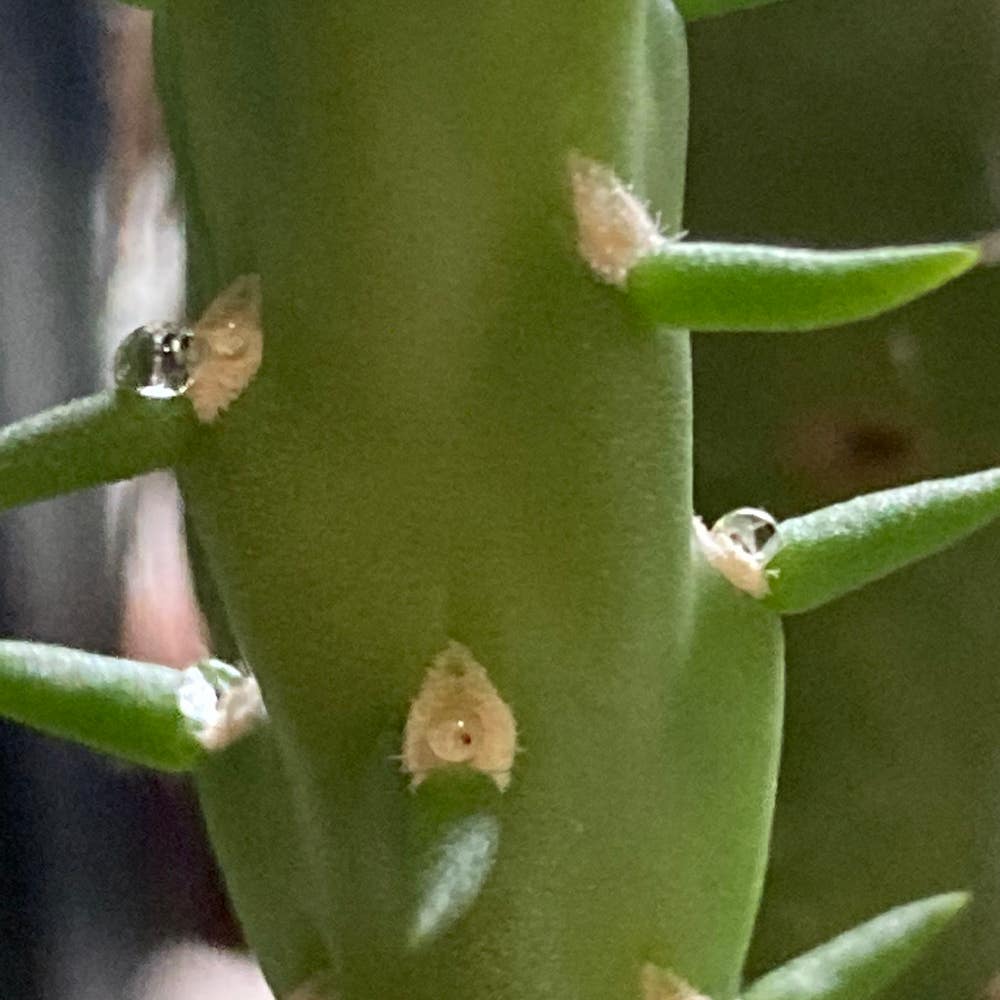
🧸 How to Fix Brown Spots on Your Teddy Bear Cactus
Cylindropuntia fosbergii
By the Greg Editorial Team
Jul 28, 2024•4 min read
This article was created with the help of AI so we can cover more plants for you. May contain errors. See one? Report it here.
- 🌵 Overwatering? Stop watering, ensure drainage, and water sparingly after.
- ☀️ Sunburnt Cactus? Move to shade and adjust watering.
- 🍄 Fungal Spots? Remove, apply fungicide, and increase airflow.
Spot Diagnosis
The health of your Teddy Bear Cactus can often be read through the story its spots tell. Let's decode the signals.
Recognizing Overwatering 🌊
- Mushy Texture: Spots from overwatering are soft and may feel squishy when gently pressed.
- Dark Appearance: These spots often appear darker and may look water-soaked.
- Rapid Spread: If not addressed, the affected areas can quickly grow in size.
Identifying Sunburn 🌞
- Crispy Texture: Sunburn spots are dry and may crackle to the touch.
- Bleached Coloration: Look for faded or bleached areas, especially on the uppermost parts exposed to sunlight.
- Scorched Tips: The tips of the cactus spines may also show signs of burning.
Detecting Fungal Infections 🍄
- Distinct Patterns: Fungal spots can have patterns, such as concentric rings or a yellow halo.
- Texture Variations: The spots may feel bumpy or rough compared to the rest of the plant.
- Small Clustered Spots: Unlike the larger, isolated spots of overwatering, fungal infections often present as a group of smaller spots.
Treating Brown Spots
🚰 Correcting Overwatering
Overwatering can leave your Teddy Bear Cactus drowning in distress. Here's how to get it back on dry land:
- Stop Watering: Immediately cease watering and allow the soil to dry out completely.
- Check Drainage: Ensure your pot has adequate drainage holes. If not, repot with a well-draining cactus mix.
- Resume Carefully: When the soil is bone-dry, resume watering sparingly, following the soak and dry method.
🌞 Healing Sunburn Damage
Sunburn can scorch your cactus's skin, causing unsightly brown spots. To soothe the burn:
- Move to Shade: Relocate your cactus to an area with indirect sunlight or use sheer curtains to diffuse the light.
- Water Wisely: If the soil is dry, water the plant to aid recovery, but avoid overwatering.
💉 Fighting Fungal Infections
Fungal infections can turn your cactus into a spotty spectacle. To combat the fungi:
- Remove Infected Parts: With sterilized tools, cut away the infected areas, going slightly into the healthy tissue.
- Apply Fungicide: Use a suitable fungicide, following the label's instructions for application.
- Improve Airflow: Ensure good air circulation around your cactus and keep the surrounding area dry.
Prevention Strategies
💧 Watering Best Practices
Watering your Teddy Bear Cactus correctly is crucial to prevent brown spots. Here's how to get it right:
- Check the soil's dryness before watering; the top inch should be dry to the touch.
- Water deeply but infrequently, typically every one to two weeks, depending on your home's climate and the season.
- Use pots with drainage holes to avoid water accumulation at the bottom, which can lead to root rot.
☀️ Sunlight Exposure
Sunlight is vital for your cactus, but too much can cause sunburn, leading to brown spots. Follow these tips to provide the ideal amount of light:
- Place your cactus in bright, indirect light to mimic its natural environment.
- If your cactus is outdoors, provide partial shade during the peak sunlight hours to protect it from intense direct sun.
🍄 Fungal Prevention
Fungal infections can also cause brown spots. To keep your cactus healthy:
- Ensure good air circulation around your cactus; stagnant air can promote fungal growth.
- Remove any dead or decaying material promptly to prevent the spread of disease.
- Use clean tools when pruning to avoid introducing pathogens.
- Consider using a cactus-specific fungicide as a preventative measure during humid or wet seasons.
Maintaining Plant Health
Regular care is the cornerstone of a healthy Teddy Bear Cactus. Here are some key tips to keep your cactus in top condition:
- Monitor Watering: Check the soil moisture levels before watering; the top inch should be dry to the touch.
- Balanced Sunlight: Ensure the cactus receives adequate but not excessive sunlight, adjusting its position seasonally if necessary.
- Pruning: Remove any dead or damaged parts of the cactus to prevent the spread of disease.
- Cleanliness: Keep the cactus and its surrounding area clean to deter pests.
- Soil Health: Perform monthly checks on the soil quality, looking out for bad odors or improper texture.
- Fertilization: Apply a cactus-appropriate fertilizer in the spring to promote healthy growth.
🚨 When to Seek Professional Help
Sometimes, despite our best efforts, issues persist. Here's when to call in the pros:
- Persistent Pests: If you've tried cactus-friendly insecticides and the pests remain, consult a pest control expert.
- Recurring Brown Spots: If brown spots reappear after treatment, a plant specialist can offer tailored advice.
- Unusual Symptoms: Any abnormal signs, such as mushy leaves or foul-smelling soil, warrant professional assessment.
Remember, a proactive approach to care can prevent many common issues from escalating.
⚠️ Safety First
This content is for general information and may contain errors, omissions, or outdated details. It is not medical, veterinary advice, or an endorsement of therapeutic claims.
Always consult a qualified healthcare professional before using any plant as food, medicine, or supplement.
Never eat any plant (or feed one to pets) without confirming its identity with at least two trusted sources.
If you suspect poisoning, call Poison Control (800) 222-1222, the Pet Poison Helpline (800) 213-6680, or your local emergency service immediately.
Spotted an error? Please report it here.
Keep your Teddy Bear Cactus thriving 🌵 with Greg's personalized care reminders, helping you prevent brown spots by perfecting the balance of sun and water.