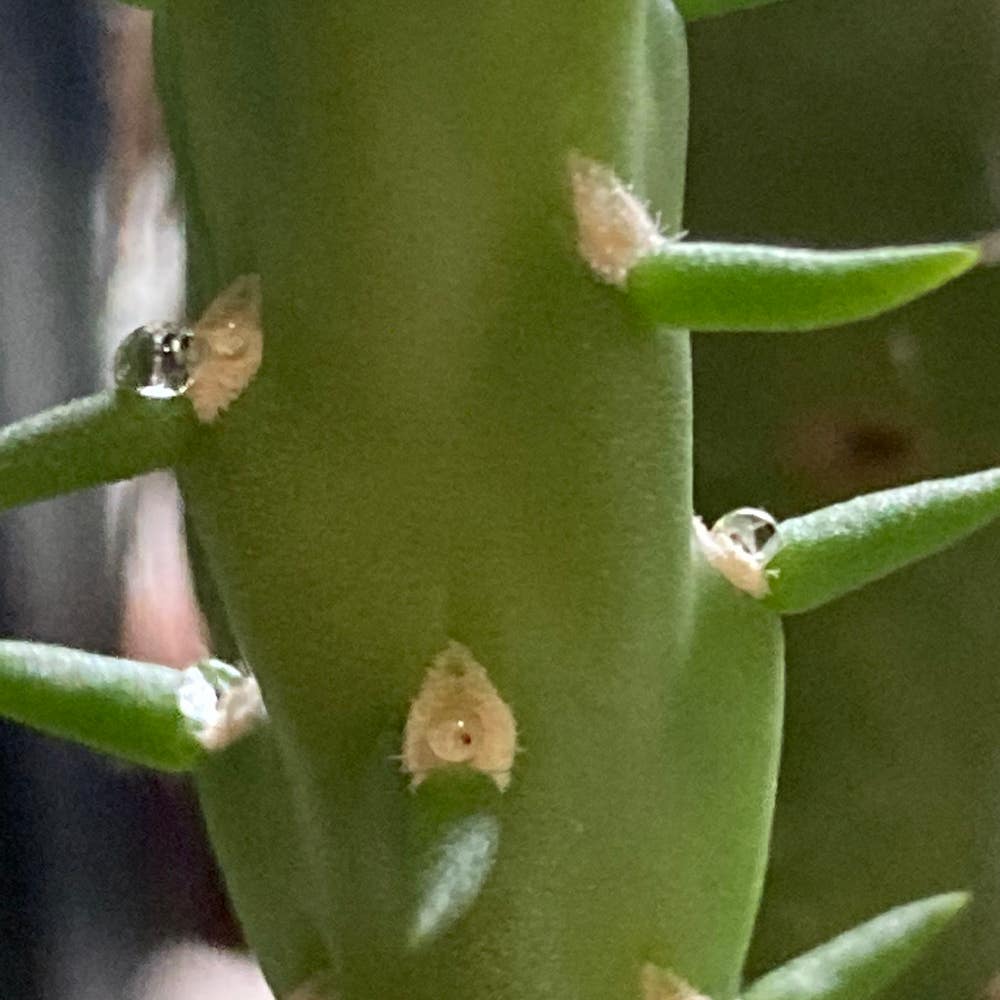
🌵 5 Tips for Healing Dropping Leaves on Your Teddy Bear Cactus
Cylindropuntia fosbergii
By the Greg Editorial Team
Jul 28, 2024•3 min read
This article was created with the help of AI so we can cover more plants for you. May contain errors. See one? Report it here.
- 🌵 Water wisely—let soil dry between sessions to prevent leaf drop.
- 🌞 Bright, indirect light and stable temps keep leaves perky.
- 🐜 Regular pest checks and proper soil ensure long-term cactus health.
Optimal Care Practices
💧 Watering Guidelines
- Water your Teddy Bear Cactus sparingly, allowing the soil to dry out completely between watering sessions.
- In the growing season, water once a week; reduce to once every 2-3 weeks in winter, mimicking the natural desert climate.
🌞 Light and Temperature
- Place your cactus in bright, indirect sunlight to prevent drooping leaves.
- Maintain a stable temperature between 68-80°F, ensuring good air circulation to avoid moisture buildup.
🌱 Soil and Repotting
- Use well-draining soil, such as a cactus mix with added perlite or sand, to prevent water retention.
- Choose terracotta pots for their breathability and ensure they are proportional to the size of your cactus.
- Repot every 2-3 years or when the cactus outgrows its pot, doing so in the warmer months to minimize stress.
Diagnosing Leaf Drop
Signs of Stress
Recognizing the early signs of stress in your Teddy Bear Cactus is crucial to prevent leaf drop. Watch for:
- Wilting or curling leaves indicating the plant is either too thirsty or drowning in excess water.
- Discoloration, such as leaves turning yellow or brown, which could signal nutrient deficiencies or environmental stress.
- Leaves that detach easily or appear shriveled, pointing to possible overwatering or dehydration.
🌵 Common Causes
Leaf drop in Teddy Bear Cacti often stems from a few usual suspects:
- Overwatering, which can lead to root rot, leaving leaves limp and lifeless.
- Underwatering, resulting in dry, crispy leaves that fall off at the slightest touch.
- Pest infestations, such as aphids and spider mites, which stress the plant and cause leaves to drop as a defense mechanism.
- Poor soil conditions, where soil that's too dense or too loose can prevent roots from functioning properly.
- Extreme temperatures, where too much heat or cold can shock the plant, leading to leaf loss.
By staying vigilant and addressing these issues promptly, you can keep your Teddy Bear Cactus healthy and fully leafed.
Treating Leaf Drop
🚰 Addressing Water Issues
Watering is a delicate balance for the Teddy Bear Cactus. Here's how to get it right:
- Wait until the top inch of soil is dry before watering again.
- Water thoroughly, but ensure the pot has drainage holes to avoid soggy soil.
- Use room-temperature water to prevent root shock.
🐜 Pest Management
Pests can be stealthy invaders, but you can keep them at bay with these tips:
- Regularly inspect for signs of pests, like sticky residue or webbing.
- If pests are spotted, wash them off or use insecticidal soap for treatment.
- Keep leaves dry and air circulating to deter pests and fungal growth.
🌱 Soil and Root Care
Healthy roots are crucial for preventing leaf drop. Here's how to maintain them:
- Use a well-draining soil mix to prevent water from pooling around the roots.
- Repot the cactus if the soil is compacted or the pot is too small.
- Fertilize with care, using a balanced fertilizer to support root health without overfeeding.
Maintaining Healthy Foliage
🕵️ Routine Checks
- Set a schedule for weekly inspections, examining your cactus for signs of distress like discoloration or wilting.
- Use a moisture meter to check soil dampness, ensuring you're not over or under-watering.
🌿 Long-Term Plant Health
- Adjust care practices as your cactus grows and seasons change; this may mean altering watering frequency or moving the plant to receive different light levels.
- Prune away any dead or unhealthy leaves to promote better air circulation and prevent disease spread.
⚠️ Safety First
This content is for general information and may contain errors, omissions, or outdated details. It is not medical, veterinary advice, or an endorsement of therapeutic claims.
Always consult a qualified healthcare professional before using any plant as food, medicine, or supplement.
Never eat any plant (or feed one to pets) without confirming its identity with at least two trusted sources.
If you suspect poisoning, call Poison Control (800) 222-1222, the Pet Poison Helpline (800) 213-6680, or your local emergency service immediately.
Spotted an error? Please report it here.
Keep your Teddy Bear Cactus's leaves perky by mastering the art of care with these tips, and rely on Greg's tailored reminders 🌵 to prevent droop and thrive!