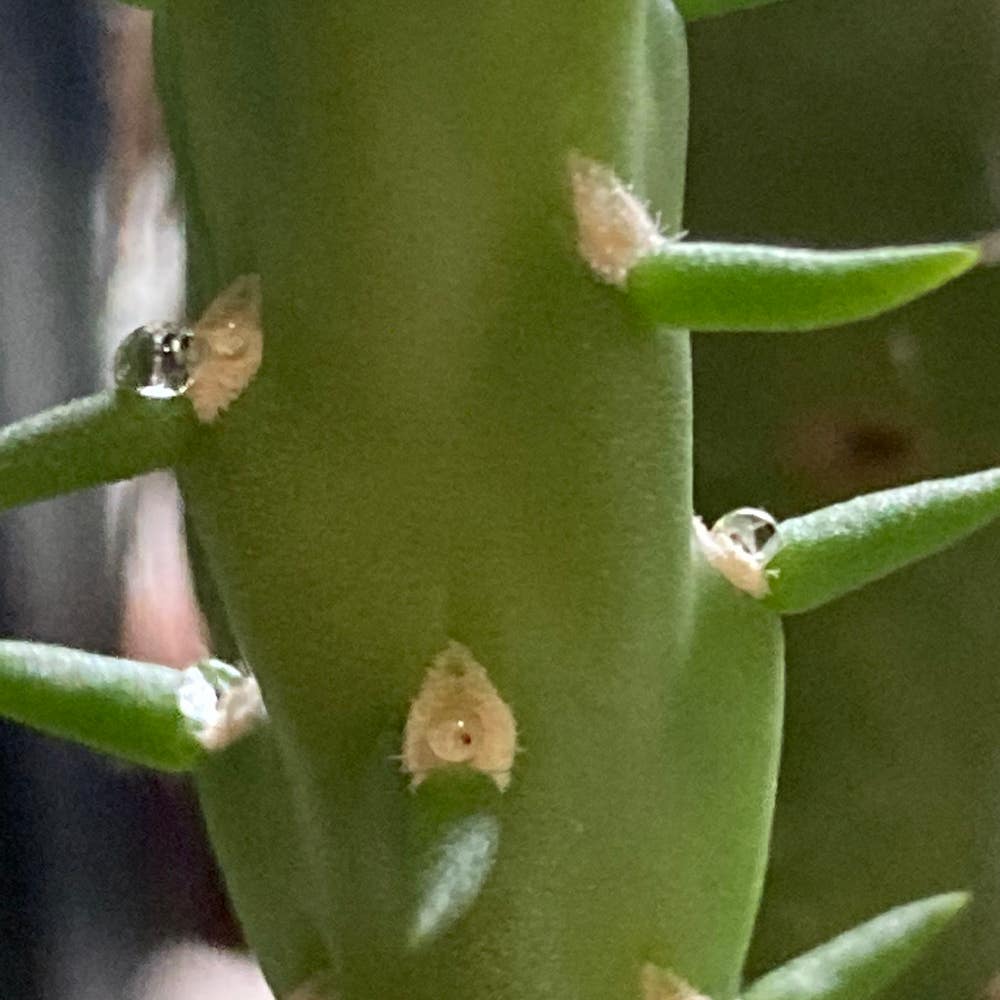
🌵 How to Prune Hoffmann's Teddy Bear Cholla
Cylindropuntia fosbergii
By the Greg Editorial Team
Feb 29, 2024•3 min read
This article was created with the help of AI so we can cover more plants for you. May contain errors. See one? Report it here.
- 🌵 Prune in spring/fall to align with growth cycles, avoid winter.
- Sharp tools and safety gear are essential for effective, safe pruning.
- Precision and health focus guide cuts for beauty and plant vitality.
Best Time to Prune Your Cholla
🌱 Seasonal Timing
Spring and fall are your golden tickets to pruning paradise for Hoffmann's Teddy Bear Cholla. These seasons align with the cactus's natural growth cycles, making them the ideal times to get snippy. Pruning during the dormant winter months is a definite no; it's like waking a sleeping giant and expecting it not to be grumpy. Aim for post-bloom pruning, when the cholla is ready to channel its energy into fresh growth.
🔄 Growth Cycle Considerations
To prune like a pro, sync your cuts with the cholla's growth spurts. Timing is key; you want to encourage the plant to thrive, not just survive. Pruning too early or too late in the season can throw off the cholla's rhythm, like a drummer who's lost the beat. Stick to the growth cycle script for a performance that ends in a standing ovation from your garden.
Gear Up: Tools and Safety for Pruning
🛠️ Choosing Your Tools
Sharp, sterilized pruning shears are non-negotiable for precise cuts on your Hoffmann's Teddy Bear Cholla. For the thicker sections, loppers are your leverage buddies. And don't forget a hand saw might come into play for the most stubborn parts. Before you dive in, give those tools a good rubdown with isopropyl alcohol or a bleach solution—think of it as a pre-op scrub for plant surgeons.
👷 Suiting Up for Safety
Gloves are your first line of defense against those menacing spines. They're not just a suggestion—they're essential. And safety goggles? They're your personal shields against the aerial assault of plant debris. Don't even think about skipping them. Remember, you're going into battle with a cactus, not cuddling a teddy bear.
The Art of Pruning Hoffmann's Teddy Bear Cholla
🌵 Where to Make the Cut
Pruning a Hoffmann's Teddy Bear Cholla is detective work. Start by eyeing dead or damaged segments; these are your primary targets. Next, tackle overgrown branches that throw off the plant's symmetry.
🌿 Pruning Techniques
Precision is key. Use sharp, sterilized tools to make clean cuts. Aim for the base of the segment, ensuring you don't leave stubs that could attract pests or disease. It's about strategic snipping, not random hacking.
🌵 Handling the Spines
The spines are no joke. Use a comb or tongs to safely remove segments, avoiding direct contact. If spines become embedded, remove them with tweezers and wash the area with soap and water. Watch for infection, and consult a doctor if necessary. After pruning, dispose of the spiny segments responsibly, keeping in mind they can root and grow.
Sculpting for Beauty and Health
🌵 Aesthetic Pruning
Pruning your Hoffmann's Teddy Bear Cholla is like unlocking its potential as a living sculpture. Each snip is a deliberate stroke, shaping the plant into a form that complements its natural beauty. Visualize the desired outcome before you cut, aiming for symmetry and balance that pleases the eye. Remember, less is often more; over-pruning can be just as detrimental as neglect.
🩹 Health-Boosting Cuts
Targeting diseased or damaged areas is crucial for your cholla's well-being. By removing these sections, you're not only cleaning up its appearance but also preventing potential maladies from spreading. Make clean, sharp cuts to remove any brown, wilted, or rotting segments. This proactive approach redirects the plant's energy towards healthy growth, ensuring a robust and vibrant cactus.
⚠️ Safety First
This content is for general information and may contain errors, omissions, or outdated details. It is not medical, veterinary advice, or an endorsement of therapeutic claims.
Always consult a qualified healthcare professional before using any plant as food, medicine, or supplement.
Never eat any plant (or feed one to pets) without confirming its identity with at least two trusted sources.
If you suspect poisoning, call Poison Control (800) 222-1222, the Pet Poison Helpline (800) 213-6680, or your local emergency service immediately.
Spotted an error? Please report it here.
Ensure your Hoffmann's Teddy Bear Cholla is artfully pruned 🌵 with timely reminders from Greg, aligning your snips with the plant's natural rhythm for a healthy, sculptural growth.