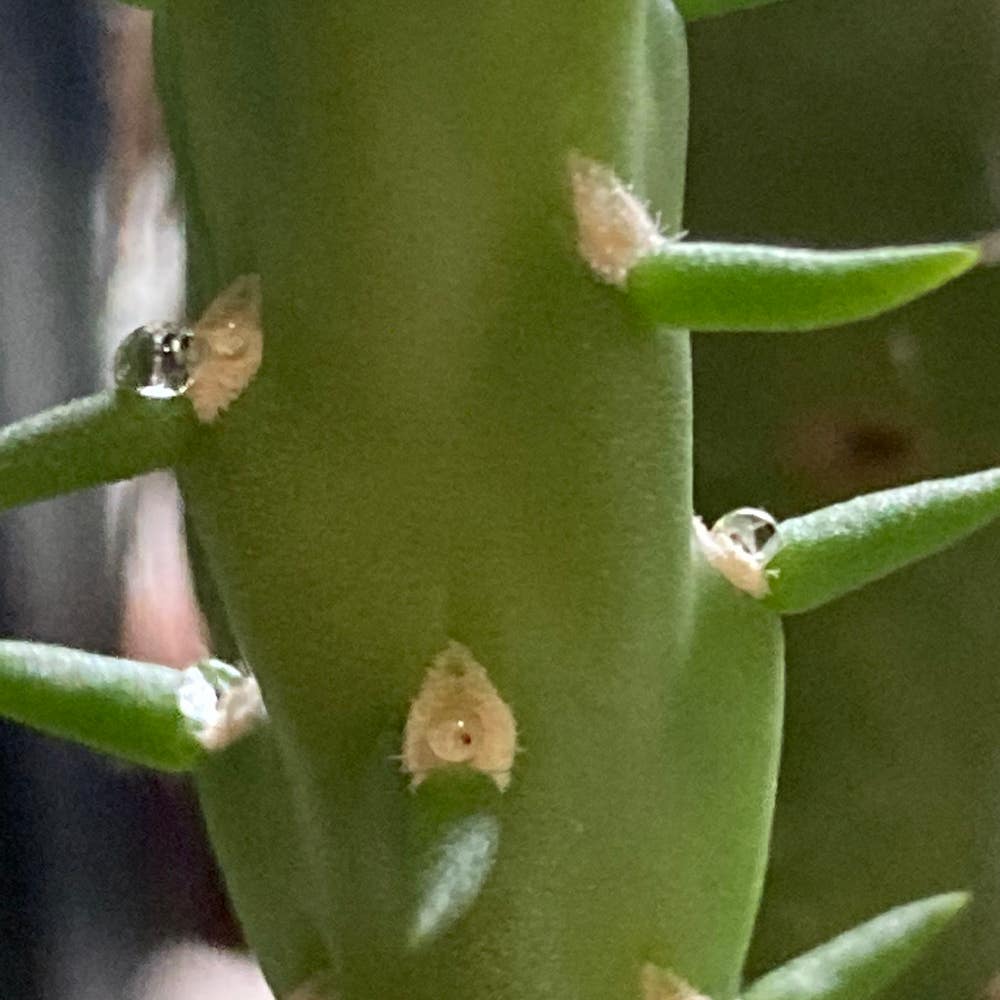
Brown Spots On Hoffmann's Teddy Bear Cholla Leaves
Cylindropuntia fosbergii
By the Greg Editorial Team
Feb 29, 2024•5 min read
This article was created with the help of AI so we can cover more plants for you. May contain errors. See one? Report it here.
- Brown spots signal health issues; texture and pattern offer clues.
- Overwatering and sunburn are common causes; adjust care accordingly.
- Prevent with proper watering, sunlight, and regular pest inspections.
Spotting the Trouble: Identifying Brown Spots
🚩 Visual Cues
Brown spots on Hoffmann's Teddy Bear Cholla leaves are like red flags waving at a bull—impossible to ignore. They come in various shapes and sizes, from tiny speckles to large blotches. The edges? They can be as crisp as a fresh dollar bill or as fuzzy as a peach.
🤲 Texture Tells a Tale
The feel of a spot can spill the beans about what's wrong. If it's brittle, think dry desert; if it's slimy, you've got a swamp situation. And location, location, location—it's as important in plant health as in real estate. Spots can pop up anywhere from leaf edges to near the veins.
🎯 Spot vs. Blotch
Now, don't mix up your spots with blotches. A blotch is like a spot that's hit the gym—bigger, badder, and more likely to be a sign of something serious. If you see a yellow halo around a spot, that's the plant's way of crying for help.
👀 The Look of Trouble
Remember, not all brown is down. Some spots are just the plant's freckles, harmless and quirky. But when they start to look like a leopard's coat—uniform and scattered—it's time to play detective. Keep an eye out for a sticky residue or webbing, the telltale sign of pests throwing a party at your plant's expense.
🔑 Consistency is Key
Consistency in the appearance of spots is your best clue. If they're more repetitive than your morning alarm, it's likely a cry for help. But if they're as random as a cat's wanderings, you might just be looking at the plant's version of a beauty mark.
Rooting Out the Causes
💦 Overwatering
Soggy soil is the kiss of death for roots needing air, not a bath. If the earth feels like a wet sponge that's seen better days, it's time to dial back on the H2O. Roots rotting? They'll look more like leftovers forgotten in the fridge than the sturdy anchors they should be.
☀️ Sunburn
Your Cholla's leaves should not resemble a sunbather post-beach day. Brown, flat spots are the telltale signs that your plant has had one too many rays. If the leaves look like they're throwing shade by being shades of brown, it's time to rethink your light strategy.
🐜 Pests and Pathogens
Insects and diseases are the party crashers no one invited. Look for tiny brown dots or webbing for bugs, and for diseases, it's all about those lesions with a dramatic yellow halo. Stagnant air invites these uninvited guests, so keep it breezy.
🩹 Accidents Happen
Physical trauma to your Cholla might not come with a band-aid solution. If you spot crushed or torn areas, that's your cue for some TLC. Remember, plants don't have the luxury of yelling "ouch," so keep an eye out for these silent cries for help.
First Aid for Your Cholla: Treating Brown Spots
💧 Drying Out the Situation
Overwatering is a common misstep with Hoffmann's Teddy Bear Cholla. To rectify this, check the soil before watering—dry is a green light, moist means wait. If you've been heavy-handed with the H2O, it's time to back off and let the soil breathe. Water from the bottom to promote deep root growth and prevent a soggy situation.
🌞 Shading and Sun Care
Sunburn can leave your Cholla looking like it had a bad day at the beach. Strategic positioning is key. Ensure your spiky friend isn't marinating in the sun's full glare. A bit of shade during the harshest hours can prevent those brown spots from developing a tan complex.
🐜 Pest Control Tactics
Pests are the uninvited squatters of the plant world. Identify the culprit—aphids, mealybugs, or spider mites—and show them the door with insecticidal soaps or neem oil. A strong jet of water can also dislodge these freeloaders. For a botanical horror show, don't hesitate to seek professional help.
Healing Wounds
Physical damage needs a clean cut—literally. Use sterilized tools to prune back to healthy tissue and give your Cholla a chance to scab over. If the damage is extensive, it's a tough call, but sometimes you have to let go. Remember, a clean environment is key, so keep your tools pristine to avoid introducing new problems.
Keeping Your Cholla Spotless: Prevention Tips
💧 Watering Wisdom: Best Practices for Hydration
Overwatering is the fast track to a cactus calamity. Check the soil's moisture level before giving your Hoffmann's Teddy Bear Cholla a drink. The soil should be bone-dry between waterings, mimicking its natural arid habitat. In winter, water sparingly, as if you're rationing for a drought.
🌞 Sun Smarts: Finding the Perfect Light Balance
Your Cholla craves sunlight like a cat craves a warm lap, but too much can lead to a sunburnt plant. Position it in a spot that gets plenty of indirect sunlight. If you notice your cactus starting to tan, it's time to play sunshade sommelier and find a less intense spot.
🦅 Vigilance Against Invaders: Regular Inspections and Preventive Treatments
Inspect your Cholla like a hawk eyeing its prey. Spot pests early, and show them the door with insecticidal soap or neem oil. Remember, good airflow is the secret sauce to keeping pests and diseases at bay, but don't turn your plant's home into a wind tunnel.
🌿 Safe Handling and Environmental Protection
Handle with care, using gloves and tools to avoid personal injury and plant damage. Keep your Cholla's surroundings as tidy as a minimalist's living room. Fallen leaves and debris are party invitations for pests and pathogens, so RSVP with a firm 'no' by keeping the area clean.
⚠️ Safety First
This content is for general information and may contain errors, omissions, or outdated details. It is not medical, veterinary advice, or an endorsement of therapeutic claims.
Always consult a qualified healthcare professional before using any plant as food, medicine, or supplement.
Never eat any plant (or feed one to pets) without confirming its identity with at least two trusted sources.
If you suspect poisoning, call Poison Control (800) 222-1222, the Pet Poison Helpline (800) 213-6680, or your local emergency service immediately.
Spotted an error? Please report it here.
Eradicate brown spots 🛑 on your Hoffmann's Teddy Bear Cholla with Greg's tailored watering schedule and expert community support for a healthier plant!