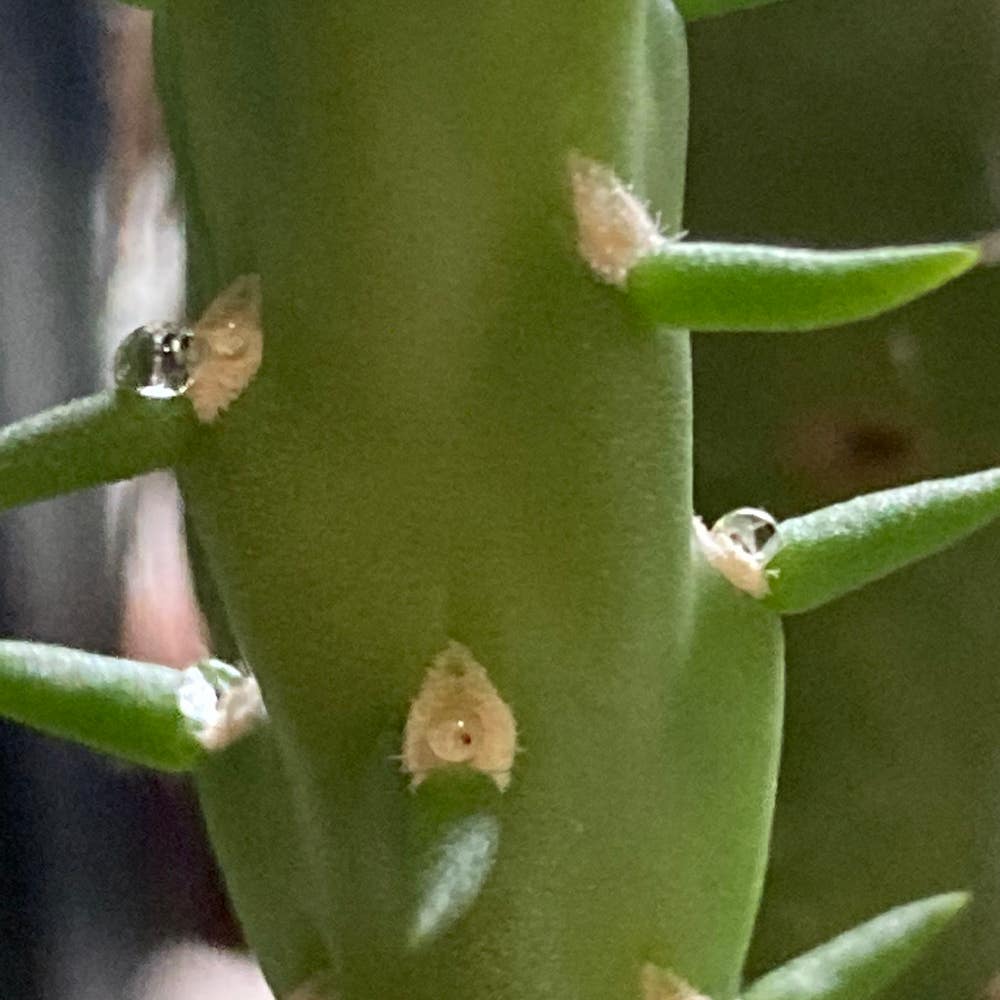
🌵 Why Are My Hoffmann's Teddy Bear Cholla Leaves Falling Over?
Cylindropuntia fosbergii
By the Greg Editorial Team
Feb 29, 2024•4 min read
This article was created with the help of AI so we can cover more plants for you. May contain errors. See one? Report it here.
- Overwatering and underwatering can both cause Cholla leaves to droop.
- Bright, indirect light is key to prevent leaning or drooping.
- Well-draining soil and proper pruning support long-term Cholla health.
Spotting the Signs: When Your Cholla's Leaves Start to Sway
🚩 Identifying Early Warning Signs
Mature leaves shouldn't look like they're taking a break. If they're drooping, it's not a sign of relaxation—it's a red flag. A healthy Hoffmann's Teddy Bear Cholla stands tall, so leaves that suddenly hang low are sounding the alarm.
🌱 Natural Growth vs. Problematic Drooping
Young leaves may lean a bit as they grow, but this is just them finding their feet. Excessive drooping in mature leaves, though, is like your Cholla waving a white flag. It's crucial to differentiate between a youthful stretch and a cry for help.
The Usual Suspects: Common Causes for the Cholla's Distress
💦 Overwatering Woes
Yellowing stems and a mushy base are the hallmarks of an overwatered Hoffmann's Teddy Bear Cholla. It's a classic case of too much love in the form of H2O. If the soil feels more like a swamp than a desert, you've gone overboard.
🚰 Spotting the symptoms of waterlogged roots
Roots should be firm, not squishy. If they resemble overcooked noodles, it's time to act. Mold or fungus partying on the soil's surface is another red flag.
🪴 How to rescue an overwatered Cholla
First, stop watering and let the soil dry out. If the roots are more slime than sublime, repot in fresh, well-draining soil. Think of it as moving your Cholla to a drier climate.
🏜️ Thirsty Roots: The Underwatering Dilemma
When your Cholla's leaves start to look more wrinkled than a linen shirt at a summer barbecue, it's parched. Dry, lifeless soil is a cry for hydration.
🚱 Recognizing a dehydrated Cholla
Leaves curling tighter than a rolled-up yoga mat are a sign. If the soil is as dry as a stand-up comedian's humor, it's time to water.
💧 Quenching your Cholla's thirst the right way
Water slowly, allowing the roots to soak it up without causing a flood. Consistency is key; mark your calendar if you must, so your Cholla doesn't turn into a cactus jerky.
🌞 Seeking the Sun: The Role of Light in Cholla Posture
A Cholla leaning more than the Tower of Pisa is a sign it's stretching for more light. Low light makes for a slouching Cholla.
🌅 How low light can lead to a leaning Cholla
If your Cholla is reaching out like a sunbather at dawn, it's craving those rays.
🌱 Finding the sweet spot of sunlight for your Cholla
Aim for bright, indirect light. Too much sun and your Cholla might start to sunburn, too little and it becomes a lean, mean, drooping machine. Adjust its spot or consider grow lights as a sun substitute.
First Aid for Your Cholla: Immediate Actions to Take
💧 Adjusting the Watering Regimen
If your Cholla is looking more like a weeping willow, it's time to rethink water. Overwatering is a common misstep, so let's dial it back. Check the soil an inch deep; if it's damp, skip the watering can. Remember, these desert dwellers prefer a drought to a deluge.
Incorporate perlite or similar materials to improve drainage. This isn't just about less water; it's about making sure the water you do give doesn't throw a pool party around the roots.
☀️ Let There Be Light: Adjustments for Growth
Now, about that sunbathing. Chollas need their vitamin D just like the rest of us, but not to the point of sunburn. If your plant's stretching out like it's trying to snag the last rays of summer, it's time to move it to a brighter spot.
No sunny window? No problem. Grow lights can be a game-changer, offering that sweet spot of sunlight without the risk of overexposure. Just make sure you're not turning your Cholla into a night owl; keep those light hours consistent with the day.
Keeping Your Cholla on Its Feet: Long-Term Care Strategies
🌵 The Right Potting Mix and Container
Well-draining soil is non-negotiable for your Cholla's long-term stability. Opt for a commercial cactus mix or concoct your own with equal parts sand, perlite, and peat moss. This trio ensures fast drainage and mimics the Cholla's native, arid conditions.
Select a pot that's a snug fit—too large and you risk water retention; too small, and your Cholla might take a tumble. Ensure the pot has drainage holes and consider a layer of gravel at the bottom for extra insurance against soggy soil.
🌱 Pruning and Providing Support
Pruning isn't just for aesthetics; it's about balance. Trim your Cholla to prevent any lopsided growth that could lead to toppling over. Focus on removing dead or damaged sections to encourage a more centered growth pattern.
If
⚠️ Safety First
This content is for general information and may contain errors, omissions, or outdated details. It is not medical, veterinary advice, or an endorsement of therapeutic claims.
Always consult a qualified healthcare professional before using any plant as food, medicine, or supplement.
Never eat any plant (or feed one to pets) without confirming its identity with at least two trusted sources.
If you suspect poisoning, call Poison Control (800) 222-1222, the Pet Poison Helpline (800) 213-6680, or your local emergency service immediately.
Spotted an error? Please report it here.
Ensure your Cholla stands tall and thrives 🌵 with Greg's custom watering reminders and optimal lighting tips, rescuing it from the droops!