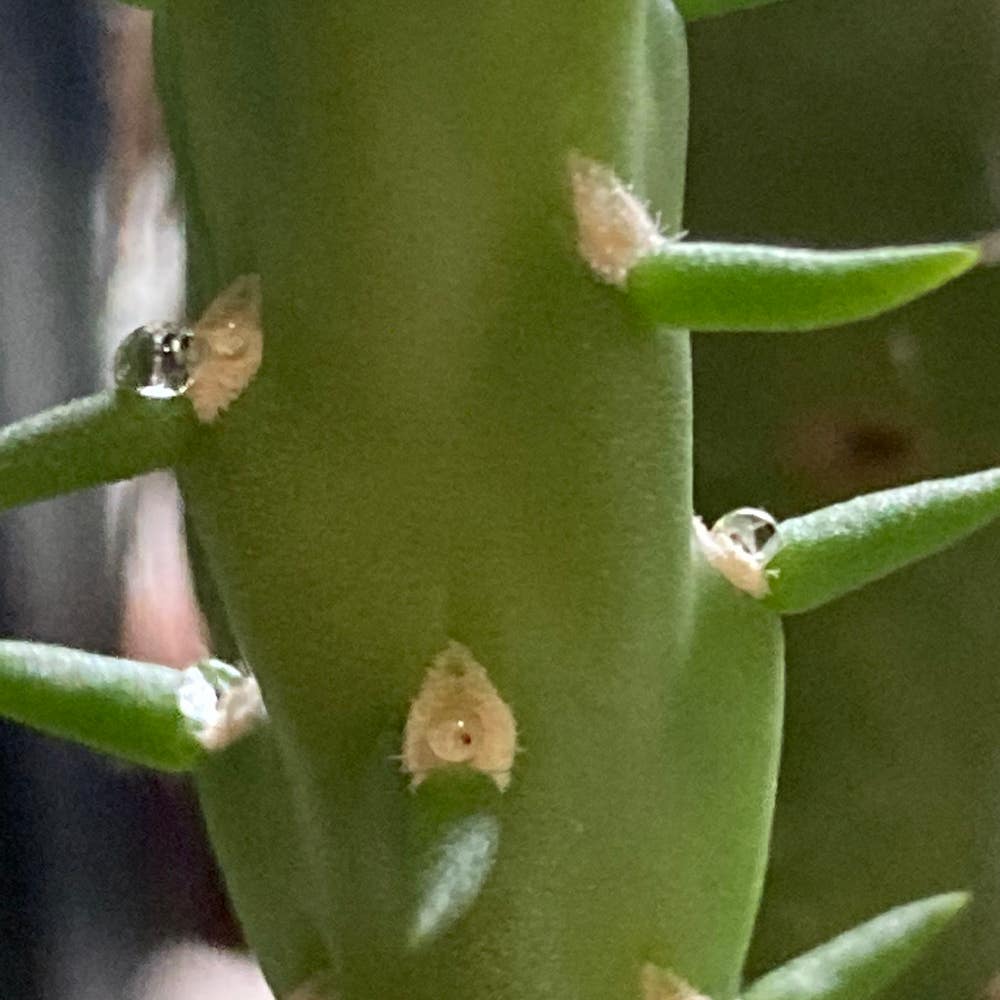
🌵 Why Does My Hoffmann's Teddy Bear Cholla Have Yellow Leaves?
Cylindropuntia fosbergii
By the Greg Editorial Team
Feb 29, 2024•4 min read
This article was created with the help of AI so we can cover more plants for you. May contain errors. See one? Report it here.
- Yellow leaves signal distress; investigate watering, light, and nutrients.
- 🌵 Over/underwatering and sun exposure affect leaf color; adjust care accordingly.
- Balanced fertilizer monthly; avoid over-fertilizing to maintain health.
When Yellow Leaves Spell Trouble
🚨 Spotting Unhealthy Yellowing
Yellow leaves on your Hoffmann's Teddy Bear Cholla aren't just a fashion statement—they're a distress signal. When leaves lose their lush green luster, turning a sickly yellow, it's time to play plant detective. Natural aging sees older leaves fade gracefully, but when the new growth starts to pale, it's an SOS. Keep an eye out for leaves that look more washed out than a vintage t-shirt; it's a sign that something's off.
🕵️ Common Culprits Behind the Yellow Drama
Overwatering turns your cactus' roots into a swampy mess, leading to yellow leaves with potential red or orange spots—a fungal fiasco in the making. On the flip side, underwatering leaves your cholla thirstier than a tourist in the desert, causing leaves to turn yellow with brown, crispy spots. Too much sun can cook your cactus, resulting in a sunburned yellow, while too little leaves it craving those rays. And let's not forget the nutrient deficiency; it's like your cactus is on a bad diet, lacking the essentials to keep its leaves green. Regular health checks are your best bet to catch these issues before they turn into a full-blown plant crisis.
The Watering Balancing Act
🌵 Too Much Love: Overwatering Woes
Overwatering your Hoffmann's Teddy Bear Cholla turns it into a soggy mess. The leaves yellow as the roots drown in excess moisture. To correct this, let the soil dry out before you water again—think of it like a sponge that needs to air out. Drainage is crucial; ensure your pot isn't holding water hostage.
💧 Thirsty Spikes: The Underwatering Connection
Conversely, underwatering leaves your cactus as desperate for a drink as a marathon runner at the finish line. The leaves yellow, craving moisture. Find the watering sweet spot; the soil should be like a wrung-out towel, not a dust bowl. Consistency is key, so get into a rhythm that keeps the soil evenly moist, not swinging between extremes.
Sunlight: Finding the Goldilocks Zone
🌞 Sunburn and Cacti: A Cautionary Tale
Cacti are sun worshippers, but too much direct light can turn your Hoffmann's Teddy Bear Cholla into a crispy critter. The sun-facing side is especially vulnerable, often showing yellowing that can escalate to brown, scorched spots. To shield your cactus, provide bright but indirect light, especially during peak sun hours. Rotate your plant to ensure all sides receive equal light and avoid the botanical equivalent of a sunburn.
Too Little Sun: Can It Cause Yellowing?
Believe it or not, insufficient sunlight can also lead to yellowing leaves. Your cactus might start reaching for the light, resulting in an awkward, stretched appearance. To hit the sweet spot, place your cactus in a spot with bright, indirect light. If you notice your cactus looking a bit pale or leggy, it's a sign to reposition it closer to a light source. Regular rotation can prevent uneven growth and ensure your cactus doesn't develop a plant version of a farmer's tan.
Feeding Your Cactus Right
💡 The Nutrient Deficiency Dilemma
Yellow leaves on your Hoffmann's Teddy Bear Cholla might be a distress call for nutrients. Nitrogen is often the missing link, leaving older leaves pale and wan. If you're seeing yellow patterns between the veins, it's time to play detective with magnesium levels. For those yellowing leaf edges, potassium is likely trying to wave you down. It's not just about the big names though; calcium and iron are part of the nutrient entourage too.
🍽️ Fertilizer Finesse: Getting It Just Right
Choosing the right fertilizer is like picking the perfect seasoning—it's all about balance. A water-soluble mix with an even N-P-K ratio is your go-to. Remember, cacti are not all-you-can-eat diners; they prefer a light sprinkle to a heavy pour. Over-fertilizing can lead to a nutrient hangover, causing more harm than good. Stick to a monthly schedule during the growth season, and consider a half-strength solution to avoid overwhelming your spiky friend. If you're unsure, a soil test can be your roadmap to tailored plant nutrition. And if you've been a bit heavy-handed, flush the soil with water to clear out the excess. Keep it simple, and your cactus will show its gratitude with vibrant, green leaves.
⚠️ Safety First
This content is for general information and may contain errors, omissions, or outdated details. It is not medical, veterinary advice, or an endorsement of therapeutic claims.
Always consult a qualified healthcare professional before using any plant as food, medicine, or supplement.
Never eat any plant (or feed one to pets) without confirming its identity with at least two trusted sources.
If you suspect poisoning, call Poison Control (800) 222-1222, the Pet Poison Helpline (800) 213-6680, or your local emergency service immediately.
Spotted an error? Please report it here.
Turn your Hoffmann's Teddy Bear Cholla's frown upside down by banishing yellow leaves 🌵 with Greg's tailored watering schedules and nutrient management advice.