Why Are My Common Rue Leaves Droopy?
Ruta graveolens
By the Greg Editorial Team
Jun 18, 2024•4 min read
This article was created with the help of AI so we can cover more plants for you. May contain errors. See one? Report it here.
Perk up your Common Rue with the right splash 💦 and care for non-droopy, happy leaves! 🌿
- Over/underwatering causes droopiness, look for yellowing or crispy leaves.
- Drainage is crucial; add sand or perlite to prevent root rot.
- Stable temperature and humidity keep leaves firm; aim for 50% humidity.
Pinpointing the Culprits of Droopiness
🌊 Overwatering Woes
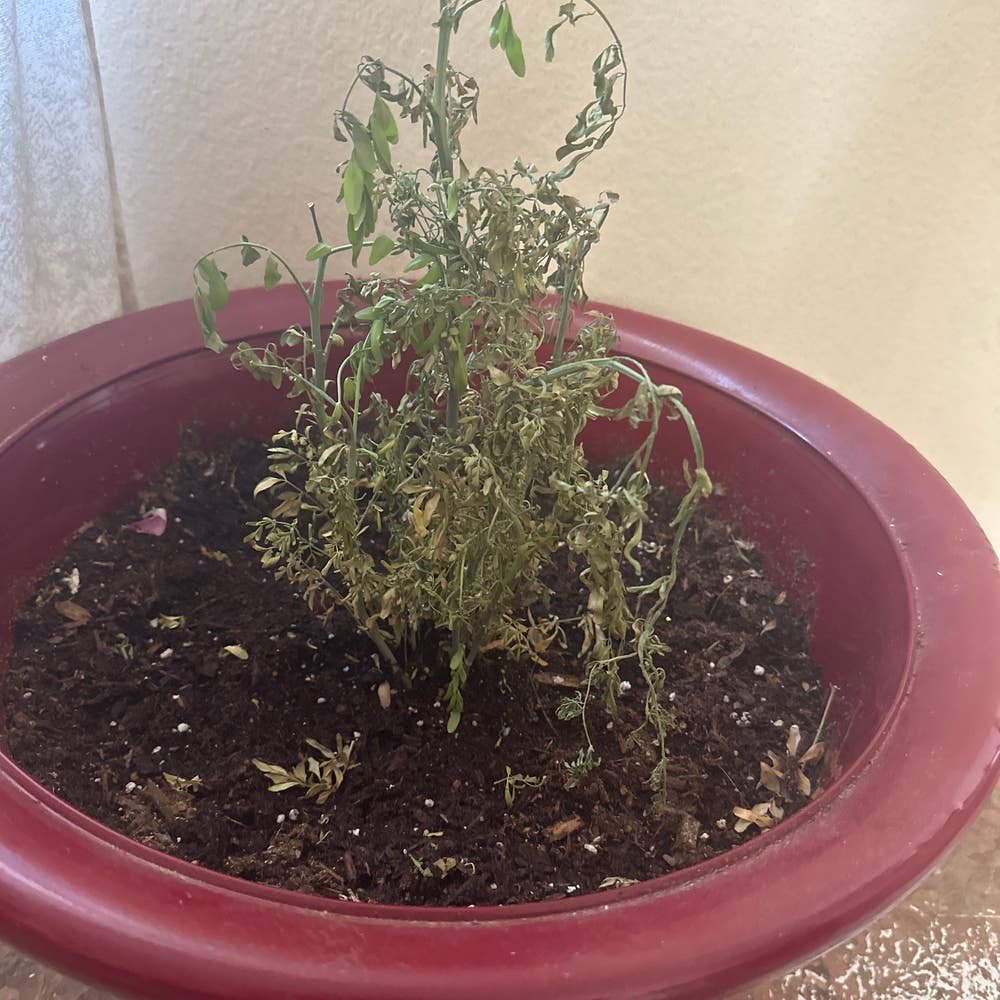
Yellowing and wilting leaves on your Common Rue might be a sign of overwatering. The soil should be moist, not a wet sponge. If there's a foul smell or the base feels soggy, root rot could be the villain behind the droopiness.
🏜️ Underwatering and Thirsty Roots
Leaves that feel crispy or look wilted are sending an SOS for hydration. Underwatering can cause your Common Rue to enter a silent drought, leading to droopiness. The soil should not be bone-dry; it needs consistent moisture to thrive.
🚰 The Drainage Dilemma
Poor drainage can turn your Rue's home into a swamp. Waterlogged soil is a no-go. To check, dig a small hole and fill it with water. If it doesn't drain in a few hours, you've got a clog. Ensure your pot has enough holes and the soil mix allows for proper water escape.

Reviving Your Rue
💧 Fine-Tuning Your Watering Technique
Watering your Common Rue is like hitting a moving target; it changes with the seasons and the plant's growth stage. To prevent droopy leaves, water when the top inch of soil feels dry. This could mean watering less frequently in cooler months and more during growth spurts. Consistency is key, so consider setting reminders to check soil moisture regularly.
🗓 The Calendar Conundrum
Establishing a watering schedule that aligns with your Rue's needs can be tricky. Start with watering once every two weeks, then adjust as needed. Pay attention to your plant's response and tweak the frequency to maintain that just-right level of moisture.
Soil and Pot Perfection
🏃♂️ The Great Escape
For a thriving Rue, ensure your soil and pot combo allows for quick drainage. Mix in sand, perlite, or vermiculite to the soil to improve its structure. Choose pots with adequate drainage holes to prevent water from pooling at the bottom.
🌱 The Repotting Remedy
When roots peek out of the pot's drainage holes, it's time for a new home. Repotting gives your Rue a fresh start with nutrient-rich soil and more room to grow. Wear gloves to protect your skin from the plant's oils and handle with care. After repotting, water thoroughly and keep an eye on your Rue as it adjusts to its new digs.

Shielding Your Rue from Environmental Stress
🌡️ Temperature and Humidity Harmony
Keeping it cool isn't just about your personal style; it's crucial for your Common Rue's leaf health. These plants don't appreciate the roller coaster ride of temperature extremes. Stability is the name of the game—think of it as setting the thermostat for a steady, comfortable indoor climate, away from the drama of sudden chills or heat waves.
Moisture matters a lot when it comes to keeping those leaves firm and happy. Aim for a humidity level that doesn't leave your Rue gasping for air or drowning in moisture. It's a delicate balance, like finding the perfect level of crunch in your peanut butter—too much or too little, and the whole experience is off.
Avoid drafts and heat sources like open windows or radiators that can cause sudden temperature changes. Your Rue isn't a fan of surprises, especially the kind that can lead to leaf drop or scorching.
Humidity levels around 50% are generally a good target. If your Rue's leaves are curling or looking as dry as a stand-up comedian's wit, it might be time to introduce a humidifier or a pebble tray into the mix.
Remember, your Rue is more than just a pretty face in your garden; it's a living organism that thrives with the right care. So keep an eye on that thermometer and hygrometer, and your Rue will reward you by standing tall and proud, not droopy and sad.

⚠️ Safety First
This content is for general information and may contain errors, omissions, or outdated details. It is not medical, veterinary advice, or an endorsement of therapeutic claims.
Always consult a qualified healthcare professional before using any plant as food, medicine, or supplement.
Never eat any plant (or feed one to pets) without confirming its identity with at least two trusted sources.
If you suspect poisoning, call Poison Control (800) 222-1222, the Pet Poison Helpline (800) 213-6680, or your local emergency service immediately.
Spotted an error? Please report it here.
Ensure your Common Rue thrives with consistent care 🌿, and rely on Greg to balance watering and monitor your home's environment for the happiest plants.