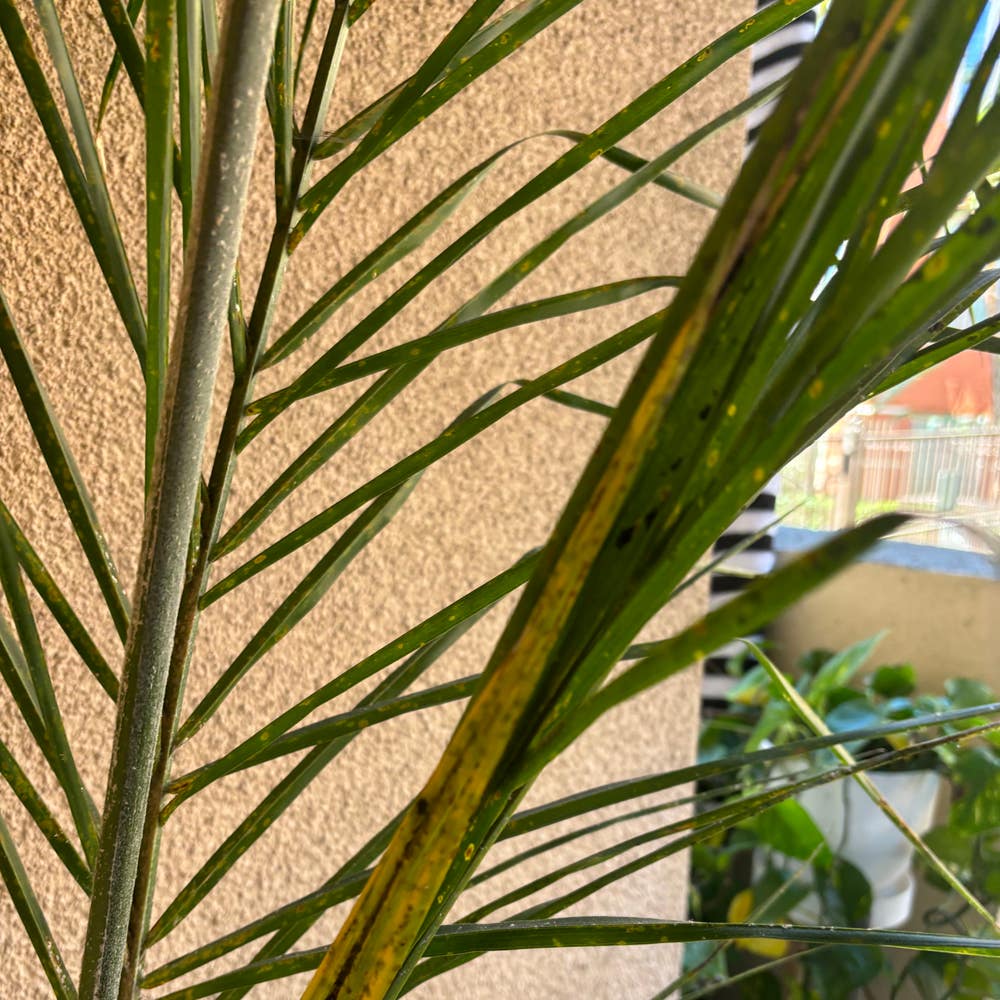
🌴 Understanding Why Your Cocos Palm Has Yellow Leaves
Syagrus comosa
By the Greg Editorial Team
Nov 23, 2024•5 min read
This article was created with the help of AI so we can cover more plants for you. May contain errors. See one? Report it here.
Revive your Cocos palm 🌴 by mastering the art of preventing yellow leaves for lush, vibrant growth!
- 🌱 Yellow leaves indicate nutrient deficiencies, especially nitrogen and magnesium.
- 💧 Overwatering or underwatering can cause yellowing; maintain a consistent watering schedule.
- 🕷️ Pests like spider mites can damage leaves; regular inspections help catch infestations early.
Causes of Yellow Leaves
🌱 Nutrient Deficiencies
Nitrogen Deficiency
Nitrogen deficiency is a common issue that manifests as general yellowing of older leaves and stunted growth. This nutrient is crucial for chlorophyll production, which is essential for the plant's overall vigor.
Magnesium Deficiency
Another nutrient concern is magnesium deficiency, characterized by yellowing between leaf veins, often leading to browning tips. Magnesium plays a vital role in photosynthesis and nutrient uptake, making it essential for healthy palm growth.
💧 Watering Issues
Overwatering
Overwatering can lead to yellowing leaves, wilting, and even root rot. This problem often arises from poor drainage, excessive rainfall, or improper watering practices.
Underwatering
On the flip side, underwatering results in dry, crispy leaf tips and overall yellowing. This typically occurs due to infrequent watering or drought conditions, which can stress your palm.
🐛 Pests and Diseases
Common Pests
Spider mites are a frequent pest that can cause significant damage, with signs including webbing and stippled leaves. Treatment options include using insecticidal soap or neem oil to eliminate these pests effectively.
Diseases
Root rot is a serious disease that presents with yellowing leaves and wilting, usually due to waterlogged soil. To combat this, improving drainage and adjusting watering practices are crucial steps.
🌡️ Environmental Stress
Temperature Fluctuations
Extreme temperature fluctuations can cause yellowing leaves, particularly in conditions that are too hot or too cold. Ideally, your Cocos palm thrives in temperatures ranging from 70°F to 95°F (21°C to 35°C).
Humidity Levels
Low humidity can lead to leaf curling and yellowing. For optimal health, maintain humidity levels above 50%, as high humidity promotes a thriving environment for your palm.
Understanding these causes is the first step in diagnosing and treating yellow leaves effectively. By addressing these issues, you can ensure your Cocos palm remains healthy and vibrant.
Diagnosis and Treatment
🌱 Identifying the Specific Cause
Soil Testing for Nutrient Levels
To effectively diagnose yellowing leaves, start with soil testing. Recommended tests include pH and nutrient content analysis, which help determine if deficiencies are present.
Inspecting for Pests and Diseases
Next, conduct a thorough visual inspection of your Cocos palm. Look for signs of pests or fungal infections, using a magnifying glass for a detailed examination.
🛠️ Treatment Options
Adjusting Watering Practices
- Establish a watering schedule based on soil moisture to avoid over or under-watering.
- Use well-draining soil to prevent water accumulation that can lead to root rot.
- Monitor weather conditions and adjust your watering routine accordingly.
Fertilization Strategies
Consider using a balanced NPK fertilizer or specific nutrient supplements. Apply these every 4-6 weeks during the growing season to support healthy growth.
Pest Control Methods
For pest control, start with organic options like neem oil or insecticidal soap. Reserve chemical pesticides as a last resort to minimize harm to beneficial insects.
Environmental Adjustments
Ensure your Cocos palm receives 6-8 hours of direct sunlight daily for optimal health. Additionally, increase humidity using humidifiers or pebble trays to create a more favorable environment.
By identifying the specific cause of yellow leaves and implementing these treatment options, you can restore your palm's health and vibrancy. Next, let’s explore effective prevention strategies to keep your Cocos palm thriving.
Prevention Strategies
🌱 Best Practices for Care
Proper Watering Techniques
Watering your Cocos Palm correctly is crucial for its health. Aim to water deeply but infrequently, which encourages deep root growth and resilience.
Always check the soil moisture before watering. This simple step helps prevent overwatering, which can lead to yellow leaves and root rot.
Soil Selection and Amendments
Choosing the right soil is vital for your palm's well-being. Use sandy, well-draining soil mixed with organic matter to promote healthy growth.
Consider amending your soil with perlite or sand. These additions improve drainage, ensuring your palm's roots stay healthy and hydrated without becoming waterlogged.
Regular Monitoring for Pests
Keeping an eye on your palm can save you from bigger problems down the line. Inspect the leaves weekly for early signs of pest infestations.
Implement preventative measures, such as companion planting. This strategy can deter pests naturally, keeping your Cocos Palm thriving.
Seasonal Care Adjustments
Your palm's needs change with the seasons. Adjust your watering and fertilization routines based on seasonal changes to meet your plant's evolving requirements.
Don’t forget to protect your palm from cold drafts during winter months. This simple adjustment can prevent stress and yellowing leaves.
🔧 Importance of Routine Maintenance
Pruning and Cleaning Leaves
Regular maintenance is key to a vibrant Cocos Palm. Remove dead or yellowing fronds to promote new growth and keep your plant looking its best.
Cleaning the leaves is also essential. Dust accumulation can attract pests, so a quick wipe-down keeps your palm healthy and happy.
Fertilization Schedule
Establishing a consistent fertilization routine helps prevent nutrient deficiencies. Use a balanced fertilizer tailored to your palm's needs.
Adjust your fertilization schedule based on the growth stage and seasonal needs. This proactive approach ensures your Cocos Palm receives the nutrients it craves.
By implementing these prevention strategies, you can maintain a healthy and vibrant Cocos Palm. Next, let’s explore how to diagnose and treat any issues that may arise.
⚠️ Safety First
This content is for general information and may contain errors, omissions, or outdated details. It is not medical, veterinary advice, or an endorsement of therapeutic claims.
Always consult a qualified healthcare professional before using any plant as food, medicine, or supplement.
Never eat any plant (or feed one to pets) without confirming its identity with at least two trusted sources.
If you suspect poisoning, call Poison Control (800) 222-1222, the Pet Poison Helpline (800) 213-6680, or your local emergency service immediately.
Spotted an error? Please report it here.
Keep your Cocos palm thriving with lush green fronds 🌴 by using Greg's tailored care reminders and tips to tackle yellowing leaves head-on!