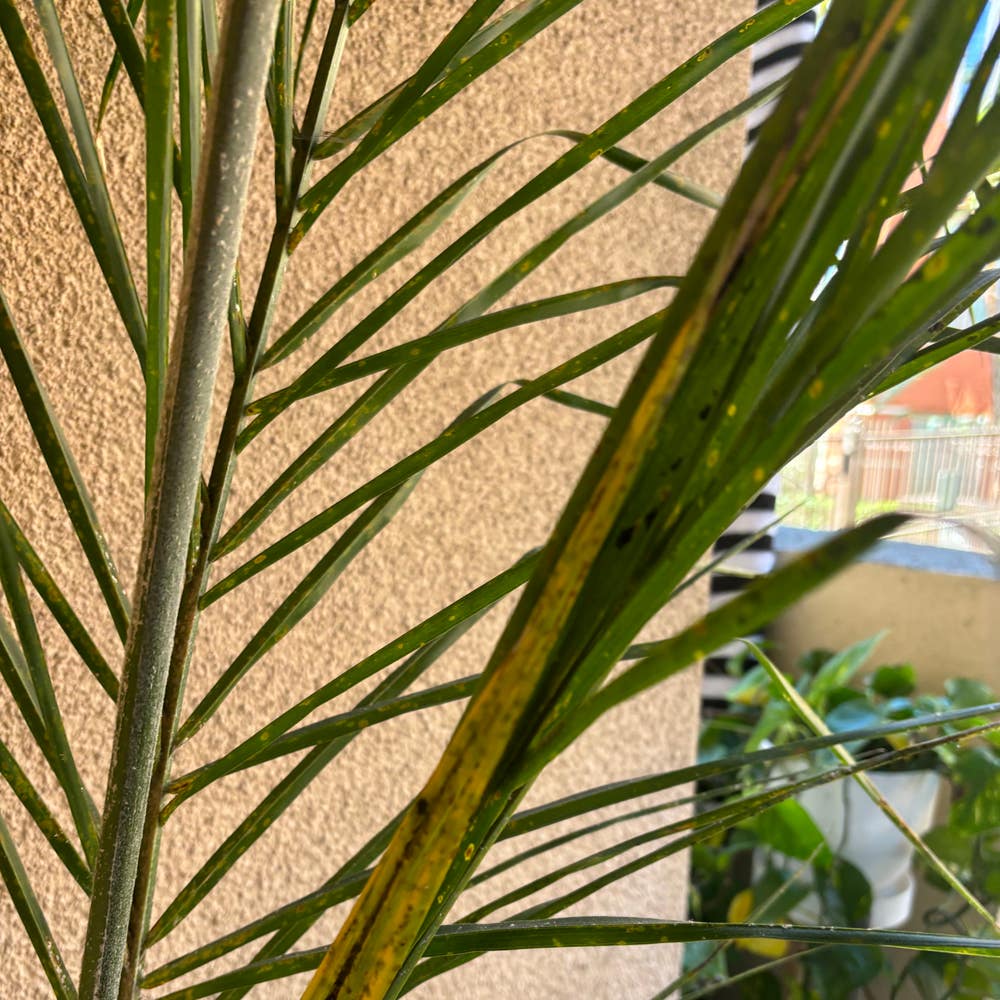
🌴 Ultimate Guide to Fixing Brown Spots on Cocos Palm
Syagrus comosa
By the Greg Editorial Team
Nov 23, 2024•5 min read
This article was created with the help of AI so we can cover more plants for you. May contain errors. See one? Report it here.
Transform your Cocos Palm's health 🌿 by mastering the art of diagnosing and treating pesky brown spots!
- 🌱 Brown spots on Cocos Palms stem from nutrient deficiencies, pests, or watering issues.
- 💧 Overwatering causes root rot, while underwatering leads to crispy fronds. Balance is key!
- 🦠 Fungal infections thrive in humidity; early detection and treatment are crucial for health.
Causes of Brown Spots
🌱 Nutrient Deficiencies
Nutrient deficiencies can significantly affect the health of your Cocos Palm. A potassium deficiency often manifests as yellowing and browning of leaf tips, while magnesium deficiency leads to interveinal chlorosis and browning.
Balanced fertilization is crucial for Cocos Palm care. Regularly providing the right nutrients helps prevent these deficiencies and promotes lush, vibrant growth.
💧 Overwatering and Root Rot
Overwatering is a common issue that can lead to serious problems. Signs include wilting, yellowing leaves, and mushy roots, indicating that your palm is struggling.
Root rot occurs when the roots sit in waterlogged soil, leading to decay. Ensuring well-draining soil is essential to prevent this condition and maintain your Cocos Palm's health.
🌵 Underwatering and Drought Stress
Underwatering can also cause brown spots, particularly at the leaf tips. Symptoms include crispy fronds and browning, signaling that your palm is not getting enough moisture.
Drought stress can severely impact overall plant vigor and leaf health. To keep your Cocos Palm thriving, aim for a consistent watering schedule, ensuring the soil remains adequately moist.
🍄 Fungal Infections
Fungal infections, such as leaf spot disease, can lead to unsightly brown spots on your palm's leaves. These infections thrive in conditions of high humidity and poor air circulation.
Early detection and treatment are vital for managing fungal diseases. Keeping an eye on your palm's environment can help prevent these issues before they escalate.
🐜 Pest Infestations
Pests like spider mites and scale insects can wreak havoc on your Cocos Palm. Signs of pest damage include leaf discoloration, webbing, and sticky residue left on the leaves.
Effective pest control is essential for maintaining healthy Cocos Palm leaves. Regular inspections and prompt action can help keep these pests at bay and ensure your palm remains vibrant.
Diagnosing Brown Spots
🕵️♂️ Identifying the Type of Brown Spots
When diagnosing brown spots on your Cocos Palm, it's crucial to differentiate between spots and edges. Look for distinct patterns; spots may indicate localized issues, while browning edges often signal broader problems like nutrient deficiencies or water stress.
Understanding the pattern of discoloration can guide your treatment approach. For instance, if the browning is concentrated at the tips, it might suggest underwatering or nutrient issues.
🧩 Assessing Leaf Texture and Overall Health
Next, evaluate the leaf texture. Soft leaves may indicate overwatering, while crispy leaves often point to underwatering or drought stress.
Additionally, observe the overall health of your palm. Healthy growth patterns and robust frond development are signs that your Cocos Palm is thriving, while stunted growth can be a red flag.
🌤️ Observing Environmental Conditions
Environmental conditions play a significant role in your palm's health. Check the light exposure; Cocos Palms thrive in bright, indirect sunlight.
Also, monitor humidity levels and temperature fluctuations. Cocos Palms prefer a humid environment, so maintaining consistent humidity can prevent stress and browning.
🐜 Checking for Pests and Signs of Disease
Finally, inspect for pests and signs of disease. Start with visual checks, using a magnifying glass to spot tiny pests like spider mites or scale insects.
Look for signs of disease, such as fungal growth or unusual leaf spots. Early detection is key to managing these issues effectively and keeping your Cocos Palm healthy.
With a clear understanding of how to diagnose brown spots, you're well-equipped to tackle any issues your Cocos Palm may face. Next, let's explore effective treatment options to restore your palm's vibrant health.
Treatment Options
Adjusting Watering Practices 🌊
Proper watering is crucial for the health of your Cocos Palm. Start by determining soil moisture using a moisture meter or your finger to check the top inch of soil.
Next, establish a watering schedule. Water your palm when the top inch of soil feels dry to the touch.
Lastly, ensure proper drainage by using pots with drainage holes. This prevents water from pooling and helps avoid root rot.
Fertilization Strategies 🌱
Fertilization plays a vital role in maintaining vibrant Cocos Palms. Use a balanced NPK fertilizer that includes micronutrients to support healthy growth.
Apply fertilizer every 6-8 weeks during the growing season. Keep an eye out for signs of nutrient deficiency, such as yellowing leaves or stunted growth.
Fungicide Application 🦠
Fungicides can be a lifesaver when dealing with fungal infections. Apply fungicides at the first sign of trouble to prevent further damage.
You have options between organic and chemical fungicides. Choose the type that best fits your gardening philosophy and apply it using methods like spraying or soil drenching.
Pest Control Methods 🐛
Pest control is essential for keeping your Cocos Palm thriving. Consider organic options like neem oil, insecticidal soap, and introducing beneficial insects to your garden.
If the infestation is severe, systemic insecticides may be necessary. Always follow label instructions to ensure safe and effective application.
Pruning Affected Leaves ✂️
Pruning is a straightforward way to improve your palm's appearance and health. Start with clean, sharp pruning shears to avoid introducing disease.
Remove leaves that show significant damage to encourage new growth. Cut at the base of the leaf stem to prevent further damage and promote a healthier plant.
With these treatment options, you can effectively address brown spots on your Cocos Palm. Next, let’s explore how to diagnose the specific causes of those pesky brown spots.
⚠️ Safety First
This content is for general information and may contain errors, omissions, or outdated details. It is not medical, veterinary advice, or an endorsement of therapeutic claims.
Always consult a qualified healthcare professional before using any plant as food, medicine, or supplement.
Never eat any plant (or feed one to pets) without confirming its identity with at least two trusted sources.
If you suspect poisoning, call Poison Control (800) 222-1222, the Pet Poison Helpline (800) 213-6680, or your local emergency service immediately.
Spotted an error? Please report it here.
Revive your Cocos Palm's vibrant health 🌴 by using Greg's tailored watering reminders and nutrient tracking to tackle those pesky brown spots with confidence!