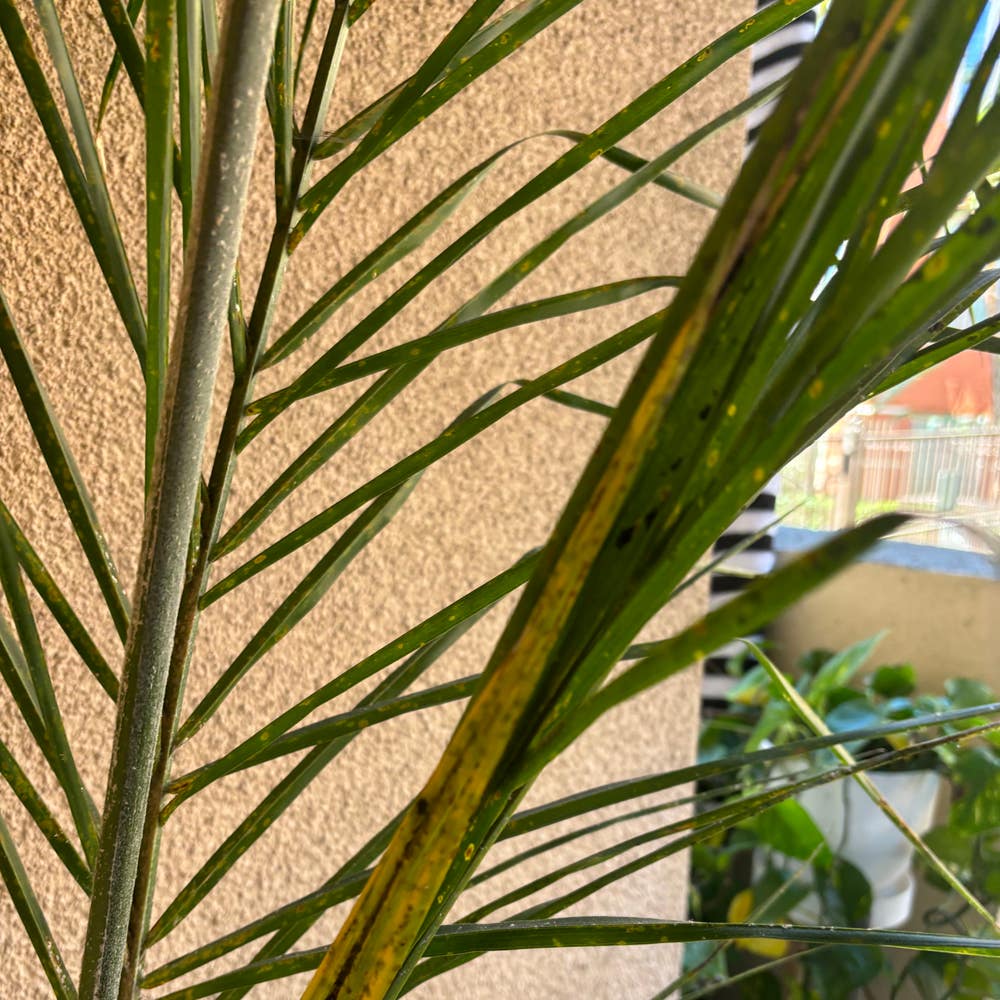
🌴 How to Cure Leaves Falling Over on Your Cocos Palm
Syagrus comosa
By the Greg Editorial Team
Nov 23, 2024•6 min read
This article was created with the help of AI so we can cover more plants for you. May contain errors. See one? Report it here.
Revive your drooping Cocos Palm 🌴 with essential care tips for vibrant, healthy growth and thriving leaves!
- 🌴 Drooping leaves signal distress; address promptly to revive your Cocos Palm.
- 💧 Yellowing fronds indicate overwatering or nutrient deficiencies; adjust care accordingly.
- 🌞 Cocos Palms need 6+ hours of sunlight daily for optimal health and growth.
Causes of Leaves Falling Over
Symptoms of Unhealthy Cocos Palm 🌴
If your Cocos Palm is showing signs of distress, it’s essential to recognize the symptoms early. Drooping leaves are often the first indicator, where the fronds bend downwards or appear limp, signaling that something is off.
Another red flag is yellowing fronds. This can point to nutrient deficiencies or overwatering, both of which can severely impact your palm's health.
Browning tips are also a common symptom. They typically indicate environmental stress or insufficient watering, which can lead to further complications if not addressed promptly.
Understanding these symptoms is crucial for maintaining a healthy Cocos Palm. By identifying these issues early, you can take the necessary steps to restore your plant's vitality and prevent further leaf drooping.
Next, let’s explore how proper watering and soil care can help keep your Cocos Palm thriving.
Watering and Soil Care
Proper Watering Techniques 🌊
To keep your Cocos Palm thriving, it's essential to master proper watering techniques. Water your palm when the top 1-2 inches of soil are dry, ensuring the roots receive adequate moisture without becoming waterlogged.
Deep watering is key; it encourages robust root growth. This method allows water to penetrate deeply, promoting a healthy root system that can better withstand stress.
Soil Type and Drainage Requirements 🏞️
Choosing the right soil is crucial for your palm's health. A well-draining sandy loam or quality potting mix is ideal, as it provides the necessary aeration and nutrients.
Good drainage is vital to prevent root rot, which can quickly lead to drooping leaves and overall decline. Ensure your pot or garden bed has proper drainage holes to facilitate excess water flow.
Signs of Overwatering and Underwatering 🚰
Recognizing the signs of overwatering and underwatering can save your palm from distress. Overwatering typically manifests as yellowing leaves, mushy roots, and a foul smell from the soil.
On the other hand, underwatering presents itself through wilting leaves, dry soil, and browning leaf tips. Monitoring these signs will help you adjust your care routine effectively.
With a solid understanding of watering and soil care, you're well on your way to nurturing a healthy Cocos Palm. Next, let’s explore the light and temperature requirements essential for optimal growth.
Light and Temperature Requirements
Ideal Light Conditions 🌞
Cocos palms thrive in bright environments, needing full sun to partial shade. Aim for at least six hours of direct sunlight daily to keep those leaves healthy and vibrant.
Insufficient light can lead to stunted growth and increased drooping. If your palm isn't getting enough sun, you might notice the leaves bending over as they struggle to reach for the light.
Temperature Ranges for Optimal Growth 🌡️
For optimal growth, maintain temperatures between 70°F to 95°F (21°C to 35°C). This range provides the warmth your cocos palm craves for robust development.
Be cautious of cold temperatures; exposure to anything below 50°F (10°C) can stress your palm, leading to drooping leaves. Protect your plant from chilly drafts to ensure it stays happy and healthy.
Understanding the light and temperature needs of your cocos palm is crucial for its overall health. Next, let’s dive into nutrient management to keep your palm thriving.
Nutrient Management
Recommended Fertilizers 🌱
To keep your cocos palm thriving, use a balanced slow-release fertilizer that includes essential micronutrients. Apply this during the growing season, specifically in spring and summer, to support robust growth.
Signs of Nutrient Deficiency ⚠️
Watch for yellowing leaves, which often indicate a nitrogen deficiency. If you notice stunted growth, it could signal a lack of potassium or magnesium, both crucial for your palm's health.
Fertilization Schedule and Techniques 📅
Fertilize your cocos palm every 6-8 weeks during the growing season for optimal results. When applying, evenly distribute the fertilizer around the base, ensuring it doesn't come into direct contact with the trunk to prevent damage.
Maintaining proper nutrient levels is vital for your cocos palm's vitality. Next, let’s explore how light and temperature requirements play a crucial role in keeping your palm healthy.
Pest and Disease Management
Common Pests 🕷️
Caring for your Cocos Palm means keeping an eye out for common pests.
- Spider mites: These tiny pests leave behind webbing and cause stippling on leaves, making them look unhealthy.
- Scale insects: Look for small, raised bumps on the fronds; these can weaken your palm by sucking its sap.
Identifying Diseases that Cause Leaf Drooping 🥀
Understanding diseases is crucial for maintaining a healthy Cocos Palm.
- Fusarium wilt: This disease manifests as yellowing and wilting of fronds, indicating a serious issue.
- Root rot: Often a result of overwatering, root rot leads to drooping leaves and decay, threatening the plant's survival.
Treatment Options for Pests and Diseases 💊
Addressing pests and diseases promptly can save your palm from further damage.
- Organic pest control: Use neem oil or insecticidal soap to effectively manage pest populations without harming the environment.
- Disease management: Improve drainage and reduce watering to combat root rot, ensuring your palm has the best chance to recover.
By staying vigilant and proactive, you can keep your Cocos Palm thriving. Next, let’s explore preventive measures to maintain its health and vitality.
Preventive Measures
Best Practices for Maintaining Healthy Leaves 🌿
To keep your Cocos Palm thriving, regular inspections are key. Check for pests and signs of stress, as early detection can save your plant from serious issues.
Proper watering and fertilization are also crucial. Stick to the recommended schedules to ensure your palm gets the nutrients it needs without overdoing it.
Seasonal Care Tips ☃️
Winter care requires special attention. Protect your palm from cold drafts and reduce watering to prevent stress during the colder months.
In summer, increase humidity around your palm and keep an eye out for pests. This proactive approach helps maintain vibrant, healthy leaves.
Long-Term Strategies to Prevent Leaf Drooping 📉
Consistency is vital for your Cocos Palm's health. Maintain stable temperature and humidity levels to create a comfortable environment.
Soil health is another long-term strategy. Regularly amend the soil to ensure good drainage and nutrient availability, setting your palm up for success.
By following these preventive measures, you can enjoy a lush, healthy Cocos Palm that stands tall and proud. Next, let’s explore the importance of nutrient management for optimal growth.
⚠️ Safety First
This content is for general information and may contain errors, omissions, or outdated details. It is not medical, veterinary advice, or an endorsement of therapeutic claims.
Always consult a qualified healthcare professional before using any plant as food, medicine, or supplement.
Never eat any plant (or feed one to pets) without confirming its identity with at least two trusted sources.
If you suspect poisoning, call Poison Control (800) 222-1222, the Pet Poison Helpline (800) 213-6680, or your local emergency service immediately.
Spotted an error? Please report it here.
Keep your Cocos Palm thriving 🌿 by using Greg's tailored watering reminders and nutrient tips to prevent drooping leaves and ensure vibrant growth!