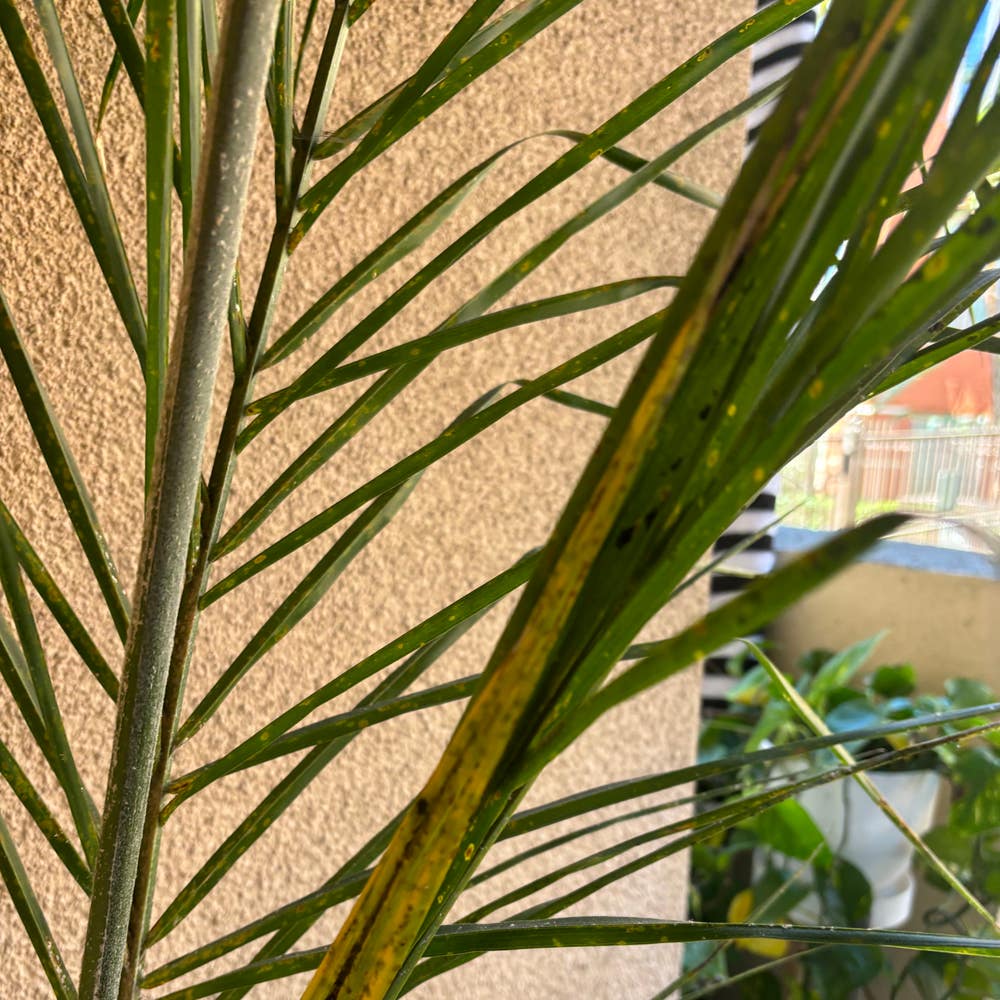
🌴 How to Cure Dropping Leaves on Your Cocos Palm
Syagrus comosa
By the Greg Editorial Team
Nov 23, 2024•6 min read
This article was created with the help of AI so we can cover more plants for you. May contain errors. See one? Report it here.
Transform your Cocos palm's health and prevent leaf drop with these expert care tips! 🌱
- 💧 Overwatering and underwatering cause leaf drop; adjust watering accordingly.
- 🌱 Nutrient deficiencies lead to yellowing leaves; use balanced fertilizer regularly.
- 🐛 Regular pest inspections are crucial for maintaining healthy Cocos palms.
Diagnosing Leaf Drop Issues
🌊 Identifying Symptoms of Overwatering
Overwatering is a common culprit behind leaf drop in Cocos palms. Look for yellowing leaves, wilting, and even root rot, which can signal that your plant is drowning.
To confirm, conduct a soil test. If the soil feels soggy and lacks proper drainage, it’s time to adjust your watering habits.
💧 Recognizing Signs of Underwatering
On the flip side, underwatering can also lead to distress. Monitor for dry, crispy leaf edges and wilting fronds, which indicate that your palm is thirsty.
A quick soil test can help here too. If the soil is dry and compacted, it’s a clear sign that your plant needs more water.
🥦 Assessing Nutrient Deficiency Symptoms
Nutrient deficiencies can manifest in various ways. For instance, yellowing leaves might indicate a nitrogen deficiency, while browning leaf tips can point to a lack of potassium.
Conducting a soil test is crucial. This will help you determine the nutrient levels and guide your fertilization efforts.
🐛 Checking for Pest Damage
Pests can wreak havoc on your Cocos palm. Regularly inspect the leaves and stems for any signs of infestation.
Look for webbing, sticky residue, or visible insects. Early detection is key to preventing further damage.
🌡️ Evaluating Environmental Conditions
Environmental factors play a significant role in your palm's health. Keep an eye on temperature and humidity levels, as extreme conditions can stress your plant.
Also, assess light exposure. Ensure your Cocos palm receives adequate sunlight to thrive and prevent leaf drop.
By diagnosing these issues early, you can take proactive steps to restore your Cocos palm's health. Next, let’s explore how to prevent leaf drop in the first place.
Preventing Leaf Drop
💧 Proper Watering Techniques
To keep your Cocos Palm thriving, deep watering is essential. This method encourages robust root growth, allowing the plant to better absorb moisture and nutrients.
Adjust your watering frequency based on the season and environmental conditions. During hotter months, your palm may need more water, while cooler months may require less.
🌱 Fertilization Schedule and Methods
Using a balanced NPK fertilizer is crucial for your palm's health. This type of fertilizer provides the necessary nutrients for growth and vitality.
Fertilize every 4-6 weeks during the growing season to ensure your Cocos Palm gets the nutrients it needs to flourish.
🌡️ Ideal Environmental Conditions for Cocos Palm
Maintaining optimal temperature and humidity levels is key to preventing leaf drop. Cocos Palms thrive in warm, humid environments, so keep an eye on these conditions.
Ensure your palm receives adequate sunlight exposure. A well-lit spot will help your plant grow strong and healthy.
🐞 Regular Pest Control Measures
Routine inspections are vital for early pest detection. Check your palm regularly for any signs of pests that could cause damage.
Preventative treatments, such as neem oil or insecticidal soap, can help keep pests at bay. Applying these treatments proactively can save you from bigger problems down the line.
🍂 Seasonal Care Adjustments
Adjust your care practices based on seasonal changes to keep your palm healthy. For instance, during winter, protect your palm from cold drafts and reduce watering frequency.
Being mindful of seasonal shifts will help your Cocos Palm adapt and thrive throughout the year. With the right care, you can enjoy a lush, vibrant plant that enhances your space.
As you implement these preventive measures, you'll set the stage for a healthy Cocos Palm. Next, we’ll explore how to treat leaf drop problems effectively.
Treating Leaf Drop Problems
🌊 Step-by-Step Guide to Adjusting Watering Practices
Adjusting your watering practices is crucial for reviving your Cocos Palm. Start by assessing current soil moisture levels to determine if your plant is over or underwatered.
Next, modify your watering frequency based on the plant's needs. Remember, Cocos Palms prefer deep watering, so ensure the water penetrates the soil thoroughly. Lastly, check for proper drainage in pots or planting areas to prevent waterlogging.
🌱 How to Amend Soil for Nutrient Deficiencies
Nutrient deficiencies can lead to leaf drop, so it's essential to amend your soil accordingly. Begin by conducting a soil test to identify any deficiencies in nitrogen or potassium.
Once you know what your soil lacks, choose the appropriate fertilizers. Follow the package instructions for application to ensure your Cocos Palm receives the nutrients it needs to thrive.
🐛 Pest Control Methods Specific to Cocos Palm
Pests can wreak havoc on your Cocos Palm, leading to leaf drop. Recommended treatments include insecticidal soap and neem oil, both effective in managing pest populations.
Apply these treatments as needed, based on the presence of pests. Regular monitoring will help you catch infestations early and keep your palm healthy.
🌈 Recovery Techniques for Stressed Cocos Palms
If your Cocos Palm is stressed, adjusting care practices is vital for recovery. Focus on providing optimal environmental conditions, such as maintaining adequate humidity and temperature.
Additionally, reduce stressors by minimizing disturbances and ensuring the plant has enough light. This supportive environment will help your palm bounce back.
🆘 When to Seek Professional Help
Sometimes, despite your best efforts, professional help may be necessary. Look for signs like severe pest infestations or persistent leaf drop that doesn't improve with care adjustments.
In such cases, consulting with a local horticulturist or plant specialist can provide tailored advice and solutions. Don't hesitate to reach out for expert guidance when needed.
With these strategies in place, your Cocos Palm can recover and thrive, setting the stage for the next section on monitoring and maintenance.
Monitoring and Maintenance
Regular Inspection Routines 🌿
To keep your Cocos Palm thriving, establish a routine of weekly inspections. Focus on key areas such as leaves, stems, and soil moisture to catch any signs of stress or pests early.
Signs of Recovery to Look For 🌱
When your palm starts to recover, you’ll notice new growth in the form of healthy fronds. Additionally, watch for improved leaf color, as they transition back to a vibrant green.
Long-Term Care Strategies for Healthy Cocos Palms 🌳
Consistency is crucial for long-term health. Maintain a regular watering and fertilization schedule while adapting your care practices to seasonal changes for optimal growth.
Tools and Products for Cocos Palm Care 🛠️
Investing in the right tools can make a significant difference. Recommended items include a soil moisture meter, pruning shears, and effective pest control products to ensure your palm remains healthy.
By staying vigilant and proactive in your care routine, you can help your Cocos Palm flourish beautifully. Next, let’s explore effective treatment methods for any leaf drop problems you may encounter.
⚠️ Safety First
This content is for general information and may contain errors, omissions, or outdated details. It is not medical, veterinary advice, or an endorsement of therapeutic claims.
Always consult a qualified healthcare professional before using any plant as food, medicine, or supplement.
Never eat any plant (or feed one to pets) without confirming its identity with at least two trusted sources.
If you suspect poisoning, call Poison Control (800) 222-1222, the Pet Poison Helpline (800) 213-6680, or your local emergency service immediately.
Spotted an error? Please report it here.
Revive your Cocos palm and prevent leaf drop 🌿 with Greg's tailored watering reminders and nutrient tracking to keep your plant thriving!