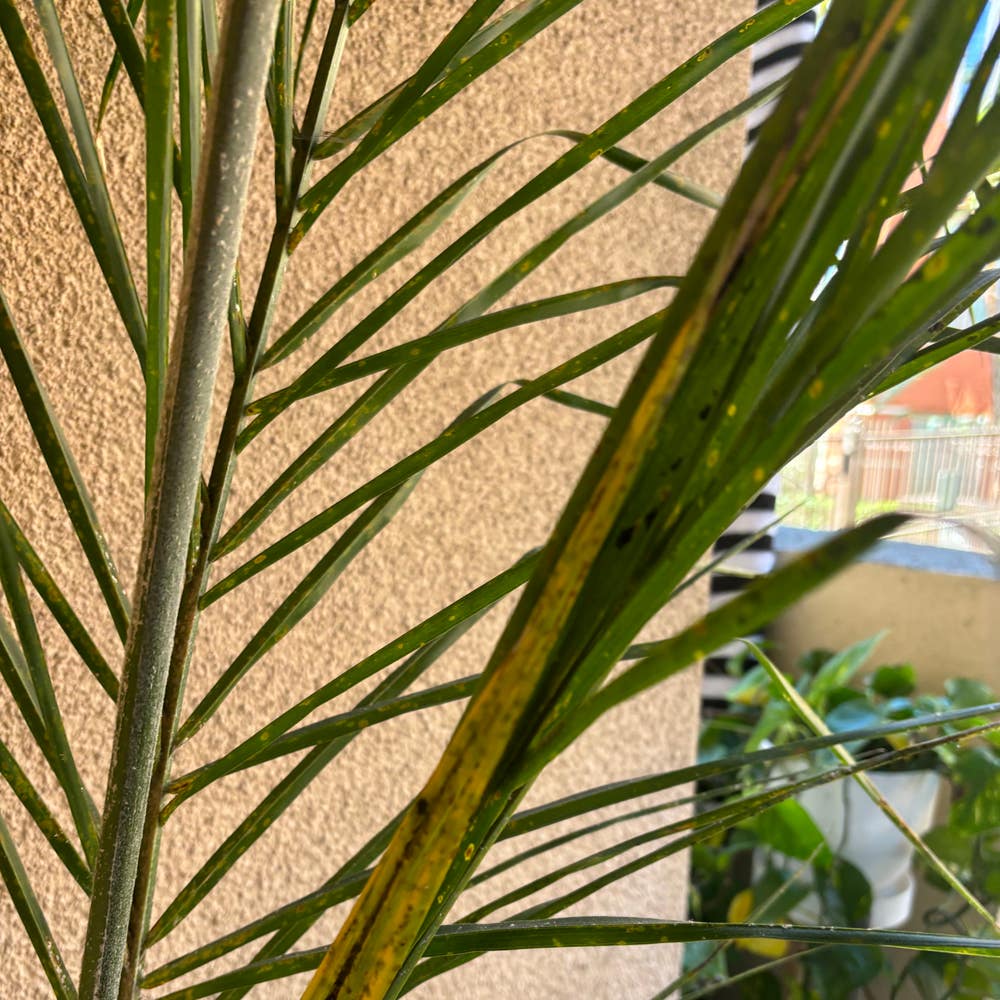
🌴 Understanding Curling Leaves on Your Cocos Palm
Syagrus comosa
By the Greg Editorial Team
Nov 23, 2024•7 min read
This article was created with the help of AI so we can cover more plants for you. May contain errors. See one? Report it here.
Revive your Cocos Palm's vitality 🌴 by mastering simple strategies to prevent and treat leaf curling!
- 🌱 Leaf curling in Cocos Palms stems from nutrient deficiencies, pests, or watering issues.
- 💧 Regular soil moisture checks prevent overwatering and underwatering for healthier palms.
- 🐜 Inspect for pests like spider mites early to avoid significant damage to your palm.
Common Causes of Leaf Curling
🌱 Nutrient Deficiencies
Nutrient deficiencies can significantly impact the health of your Cocos Palm. Look for symptoms like yellowing leaves, stunted growth, and curling, which indicate a lack of essential nutrients.
Key nutrients to monitor include nitrogen, potassium, and magnesium. Ensuring your palm receives these nutrients can help maintain its vibrant appearance and overall vitality.
💧 Watering Issues
Watering practices play a crucial role in leaf health. Overwatering can lead to yellowing and mushy fronds, while underwatering results in browning tips and crispy leaves.
To keep your palm thriving, find a balance in your watering routine. Regularly check the soil moisture to avoid these common pitfalls.
🐛 Pest Infestations
Pests can wreak havoc on your Cocos Palm, with spider mites and scale insects being the most common culprits. Symptoms of infestation include webbing on leaves, sticky residue, and visible insects.
Regular inspections can help you catch these pests early, preventing further damage to your plant.
🌡️ Environmental Stress Factors
Environmental conditions greatly influence the health of your palm. Temperature fluctuations can stress your plant, with an ideal range of 70°F to 85°F (21°C to 29°C) for optimal growth.
Humidity is another critical factor; Cocos Palms thrive in high humidity levels of 60% or higher. Additionally, ensure your palm receives full sun exposure for 6-8 hours daily to support healthy growth.
Understanding these common causes of leaf curling can empower you to take proactive measures. By addressing nutrient deficiencies, watering issues, pest infestations, and environmental stress factors, you can help your Cocos Palm flourish. Next, we’ll delve into diagnosing leaf curl issues to pinpoint specific problems affecting your plant.
Diagnosing Leaf Curl Issues
🌱 Nutrient Deficiencies and Their Impact
Identifying nutrient deficiencies in your Cocos Palm is crucial for its health. Look for changes in leaf color and texture; yellowing leaves often indicate a nitrogen deficiency, while curling can signal a lack of potassium or magnesium.
To get a precise understanding of your soil's nutrient levels, consider conducting a soil test. This will help you tailor your fertilization strategy effectively.
💧 Watering Practices and Their Effects
Assessing soil moisture is vital for maintaining your palm's health. Techniques like the finger test—where you insert your finger into the soil to check for moisture—can help you determine if your plant needs water.
Adjust your watering frequency based on seasonal changes. During hotter months, your palm may require more frequent watering, while in cooler months, you can reduce the frequency.
🐞 Pest Infestations and Signs to Look For
Pest infestations can wreak havoc on your Cocos Palm, so it's essential to know what to look for. Spider mites often leave fine webbing and cause stippled leaves, indicating a serious issue.
Scale insects present as hard, waxy bumps on leaf surfaces. Regular inspections can help you catch these pests early and take action before they cause significant damage.
🌡️ Environmental Stress Factors
Monitoring temperature is key to keeping your palm healthy. Use thermometers to ensure your Cocos Palm stays within its ideal temperature range of 70°F to 85°F (21°C to 29°C).
Humidity control is equally important. Employ hygrometers to measure humidity levels and make adjustments as needed, ensuring your palm thrives in conditions of 60% humidity or higher.
By diagnosing these issues early, you can take proactive steps to restore your Cocos Palm's health. Next, let’s explore how to prevent leaf curling to keep your palm looking its best.
Preventing Leaf Curl
💧 Proper Watering Techniques
To keep your Cocos Palm healthy, establish a watering schedule that focuses on deep, infrequent watering. This approach encourages strong root development and prevents the soil from becoming overly saturated.
Signs of proper watering include soil that feels moist but not soggy. If the top inch of soil is dry, it’s time to water again.
🌱 Soil and Drainage Considerations
The ideal soil composition for your palm is well-draining sandy loam. This type of soil allows excess water to escape, reducing the risk of root rot.
Ensure that pots have drainage holes to facilitate proper water flow. Without these, your palm's roots can become waterlogged, leading to serious health issues.
🥦 Fertilization Schedule and Nutrient Balance
Fertilizing your Cocos Palm every 6-8 weeks during the growing season is essential for maintaining vibrant foliage. A balanced NPK fertilizer with added micronutrients will provide the necessary nutrients for optimal growth.
Regular fertilization helps prevent nutrient deficiencies that can lead to leaf curling. Keep an eye on your palm's health and adjust your fertilization routine as needed.
🐞 Pest Management Strategies
Regular inspections are crucial for catching early signs of pest infestations. Look for unusual spots or webbing on leaves, which can indicate the presence of pests.
Using organic insecticides and introducing beneficial insects can effectively manage pest populations. Staying proactive in your pest management will help keep your Cocos Palm thriving.
By implementing these preventive measures, you can significantly reduce the risk of leaf curling and ensure your palm remains healthy and vibrant. Next, let’s explore how to treat curling leaves effectively when issues arise.
Treating Curling Leaves
🥗 Step-by-Step Guide to Addressing Nutrient Deficiencies
To tackle nutrient deficiencies in your Cocos Palm, start with a soil test. This will help you pinpoint which nutrients are lacking.
Next, select fertilizers that align with your test results. Make sure to apply them according to the package instructions for the best results.
🐛 How to Manage Pests Effectively
Begin pest management by identifying the type of pest through a visual inspection of your palm. Look for common culprits like spider mites or scale insects.
Once identified, choose suitable pest control methods, such as neem oil or insecticidal soap. Regular monitoring is essential to catch any re-infestation early.
🌧️ Remedies for Environmental Stress
If your palm is struggling due to environmental stress, consider adjusting its location. Moving it to a more suitable environment can make a significant difference.
Additionally, increasing humidity can help. Use humidifiers or place pebble trays filled with water near the palm to create a more favorable atmosphere.
🍄 Fungal Treatment Options
Fungal infections can also cause curling leaves. Look for signs like dark spots or mold on the leaves.
If you spot these symptoms, consider using fungicides and improving air circulation around the plant. This will help mitigate the issue and promote healthier growth.
By addressing these factors, you can effectively treat curling leaves and restore your Cocos Palm to its vibrant state. Next, let's explore how to monitor and maintain your palm for long-term health.
Monitoring and Maintenance
Regular Inspection Routines 🌿
To keep your Cocos Palm thriving, conduct weekly inspections for signs of stress or pests. Focus on key areas like the undersides of leaves, soil moisture, and the overall health of the plant.
Seasonal Care Adjustments 🌦️
As seasons change, so should your care practices. For instance, you may need to adjust your watering frequency during winter when the plant requires less moisture.
Long-Term Health Strategies 🏋️♂️
Establishing a consistent care routine is crucial for your palm's long-term health. This includes regular watering, fertilizing, and pest management to ensure your plant remains vibrant and strong.
Additionally, keep a record of your care practices and any changes in plant health. This documentation will help you identify patterns and make informed adjustments over time.
By staying proactive with inspections and adjustments, you can foster a healthy environment for your Cocos Palm. This diligence not only enhances its growth but also enriches your gardening experience.
Next, we'll explore effective treatments for curling leaves to restore your palm's vitality.
⚠️ Safety First
This content is for general information and may contain errors, omissions, or outdated details. It is not medical, veterinary advice, or an endorsement of therapeutic claims.
Always consult a qualified healthcare professional before using any plant as food, medicine, or supplement.
Never eat any plant (or feed one to pets) without confirming its identity with at least two trusted sources.
If you suspect poisoning, call Poison Control (800) 222-1222, the Pet Poison Helpline (800) 213-6680, or your local emergency service immediately.
Spotted an error? Please report it here.
Keep your Cocos Palm curl-free 🌴 by using Greg's tailored watering reminders and nutrient tracking to ensure it gets the care it needs for vibrant growth!