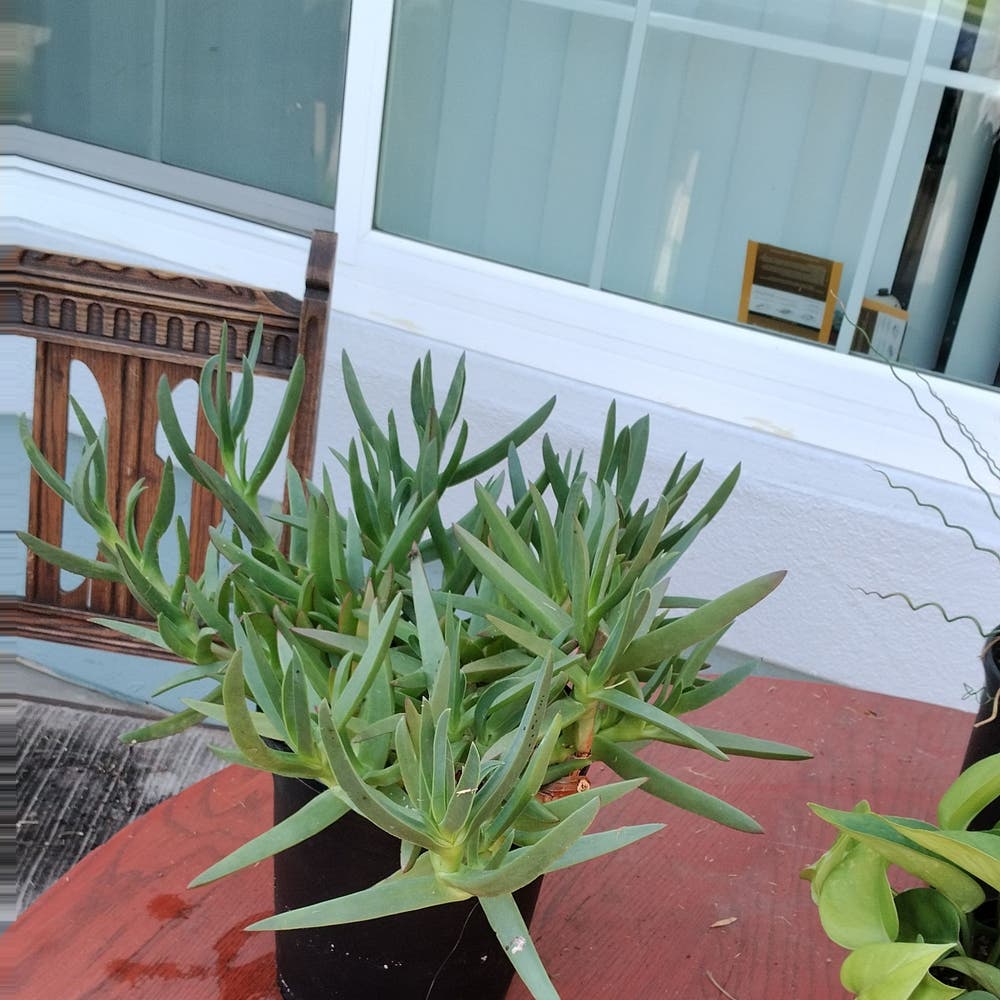
💧 Why Are My Chilean Sea Fig Leaves Mushy?
Carpobrotus chilensis
By the Greg Editorial Team
Jun 18, 2024•3 min read
This article was created with the help of AI so we can cover more plants for you. May contain errors. See one? Report it here.
Rescue your Chilean Sea Fig from mushiness with these essential plant care 🌵 tips!
- 🌊 Overwatering? Yellow leaves and mushiness are your red flags.
- 🚫 Stop watering immediately and perform 'soil surgery' for mushy leaves.
- 🌵 Use well-draining potting mix and practice watering discipline.
Spotting the Trouble: Signs Your Chilean Sea Fig is Too Wet
💧 Overwatering Symptoms
Yellowing leaves are the first red flags waving at you, signaling your Chilean Sea Fig might be drowning in excess water. If the leaves have gone from firm to mushy, it's past the time for a watering intervention.
🚱 Root Rot Red Flags
Root rot is the silent assassin of the plant world. If the base of your Chilean Sea Fig feels softer than a ripe tomato, you're likely dealing with this underground menace. A foul smell emanating from the soil is another dead giveaway.
🍄 Fungal Foes
Fungi love a good, moist environment to throw a party. Spotted any mold or a powdery substance on your plant? That's the uninvited guest making itself at home. It's time to crash their party and show them the door.

First Aid for Mushy Leaves
💦 Emergency Watering Intervention
When your Chilean Sea Fig's leaves turn to mush, it's a code red for overwatering. Halt all hydration immediately. Check the soil; if it's wetter than a rainforest floor, it's time to back off the watering can.
🌱 Soil CPR
Next up, soil surgery. Remove your plant from its pot like it's a delicate bomb defusal. Inspect the roots with the scrutiny of a hawk. If they're brown and slimy, they're goners—trim the rot away. Healthy roots? They get a second chance. Let them air out, then repot in fresh, well-draining soil that's as light and airy as a cloud.
🍄 Fungus Eradication Tactics
Fungus is the party crasher you didn't invite. If you spot signs of fungal infection, it's time to bring out the big guns—a copper-based fungicide. Apply with the precision of a sniper, following the label to the letter. Remove any infected leaves with the care of a surgeon, and dispose of them like hazardous waste. Remember, cleanliness is next to godliness, so clean your tools and hands thoroughly after the procedure.

Long-Term Care to Keep the Mush Away
💧 Watering Wisdom
To prevent your Chilean Sea Fig from becoming a soggy mess, watering discipline is key. Think of it as a tactical maneuver—only provide hydration when the soil is dry to the touch. This mirrors the plant's natural, arid conditions. Consistency is crucial; erratic watering can be as damaging as overwatering.
🌱 The Perfect Potting Mix
Your Chilean Sea Fig's roots crave a well-draining sanctuary. A mix of cactus soil, perlite, and sand should do the trick, creating a fast-draining environment that deters water from overstaying its welcome. Think of it as creating a breathable space for roots, not a swampy trap.
🍄 Fungal Prevention Practices
Fungus thrives in moist conditions, so keeping the environment around your Chilean Sea Fig dry is essential. Ensure good airflow around the plant and consider using a fungicide as a preventive measure, especially if you've had issues before. It's like setting up a no-fungus zone around your beloved plant.

⚠️ Safety First
This content is for general information and may contain errors, omissions, or outdated details. It is not medical, veterinary advice, or an endorsement of therapeutic claims.
Always consult a qualified healthcare professional before using any plant as food, medicine, or supplement.
Never eat any plant (or feed one to pets) without confirming its identity with at least two trusted sources.
If you suspect poisoning, call Poison Control (800) 222-1222, the Pet Poison Helpline (800) 213-6680, or your local emergency service immediately.
Spotted an error? Please report it here.
Prevent mushy mishaps in your Chilean Sea Fig by using Greg's tailored watering schedule 🌵, ensuring just the right dryness for a happy, healthy plant.