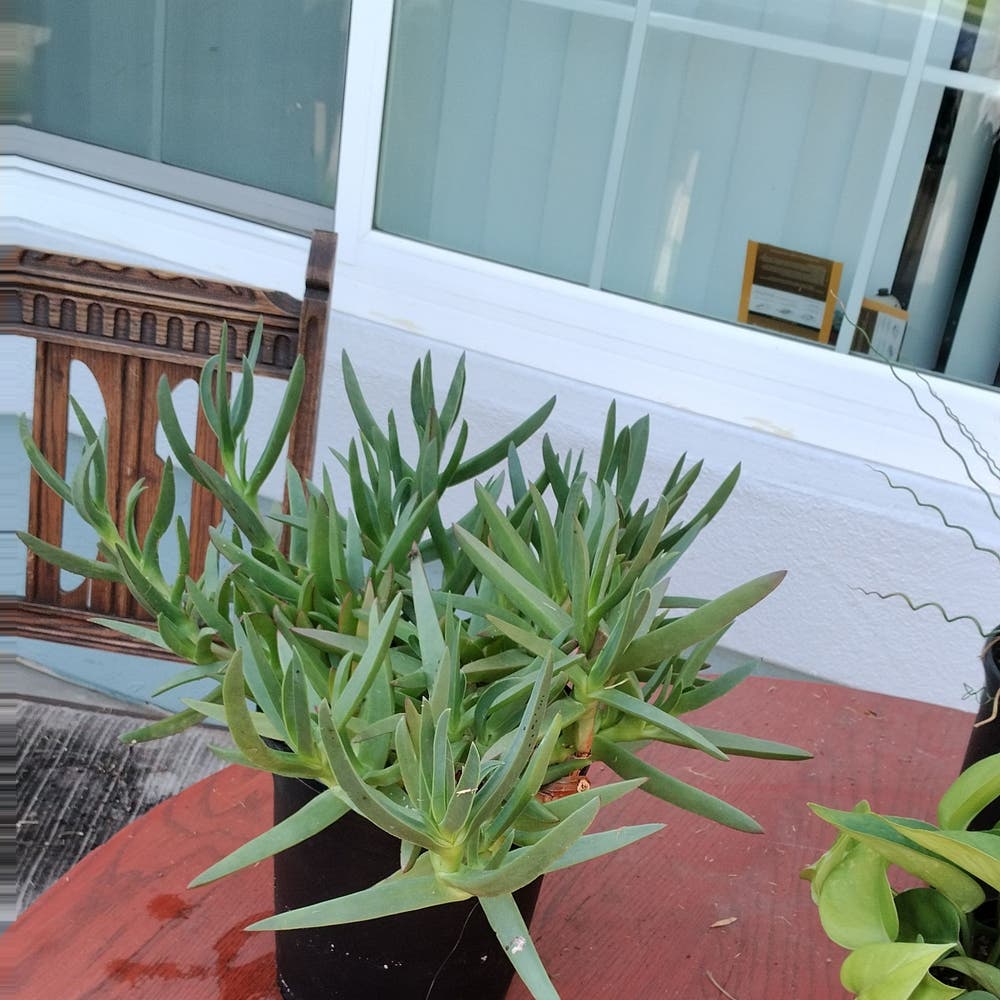
Why Are There Black Spots on My Chilean Sea Fig Leaves?
Carpobrotus chilensis
By the Greg Editorial Team
Jun 18, 2024•4 min read
This article was created with the help of AI so we can cover more plants for you. May contain errors. See one? Report it here.
Banish black spots on your Chilean Sea Fig 🌿 and ensure its lush, spot-free growth with our expert guide!
- Fungal and bacterial infections often cause black spots on leaves.
- Overwatering and poor airflow exacerbate the problem; adjust care accordingly.
- Prevent with well-draining soil and regular plant check-ups.
Spotting the Trouble: Recognizing Black Spots
🕵️ What Do They Look Like?
Black spots on Chilean Sea Fig leaves are the plant's version of a distress signal. They can be tiny specks or grow into larger blotches, often accompanied by a yellowish halo. These spots may appear jet black or have a brownish tinge and can be raised, sunken, or have a slimy texture. Watch out for spots with dark margins or concentric rings—these are the hallmarks of a fungal or bacterial infection, not just an aesthetic quirk.
Where to Find Them?
The spots don't discriminate; they can show up anywhere on the leaf. However, they're notorious for starting their invasion on the undersides of leaves, a spot less likely to be checked by the casual plant owner. But don't be fooled—they're not shy about making an appearance on the top surfaces either, especially in areas that soak up the most light. Regular leaf inspections are crucial; flip those leaves and scrutinize every corner to catch these party crashers before they take over.

Unearthing the Culprits: Causes of Black Spots
🌊 Too Much Love: Overwatering Woes
Overwatering is a classic case of too much of a good thing. It's the equivalent of drowning your plant's roots in affection, leading to a fungal free-for-all. The soil should feel like a wrung-out sponge before you even think about giving your Chilean Sea Fig another drink.
💨 Stuffy Leaves: Poor Airflow and Bacteria
Airflow is to plants what breathing room is to humans—essential. Without it, you're practically inviting bacteria to a house party on your plant's leaves. Keep the air moving; it's the unsung hero in the fight against those pesky black spots.
🌞 Sun Kissed or Sunburnt?
Direct sunlight can turn from friend to foe in a heartbeat. If your Chilean Sea Fig's leaves are sporting black spots with a sunburnt edge, it's time to rethink its tanning sessions. Shade is your ally here, shielding those tender leaves from the harsh rays.

The Rescue Plan: Treating and Preventing Black Spots
🌱 First Aid for Fungal Fights
Adjusting watering habits is crucial. Overzealous hydration is a fungal infection's dream. Ensure your Chilean Sea Fig's soil is as parched as a desert before giving it another drink. Improving drainage is equally important; think of your plant's pot as a colander, not a bowl.
💨 Clearing the Air
Pruning isn't just for aesthetics. It's about survival. Snip away like a horticultural ninja, creating space between leaves for air to swoop in and dry things out. Air circulation is the unsung hero here, so give your plant room to breathe and avoid the dreaded moisture build-up.
🌞 Shading Strategies
Direct sunlight can turn from friend to foe if it's too intense. Protecting leaves with a shade cloth is like slapping on some sunscreen. It's a simple move that can prevent your Chilean Sea Fig from getting a sunburn in the form of black spots.

Keeping the Spots at Bay: Long-Term Prevention
🌱 The Right Mix
Well-draining soil is the cornerstone of preventing black spots. It's like a good mattress for your Chilean Sea Fig—supportive, yet breathable. To achieve this, mix in materials like perlite or sand. These additions prevent the dreaded waterlogging that invites fungal parties at your plant's expense.
👩⚕️ Consistent Check-Ups
Regular inspections are your plant's health insurance. Keep an eye out for early signs of distress. Maintenance isn't just about reacting; it's about proactive care. Prune regularly to encourage airflow and prevent overcrowding. This isn't just about aesthetics; it's about giving each leaf its own personal space to thrive.
Remember, a well-draining pot is as important as the soil mix. Unglazed clay pots allow for evaporation and discourage moisture build-up. It's like choosing breathable fabric for a workout—it helps to prevent a fungal infestation sweat-fest.
Lastly, rotate your plant periodically. This isn't just to give it a new view but to ensure all sides receive equal light and air exposure. It's a simple move that can make a big difference in preventing those pesky black spots.
⚠️ Safety First
This content is for general information and may contain errors, omissions, or outdated details. It is not medical, veterinary advice, or an endorsement of therapeutic claims.
Always consult a qualified healthcare professional before using any plant as food, medicine, or supplement.
Never eat any plant (or feed one to pets) without confirming its identity with at least two trusted sources.
If you suspect poisoning, call Poison Control (800) 222-1222, the Pet Poison Helpline (800) 213-6680, or your local emergency service immediately.
Spotted an error? Please report it here.
Combat those alarming black spots on your Chilean Sea Fig by letting Greg optimize your plant's environment 🌱, with custom watering reminders and tips for perfect airflow, ensuring your green buddy thrives.