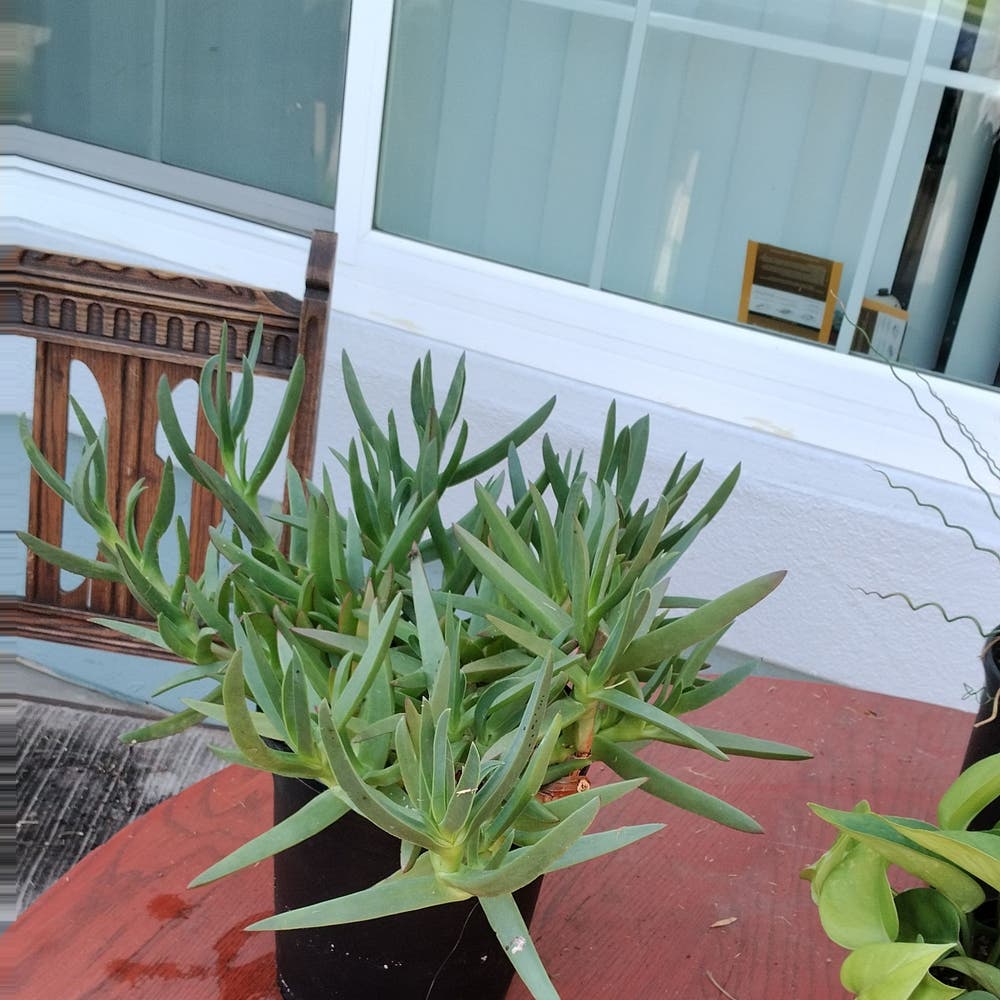
Why Are My Chilean Sea Fig Leaves Curling?
Carpobrotus chilensis
By the Greg Editorial Team
Jun 18, 2024•4 min read
This article was created with the help of AI so we can cover more plants for you. May contain errors. See one? Report it here.
Unravel the mystery of curling Chilean Sea Fig leaves and reclaim their splendor! 🌿🔍
- 🌞🌡️ Balance light and temperature between 65-75°F to prevent curling.
- 💧 Water wisely—keep soil moist, not soggy, to avoid curling.
- 🕵️♂️ Regular checks for pests and diseases help stop leaf curl early.
Pinpointing the Culprits Behind Curly Leaves
🌞 Too Much Sun or Not Enough?
Chilean Sea Fig plants are sun worshippers, but there's a fine line between a healthy tan and a sunburn. Too much direct sunlight can cause leaves to curl up, like they're trying to shield themselves from a solar smackdown. On the flip side, insufficient light leads to leaves stretching out desperately, as if they're trying to snag a bit of brightness from a stingy sun.
🔥 Feeling the Heat or Shivering Cold
Temperature swings are the nemesis of the Chilean Sea Fig. When the thermostat reads like a yo-yo, leaves curl up, bracing for the next wild swing. Heat stress makes them curl inward, conserving moisture like a camel, while cold stress can cause them to pucker up tighter than a pair of lips in a blizzard.
💧 Thirsty Roots or Waterlogged Soil?
Watering is a balancing act worthy of a circus performer. Overwatering turns the soil into a swampy mess, leaving leaves droopy and discolored. Underwatering, however, leaves the soil parched and the leaves curling and crispy, like they've been through the desert on a horse with no name. Aim for moist but not soggy soil – think of it as the plant equivalent of a well-mixed cocktail.

Unwanted Guests: Pests and Diseases
🐜 Spotting the Signs of Infestation
Pests adore your Chilean Sea Fig as much as you do, but for all the wrong reasons. Spider mites and aphids are the main culprits, turning lush leaves into their personal buffets. Look for the classic signs: webbing, sticky residue, or the tiny troublemakers themselves.
🍄 Fungal Foes and How to Fight Them
Fungi are less visible but equally villainous. Fungal leaf spot, anthracnose, and rusts can all lead to leaf curling. These fungal foes leave behind a trail of discoloration and decay. At the first sign of infection, isolate your plant and consider a tactical strike with an organic fungicide.

Turning Over a New Leaf: Solutions and Adjustments
🌞 Creating the Ideal Chilean Sea Fig Environment
To coax your Chilean Sea Fig into flaunting flat leaves, light is your ally. Bright, indirect sunlight is the mantra here; direct rays are a no-go. Keep the temperature steady, a cozy 65-75°F works wonders. Humidity? Think tropical vibes without the downpour. A pebble tray or humidifier can up the ante on moisture in the air, preventing your plant from turning into a leafy pretzel.
🚰 Water Wisdom: Finding the Sweet Spot
Watering is an art form, and your Chilean Sea Fig is the canvas. Consistency is key—keep the soil moist, but never soggy. Think of it as a thirst-quenching sip rather than a drenching downpour. The top inch of soil is your truth-teller; if it's dry, it's time for hydration. Remember, the goal is to avoid waterlogged roots that can lead to a botanical bellyache.

Keeping Curly Leaves at Bay: Prevention Tactics
🕵️♂️ Regular Check-Ups and Early Action
Vigilance is your Chilean Sea Fig's best ally. Make it a habit to scrutinize your plant like a detective at a crime scene. Look for subtle signs of distress: a slight curl, a change in color, or a blemish. These could be the smoke signals of an underlying issue. When you spot them, act fast—it's the equivalent of catching a leak before your basement floods.
🌱 The Right Start: Soil and Potting Best Practices
Choosing the right soil for your Chilean Sea Fig is like picking the perfect pair of running shoes—it's foundational. Opt for a mix that drains well yet retains enough moisture to avoid dehydration. When potting, think of the pot size as the plant's apartment—too cramped or too spacious, and it's uncomfortable. A pot that's just right encourages healthy root growth without waterlogging. Remember, a happy plant starts with a happy home.
⚠️ Safety First
This content is for general information and may contain errors, omissions, or outdated details. It is not medical, veterinary advice, or an endorsement of therapeutic claims.
Always consult a qualified healthcare professional before using any plant as food, medicine, or supplement.
Never eat any plant (or feed one to pets) without confirming its identity with at least two trusted sources.
If you suspect poisoning, call Poison Control (800) 222-1222, the Pet Poison Helpline (800) 213-6680, or your local emergency service immediately.
Spotted an error? Please report it here.
Keep your Chilean Sea Fig's leaves flawless 🌵 by leveraging Greg's custom care reminders to sidestep overwatering, pests, and environmental stress.